

Navigating Pediatric Emergency and Urgent Care During the Tournament
What Traveling Families Need to Know About Pediatric Care in North Texas
Navigating Cook Children’s Health Care System
Quick Facts:
- A Fully Integrated System: Cook Children’s Health Care System is a comprehensive, not-for-profit pediatric organization encompassing two full service hospitals, physician network, home health care, surgery centers, a health plan, and a dedicated health foundation.
- Cook Children's: Within our network, our two full-service pediatric hospitals are officially named and referred to as Medical Centers (located in Fort Worth and Prosper).
- Urgent Care: For non-emergency medical needs that still require prompt attention, the system also operates seven Urgent Care Centers across the region.
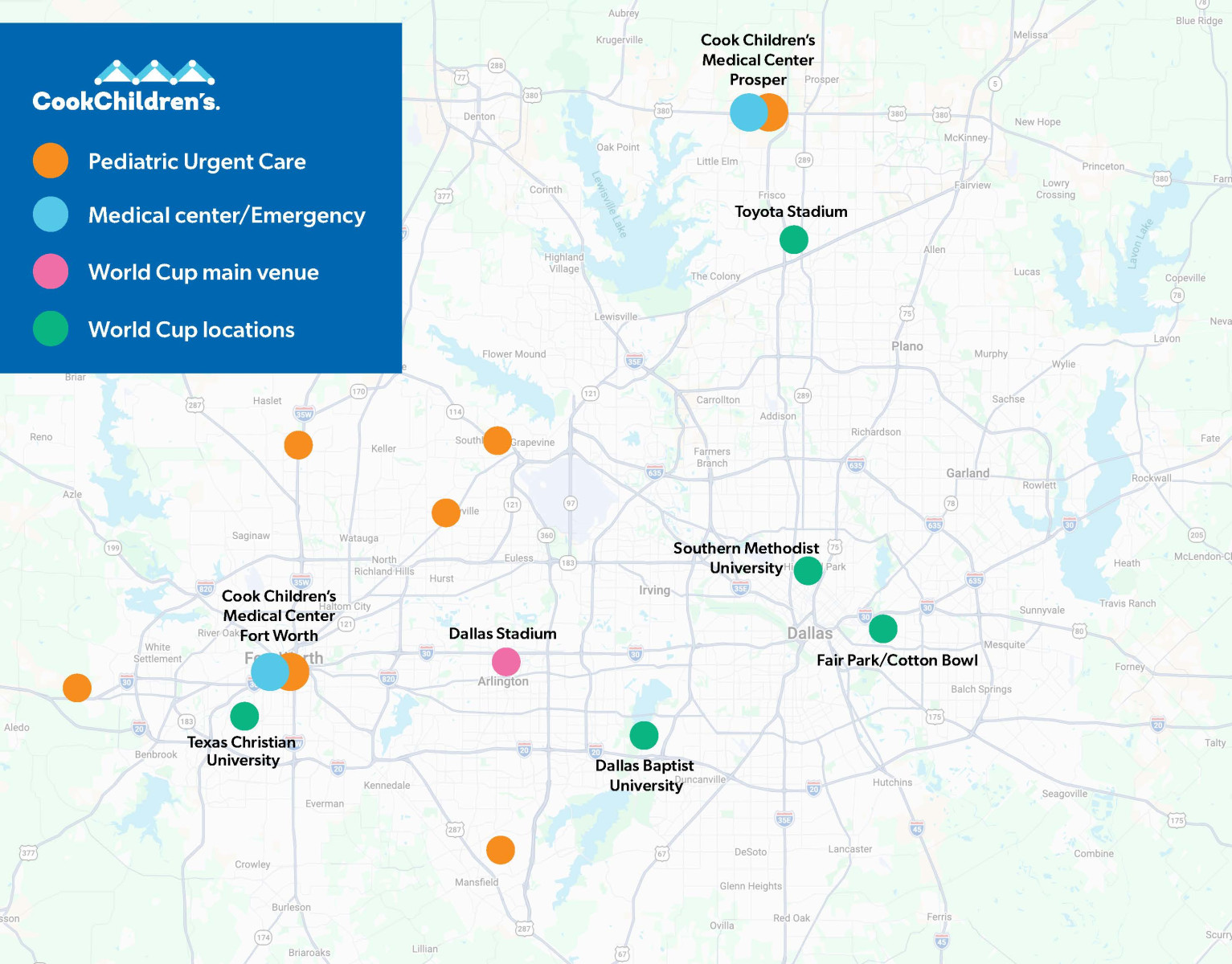
An unexpected visit to the doctor can be stressful, especially when traveling. Cook Children’s Health Care System ensures that families can access health care at any time through its seven Urgent Care Centers (UCCs), or its two 24-hour emergency departments. With help from the Cook Children’s Language Services Department, families can receive care in their native language.
Know before you go
Whether visiting the emergency room or urgent care clinic, being prepared will help ensure care is timely and the child is back in action as quickly as possible.
To be able to treat a child, a parent or legal guardian must be present or provide permission for treatment. If a parent or legal guardian is unavailable, a written letter of permission or immediate phone access to obtain verbal consent from the parent or legal guardian is needed.
The adult accompanying the child should bring:
- A form of identification.
- Traveler’s insurance information (if available).
- A list of the child's medication.
When to use the Cook Children’s Emergency Department
With full-service medical centers in both Fort Worth and Prosper, Cook Children’s provides emergency care for children across North Texas.
“We are always happy and prepared to help,” said Julio Castillo, M.D., medical director of emergency services at Cook Children’s Medical Center – Prosper.
Cook Children's cares for more than 300,000 children every year through urgent care and emergency room visits, providing care in more than 200 languages.
“We have local Spanish translators and multilanguage computerized access,” explained Dr. Castillo.
Caregivers should take their child to the Emergency Department if their child is unconscious, not responding, a bone is sticking out, or the situation seems critical. For immediate assistance, dial 911. When a condition is sudden, life-threatening, or risks causing permanent harm, transport by ambulance is safest for the child.
Take the child to the emergency department if your child is experiencing:
- Severe bleeding that does not stop after 15 minutes of direct pressure
- Severe allergic reactions
- Difficulty breathing
- Bluish tint to the lips
- Coughing up or vomiting blood
- Sudden severe joint pain with swelling
- Insect stings accompanied by breathing difficulties
- Accidental swallowing of medications, chemicals or other substances
- Not being able to move or speak
- Severe or persistent vomiting or diarrhea
- Gaping wound (edges won’t come together)
- Head injury with loss of consciousness, vomiting or causing dizziness/confusion
- Visible broken bones or dislocated joints
- Fever higher than 100.4 F in infants under 8 weeks old
- Diabetes/blood sugar issues
Urgent Care
“For simple fever, cough, and congestion, your child can be seen in urgent care or by their pediatrician,” said Taylor Louden, M.D., medical director of emergency services at Cook Children’s Medical Center- Fort Worth.
When a child needs same-day medical attention for non-life-threatening illnesses or injuries such as X-rays or stitches,a Cook Children's urgent care clinic can provide the necessary care.
“Cook Children’s Urgent Care Centers are available to see patients needing routine or urgent care while visiting our city for the event,” said Kara Starnes, D.O. medical director of Urgent Care at Cook Children’s.
Not all urgent care centers are the same. Cook Children’s Urgent Care clinics are not just kid-friendly; they are kid-only. Because childhood injuries and illnesses require specialized pediatric expertise, families must make an appointment prior to ensure a smooth, efficient visit.
When to use Cook Children’s Urgent Care
- Ear infections/pain
- Strep/sore throats
- Cold symptoms
- Flu
- Mild dehydration
- Respiratory illnesses – including respiratory syncytial virus (RSV), bronchitis, bronchiolitis, pneumonia and asthma without severe breathing difficulty
- Sprains and possibly broken bones
- Minor cuts
- Prolonged vomiting
- Persistent diarrhea
- Infected bug bites
- Foreign body removal (marbles, beans and other interesting things)
- Urinary infection symptoms
- Pinworms, ringworm, rashes and pink eye
- Painful muscle strains
- Head injuries without loss of consciousness or vomiting
As pediatric experts, Cook Children’s Health Care System experts know that protecting a child's health is about preventing emergency room visits just as much as treating illness. Ahead of the major soccer tournament, the system launched "World Cup Wednesday," a weekly healthcare series providing local and international visitors with essential resources on injury prevention, heat safety, water safety and guidance on when to utilize urgent care versus the emergency department.
