‘It’s Like Riding a Roller Coaster’: The Journey of Living with Sickle Cell Disease
After years of living with the unpredictable challenges of sickle cell disease, a 21-year-old Cook Children’s patient is now able to experience life without pain thanks to the innovation of gene therapy.
Michael Williams has learned to appreciate the days when he can go about his routine without pain. He also recognizes how quickly those days can change.
“Living with sickle cell is like riding a roller coaster,” the 21-year-old said. “Some days, I used to get the benefit of living day-to-day, month-to-month without any pain. Then other days, it was just a painful experience.”
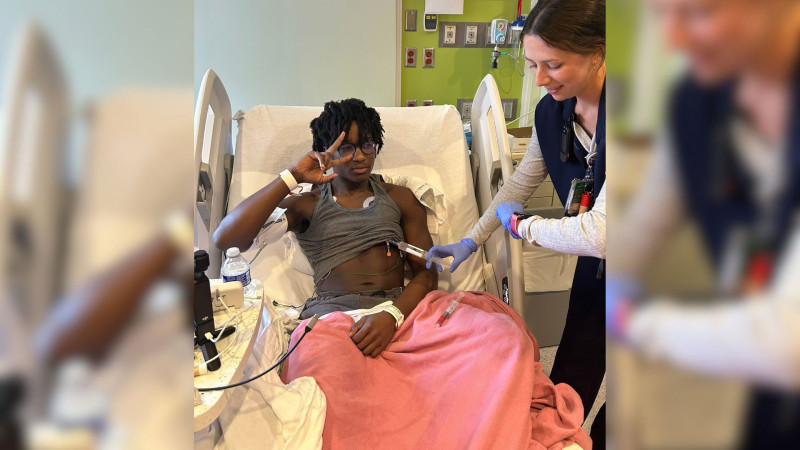 Williams was diagnosed with sickle cell disease as a baby. He spent the first 13 years of his life in Jamaica before moving to the United States. He remembers being hospitalized with pneumonia as a child, an experience that showed him how serious the disease could be.
September is Sickle Cell Awareness Month and Williams is sharing what years of unpredictable pain have meant for his life and what he hopes will change after receiving a gene therapy called Casgevy® at Cook Children’s Health Care System in July 2026.
This gene therapy is approved by the U.S. Food and Drug Administration (FDA) sickle cell disease with recurrent pain crisis, and its approval was expanded in July 2026 to include eligible children as young as 2.
Understanding Sickle Cell Disease
Sickle cell disease is an inherited condition that changes the shape of red blood cells. Instead of moving easily through small blood vessels, the cells that grow in the shape of a sickle, or a crescent moon, often get stock blocking blood flow. They also break down faster than typical red blood cells. The results can be anemia, episodes of severe pain and other complications.
 “If you look at me, you can never tell, ‘oh he has sickle cell,’” Williams said. “It’s a thing where you have to have people tell you they have sickle cell.”
According to Meg Moffer, BSN, RN, CPN, CPHON®, Cellular Immunotherapy Program Coordinator at Cook Children’s, the hospital currently cares for more than 700 patients with this disease.
A person with sickle cell trait inherits one sickle gene and one typical hemoglobin gene. Most people with the trait do not have symptoms, but they can pass the sickle cell gene to their children. A child who inherits two sickle cell genes, one from each parent, has sickle cell disease. Other combinations of inherited hemoglobin genes can also cause forms of the disease.
Plans Interrupted by Pain
Williams wanted to play soccer when he was growing up in Jamaica, but he said he became dehydrated quickly and could not stay active as long as he wanted. Upon arriving in the United States, he also dreamed of serving in the military. Williams applied to three different branches when he reached the proper age, but he was rejected by all of them. Today, fitness is still an important part of his life, but previous pain episodes and other sickle cell symptoms interrupted months of progress.
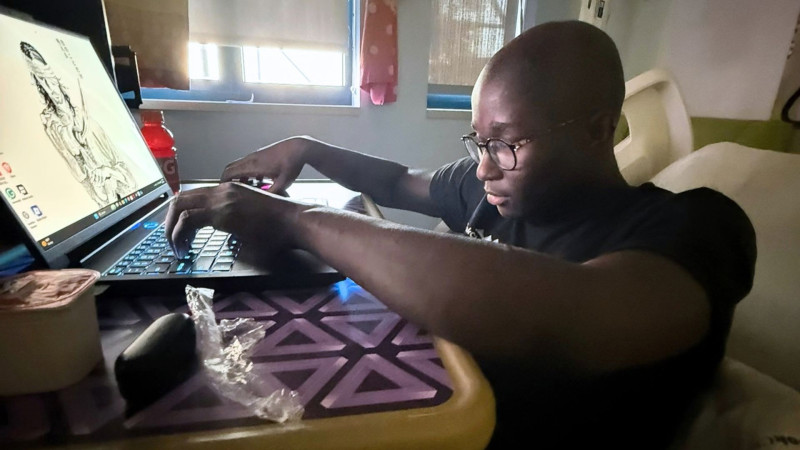 “I couldn’t walk for two months. I couldn’t do things I wanted to do,” he said, describing what happened after some episodes. “All the progress that I had made with my fitness, it all went back down to zero.”
Moffer cared for Williams before joining the Cellular Immunotherapy Program. She said his sickle cell disease led to multiple hospitalizations a year.
“I knew him well because he was someone who was often hospitalized,” Moffer said. “And as the program coordinator, the day his name came across my desk, I felt this tremendous joy for him to think that he has a chance at a different tomorrow.”
Pain can be hard for others to see, Williams said. Having someone willing to listen and offer support can make a difference for a person with the disease.
A Long Path to Treatment
Sickle cells are a disease that can be cured only if the patient has a compatible and eligible sibling that can participate in a stem cell transplant. Unfortunately, not all patients with sickle cells have an eligible sibling who is not a carrier of the sickle cell as well. At Cook Children’s Sickle Cell Program, care can include medicines to reduce complications, blood transfusions, stem cell transplants, and gene therapy. Treatment depends on the patient’s needs and eligibility.
For Williams, the possibility of gene therapy brought hope and fear. He wondered about side effects and what it would take to get through treatment. His younger brother and sister also have sickle cell disease, he said and he wanted to be able to share his experience with them.
“I want to be the one to take the fall,” he said. “So, I’m able to tell them this is what helped me.”
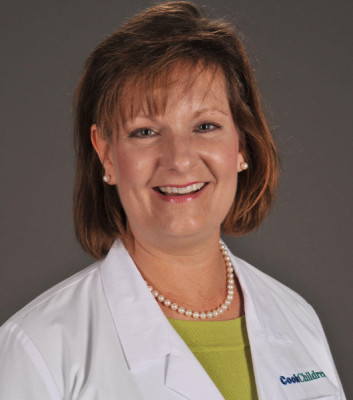 The treatment took months of preparation. Williams’ stem cells were collected and sent to a laboratory, where they were edited before being returned to Fort Worth for his treatment. He then received chemotherapy to make room for those cells, followed by the edited cells. Gretchen Eames, M.D., Medical Director of the Bone Marrow and Stem Cell Transplant Program at Cook Children's, said the full process, from assessing eligibility through treatment, generally takes about 12 to 18 months.
The edited cells are designed to increase production of fetal hemoglobin; a form of hemoglobin that helps reduce sickling and its complications. Dr. Eames said.
“This gene therapy is not curative for sickle cell,” Dr. Eames said. “It is very transformational as far as changing the clinical course.” Patients are carefully assessed before beginning a treatment that requires stem cell collection and high-dose chemotherapy. A matched donor stem cell transplant remains as the only curative option for some patients, she said.
It is still early in Williams’ recovery. Moffer said follow-up visits start frequently after gene therapy and gradually become less frequent if recovery goes as expected. Williams says he feels more energized, but the long-term effect on his health remains to be seen.
Looking Beyond the Hospital
“He has a job. He’s wanting to go back to school. He has so many dreams,” Moffer said.
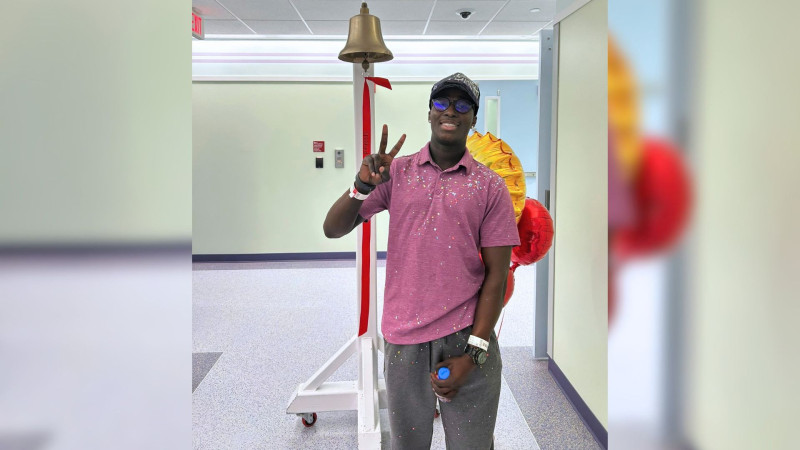 As his recovery continues, Williams also hopes to start a clothing brand inspired by experience with sickle cell disease and donating some of its earnings to the hospital. He also plans to volunteer at Cook Children’s to work with children who have leukemia and blood disorders and hopes to encourage young patients.
“The doctors and nurses at Cook Children’s have become like family during these years,” Williams said. Looking ahead to fewer visits brings mixed feelings: He wants a life with less pain, and he knows he will miss seeing the people who helped him through it.
“I just never give up,” Williams said. “Just keep going keep pushing, keep pursuing what you want to do, and never let anyone tell you that you can’t because of a blood disorder.”
For families learning about sickle cell disease, explore: