

Published Study: New AI Tool Detects Origins of Seizures
Cook Children's Neurosciences team creates a breakthrough approach to identifying where seizures start in drug-resistant epilepsy cases.
Researchers from Cook Children’s used artificial intelligence (AI) to develop an innovative tool that precisely identifies the area of the brain where seizures originate in patients with drug-resistant epilepsy.
Their findings were published in March 2025 in the top-tier scientific journal Nature Portfolio Journal Digital Medicine. The article explains how the research team designed and trained a machine-learning tool to specifically locate the seizure starting point in children and teenagers.
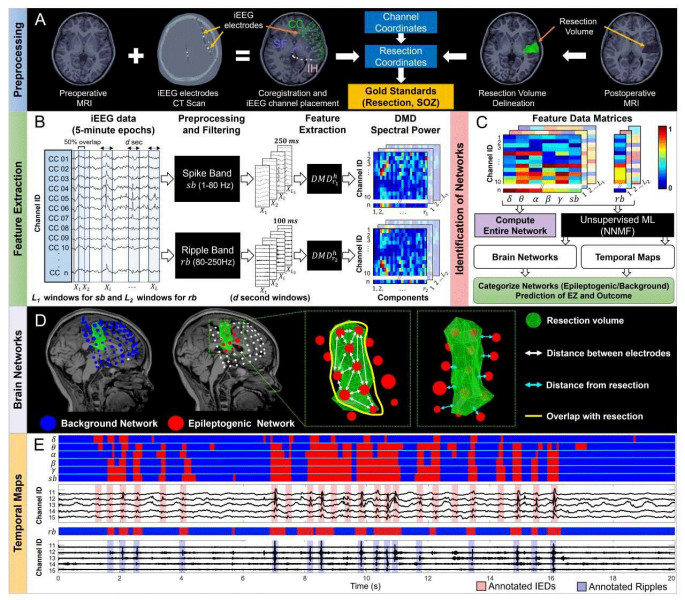
 During their two-year study, the researchers came up with an automated system that works by analyzing recordings of electrical activity in the brain. The researchers entered the data into the framework, and the system learned to identify where the drug-resistant seizures started.
“The system provides as an output to the epileptologists and neurosurgeons the brain area to resect in order for the patient to become seizure free,” said Christos Papadelis, Ph.D., Assistant Vice President of Neuroscience Research at the Jane and John Justin Institute for Mind Health at Cook Children’s Health Care System.
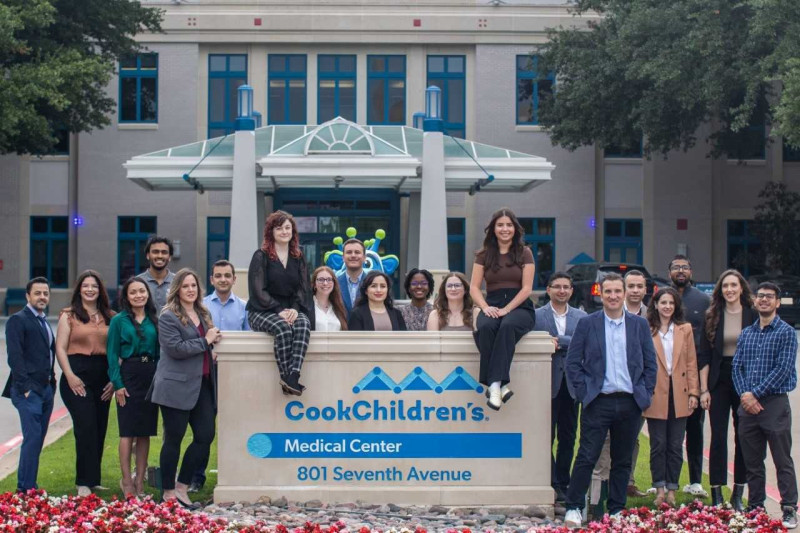
Dr. Papadelis teamed up with his postdoctoral research fellow Hmayag Partamian, Ph.D., to come up with the project’s concept and experimental design. Dr. Partamian developed the mathematical formulas and codes. The work took place in labs at Cook Children’s Medical Center in Fort Worth and at the University of Texas at Arlington, where Dr. Papadelis serves as Professor of Research in Bioengineering and Director of the Pediatric Brain Health and Neurosciences Center.
The study utilized data from 43 children with drug-resistant epilepsy who underwent resective surgery. The goal of resective surgery is to stop seizures from occurring by removing the brain tissue where the seizures originate.
Dr. Papadelis said the new AI-based tool could help improve the outcome of those surgeries by precisely defining which tissue to remove, giving those patients hope for a seizure-free future.
Where Seizures Begin
Nearly 500,000 children nationwide live with the chronic disorder of epilepsy. They suffer from seizures, which are misfiring of electrical activity in the brain. Someone experiencing a seizure might have a blank stare, muscle spasms, or loss of consciousness. Medications control seizures in about 70% of epilepsy patients. The others have what’s called drug-resistant epilepsy.
The AI tool created by Dr. Papadelis and his team requires just five minutes of recorded brain electrical activity to determine the area of seizure origin. This presents a significant advantage compared to conventional methods that typically require recording the brain activity for several days -- or even weeks -- in order to capture a seizure.
The tool then transforms the electrophysiological data into color-coded maps of brain activity across time and corresponding these maps into active epileptic regions in the brain. Researchers trained the AI tool to automatically discriminate epileptic from healthy brain regions in these maps. Surgical resection of the epileptic regions in these brain maps can predict a good prognosis for the patient.
Dr. Papadelis pointed out important features of the automated process:
- Less chance for human error from manual interpretation of the data
- Reduced costs, time and risks from the presurgical evaluation process
“We have developed an AI, patient-specific method that automatically identifies the brain area that generates seizures in patients with drug-resistant epilepsy. This method requires little to no input from clinicians,” Dr. Papadelis said. “Our method eliminates the need for manual data inspection, reduces prolonged monitoring and enhances surgical planning.”
 The study is in collaboration with Boston Children’s Hospital and is funded by a grant from the National Institute of Neurological Disorders and Stroke.
Dr. Papadelis plans to seek extra funding for the study’s next phase: applying the tool prospectively to patients who are candidates for surgical intervention at Cook Children’s.
Dr. Papadelis believes that the findings of this study represent a significant step toward improved surgical procedures for drug-resistant epilepsy.
“Such a framework would be particularly useful to epilepsy centers that lack the multidisciplinary expertise to delineate accurately and precisely the epileptogenic brain regions in complex cases,” the article states.
Dr. Papadelis credited the dedication of all the researchers, and in particular he highlighted Dr. Partamian’s talent for scripting. The study shows direct benefits that align with the Cook Children’s Promise to improve the well-being of every child in our care and communities, he said.
“This is one of the moments that makes you feel really proud of the work that you have accomplished together with your team,” he said. “We keep our Promise to do our best for improving the lives of children suffering from devastating neurological disorders.”
RELATED STORIES:
Cook Children’s Neuroscience Research Published in Brain Journal for 2nd Time This Year
History in the Making: Cook Children’s Secures NIH Grant
Cook Children’s Lead Neurosciences Researcher Addresses Congress Members on Capitol Hill
Neurosciences Research Center
Scientists and students at the Cook Children’s Jane and John Justin Neuroscience Research Center produce pioneering knowledge on pediatric neurological and behavioral disorders. With an emphasis on epilepsy and movement disorders, they aim to better understand functions of the brain in children diagnosed with neurological disorders. If you would like to speak to our research team, call 682-715-5026 or email us at NeuroResearch@cookchildrens.org.
