Cook Children's Physical Therapists Share Advice for Preventing Common Soccer Injuries
As the World Cup heats up and all eyes are on soccer, two physical therapists at Cook Children’s Sports Physical Therapy are sharing injury prevention tips to keep in mind, whether your child is a seasoned pro or just kicking off their first season.
Warm-Ups & Stretching
Physical therapist assistant Kim Barb, OPTA, of Cook Children’s Pediatric Specialties Walsh Ranch, says it’s important to stretch and warm up before playing or practicing, as doing so prepares the body for fitness. After a game or practice, incorporate flexibility stretches with static stretches and holding positions, like the typical hamstring stretch, calf stretch and quad stretch. A five- to eight-minute dynamic warm-up prepares the muscles for a better stretch.
Why?
- To increase blood flow
- To improve muscle flexibility
- To prevent injury and tearing of muscles, sprains and strains
- To improve performance
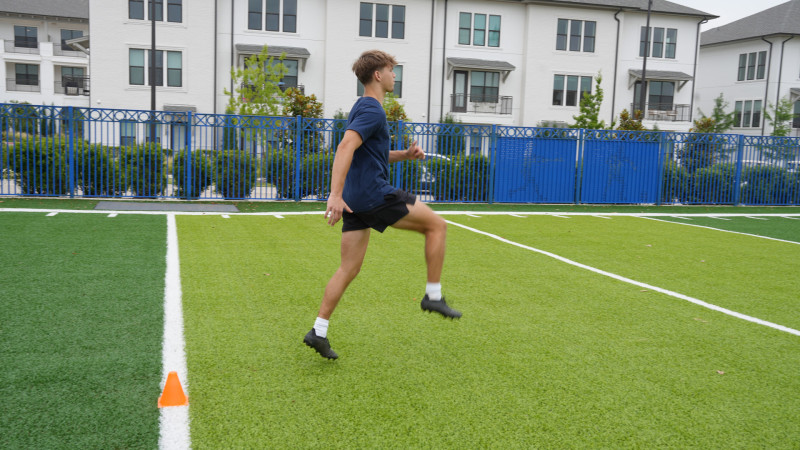
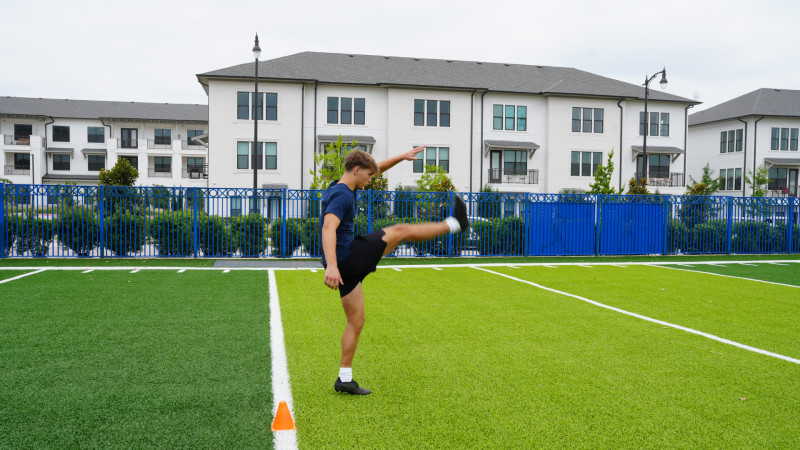
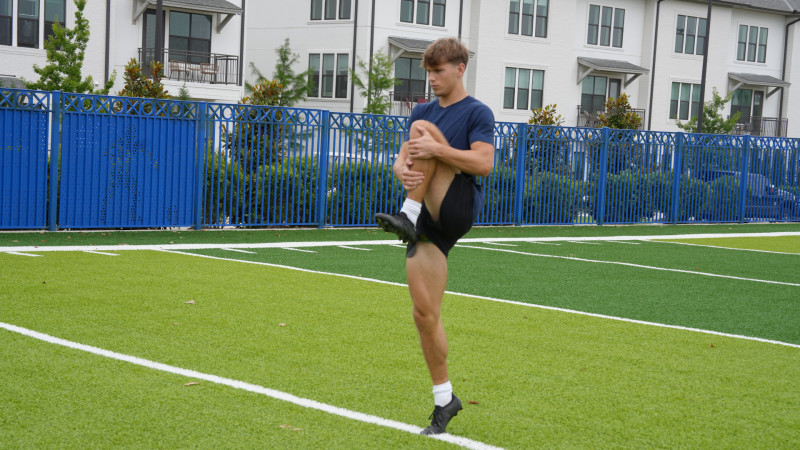
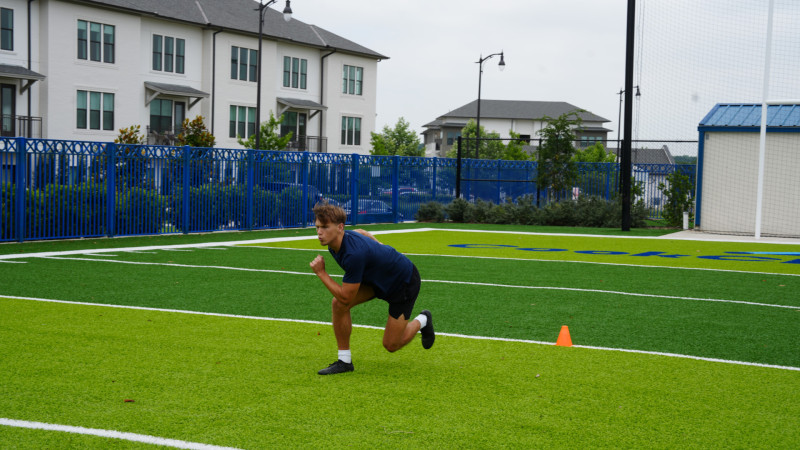
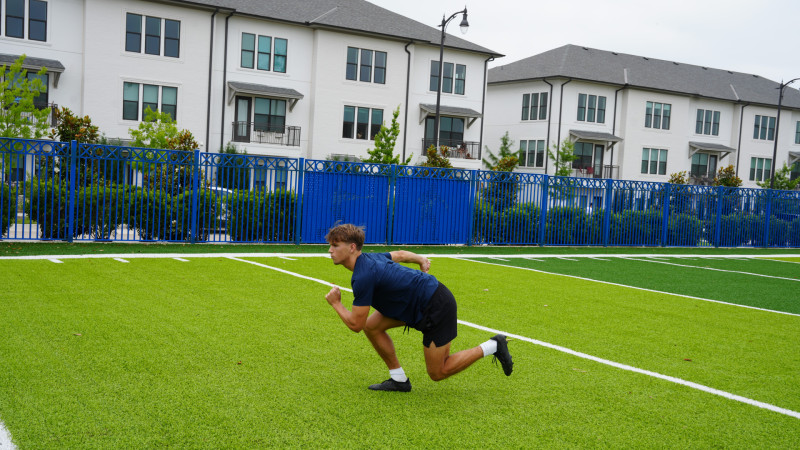
Agility drills prepare the muscles and joints for running, jumping, cutting and footwork.
Examples of agility drills are:
- Soldier kicks
- Knee hugs
- Hamstring scoops
- Skipping
- Hip openers
ACL-Injury Prevention for Soccer Players
Barb recommends strengthening large muscle groups typically used in soccer, such as the hamstrings, quadriceps and the gluteals (including the glute medius, minimus and maximus), with exercises such as squats, lunges and hamstring curls.
Strengthening exercises can help prevent the risk of injury by teaching muscles and joints to be stable and strong. Strengthening hip and core muscles also helps with the reactive forces created when making contact with other players.
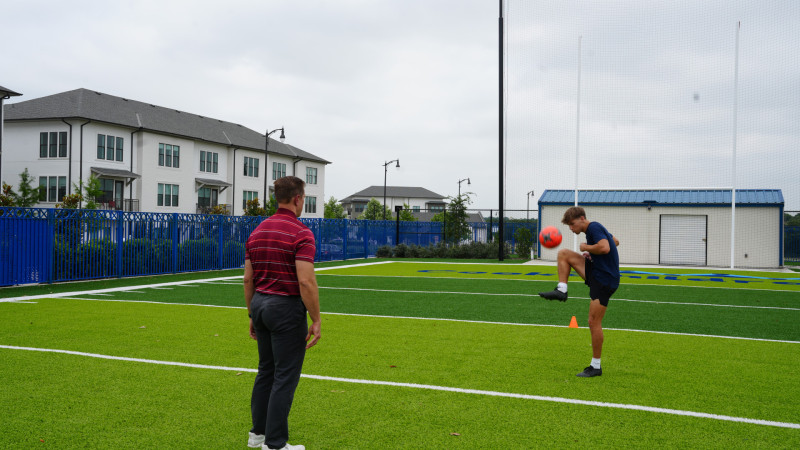
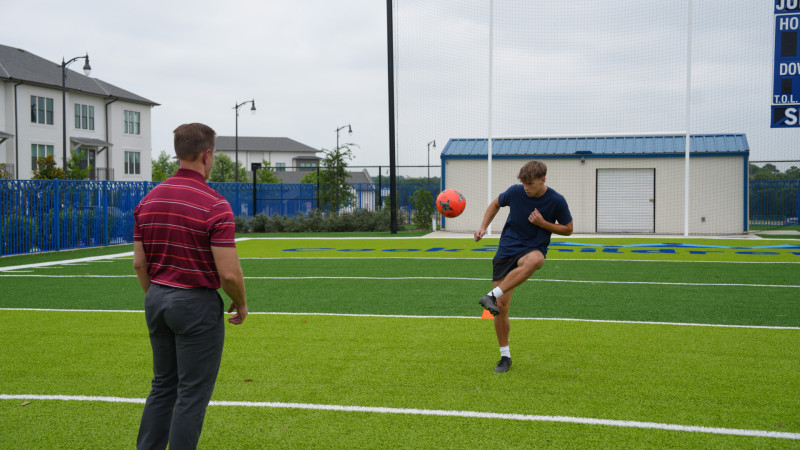
Single-leg balance drills increase stability by training your body to stay balanced on one foot while moving, cutting and changing directions.
Examples of single-leg balance drills are:
- Stand on one foot and pass the ball.
- Stand on one foot and head the ball.
Plyometric drills teach athletes how to land with control – a skill that boosts the body’s ability to absorb impact and protect the joints. According to Barb, landing with poor alignment can cause the knees to cave inward, a position known as “knee valgus.” This inward collapse is a common culprit behind serious injuries, making proper landing technique an essential part of any training routine.
Examples of plyometric drills are:
- Box jumps
- Lateral bounds/skater lateral hops
- Depth jumps
Turf Burn Prevention & Treatment
These raw, red friction burns can be very painful, says Cook Children’s physical therapist Jessie Fernandez, PT, DPT, OCS, COMT, of Cook Children’s Rehabilitation (South).
If you have turf burn:
- First, be sure to clean it with soap and water to rinse out any dirt or debris and help to prevent infection.
- Next, treat the burn with an injury ointment, such as Neosporin.
- Cover it with a dressing or bandage. Waterproof bandages can help prevent the bandage from falling off during exercise.
Players can wear tighter-fitting, sliding shorts underneath their regular shorts to reduce the risk of skin damage when sliding on the field. Staying hydrated and keeping skin moisturized can also help reduce the risk of turf burn.
Whether your child plays on a natural grass field or turf, it’s important to continue practicing on the same surface so the athlete can get used to controlling their body on it. Turf fields absorb shock less effectively than natural grass, so running, jumping and playing on them will feel different.
What to Know About Concussions and “Second Impact Syndrome”
The American Academy of Pediatrics (AAP) defines a concussion as “a type of mild traumatic brain injury (mTBI) caused by a bump, blow, or jolt to the head or by a hit to the body that causes the head and brain to move rapidly back and forth.”
This sudden movement can cause the brain to move or twist in the skull, creating chemical changes in the brain and sometimes stretching and damaging brain cells.
A concussion can sometimes be hard to spot. After all, it’s an internal injury.
There are times when a concussion is more easily identified, such as if an athlete loses consciousness. But it’s important to know that anytime there is a blow to the head, a concussion is possible.
“Monitor the athlete immediately after but be aware that sometimes it can take one to three days for symptoms to come on,” Fernandez said.
Immediate symptoms to watch out for and not to delay emergency medical treatment:
- Severe headache
- Blurred vision
- Trouble walking
- Confusion
- Slurred speech
- Unresponsiveness
Symptoms to watch after one to three days:
- Dizziness
- Headache
- Nausea
- Sleep changes, like sleeping too much or not enough
- Changes in mood or emotions
- Difficulty concentrating
Symptoms often resolve on their own, but one extremely important thing for parents to know about is second impact syndrome, which is when a person has a second concussion occur prior to resolution of symptoms from a previous concussion. This is the reason children and teens must sit out of a sport while recovering from a concussion.
“Playing through something like a knee injury is not ideal, but playing when you have concussion symptoms can be extremely dangerous, and can cause permanent brain damage or even death,” Fernandez said. “It’s just not something to mess around with.”
This is why Fernandez says that if there are any symptoms or concerns, the athlete should wait to return to play until they resolve. Usually, return-to-play protocols are overseen by a physician, athletic trainer, or physical therapist to work on the step-by-step process.
While neck strengthening and stability exercises can help prepare players for planned contact, like heading the ball, Barb notes that many concussions are harder to prevent because they stem from unexpected collisions that a player can't brace for.
“If you go up for a ball and someone hits you on the side of the head, you’re not prepared for that or it’s likely that you’re not stabilizing your neck muscles and that’s when the problem arises.”
As pediatric experts, Cook Children’s Health Care System xperts know that protecting a child's health is about preventing emergency room visits just as much as treating illness. Ahead of the major soccer tournament, the system launched "World Cup Wednesday," a weekly healthcare series providing local and international visitors with essential resources on injury prevention, heat safety, water safety and guidance on when to utilize urgent care versus the emergency department.