Brother's Bone Marrow Cures Sister's Sickle Cell Disease
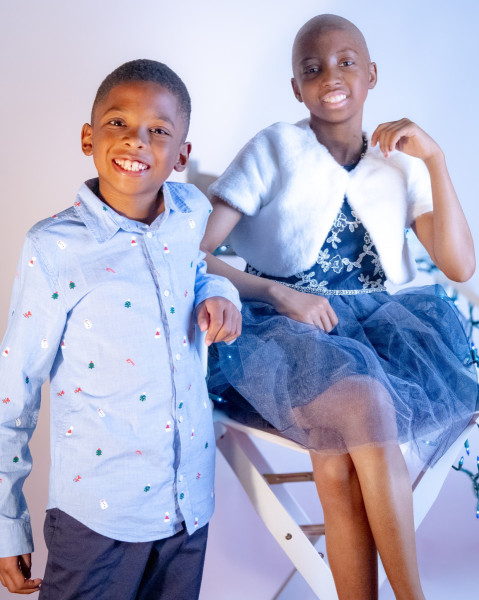
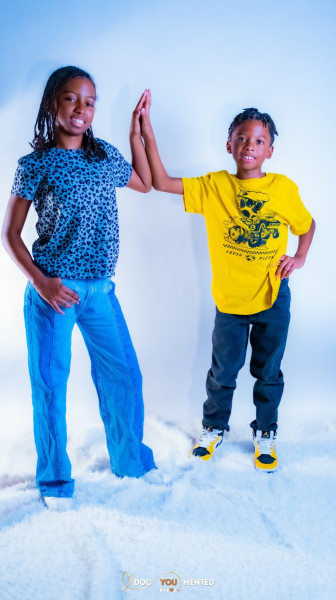
With a little bit of teasing and a lot of affection, siblings Anyah and Cobus Johnson like to talk about how much they have in common.
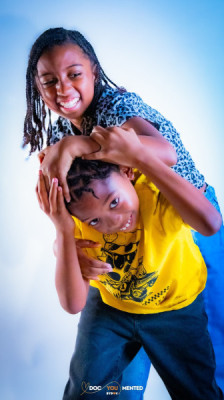 Anyah, 13, and 11-year-old Cobus share the same friends and favorite games. They even share identical blood and immune systems. That’s because doctors at Cook Children’s in September 2024 infused a small portion of Cobus’ bone marrow into Anyah’s body in hopes of curing her sickle cell disease (SCD).
Anyah was born with SCD, a genetic disorder that bends red blood cells into a crescent shape. SCD can cause pain, anemia, stroke and other complications when those sickled cells get clumped up in the blood vessels.
Thanks to the healthy cells she received from her brother, Anyah now makes her own healthy red blood cells instead of abnormal ones. She doesn’t have limits on physical activity or need blood transfusions like she did before the stem cell transplant.
“My favorite thing is that I don’t have sickle cell anymore. I’m able to do more things,” she said.
September is National Sickle Cell Awareness Month, a time to promote understanding and encouragement for the estimated 100,000 people in the United States who live with SCD. The Cook Children’s Sickle Cell Program follows about 600 patients with services including diagnosis, treatment, stroke screening, clinical trials and more.
Gretchen Eames, M.D., Medical Director of the Cook Children’s Stem Cell Transplant Program, said Cook Children’s has done 67 transplants for patients with SCD since 1999. That statistic includes two young adults who received their own stem cells, also known as an autologous transplant, via a clinical trial involving gene editing, a leading-edge therapy.
Patients who undergo stem cell transplant with a matched sibling donor have a greater than 90% chance of being cured, Dr. Eames said.
“It’s a very big deal, very serious therapy, but the success rate is very high,” she said. “And if we can get a patient to be pain free, not needing transfusions, now they have a healthy outlook for the rest of their life.”
How did the process unfold for Anyah and Cobus? Both of them faced their challenges – including needles and nausea – with resilience and a cheerful attitude. Here’s their story.
Starting with Anyah
Anyah never experienced pain episodes from SCD. But at age 10 she had the first of two aneurysms when blood vessels ruptured in her brain. Anyah and her mom began traveling from their home in Killeen to see the Stroke Clinic experts at Cook Children’s Medical Center – Fort Worth in 2023.
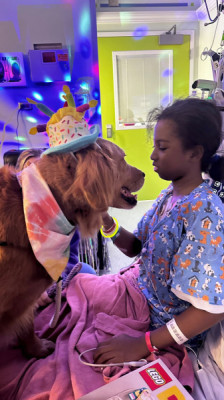 That’s when hematologist Clarissa Johnson, M.D., who heads up the Sickle Cell Program at Cook Children’s, became Anyah’s SCD physician. While sickle cell disease can cause aneurysms, the location of Anyah’s aneurysms was unusual even for sickle cell disease. Extensive testing did not reveal a specific cause for them. Because sickle cell disease can also cause stroke and brain bleeds even without aneurysms, Dr. Johnson hoped that curing Anyah of SCD would protect her brain and prevent future damage related to sickle cell disease.
Neither of Anyah’s two brothers has SCD. They were potential stem cell donors – but each boy had only a 25% chance of fully matching Anyah’s tissue typing. Genetic tests showed that Cobus was a full match; younger brother Titus was a half match. The transplant was on.
“It really came down to this is the best method for her to have the best possible life and the least amount of trauma,” said the kids’ mom, Rachel Hastings.
If neither boy had been a match, the medical team could have pursued an alternative treatment, such as unrelated donor transplant. “But it’s complicated. We’re lucky we didn’t have to go through that path,” Rachel said.
Anyah underwent tests on her heart, ears, eyes and kidneys in preparation. One of her ovaries was removed to preserve her fertility. Then, for seven days right before the transplant, she underwent chemotherapy to wipe out her bone marrow.
“I describe it to parents like hoeing the garden, removing her cells and making a fresh empty garden for the new cells to take hold,” Dr. Eames said.
Chemo caused her hair to fall out and sores in her mouth. “I could barely speak. I didn’t eat for a few days. I was throwing up everywhere,” Anyah said.
Another medication suppressed her immune system so that she wouldn’t reject the infusion of Cobus’ bone marrow. Meanwhile ….
Cobus Takes a Turn
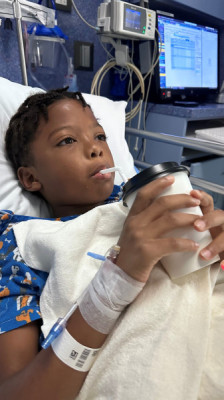 Cobus didn’t get nervous until the day of transplant, Sept. 18, 2024. But he was also excited because he wanted to help his sister. “She’s there when I need help, and she’s always ready to defend me if she needs to,” he explained.
Cobus remembers playing a video game in his hospital room until falling asleep under anesthesia. A needle inserted into his hip bone withdrew about 1-2 teaspoons of bone marrow at a time, Dr. Eames said. The needle’s position had to be adjusted to avoid diluting the collection.
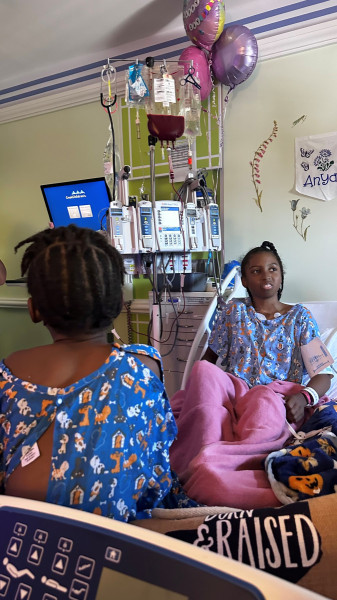
The procedure took about 30 minutes. Cobus then got to sit with Anyah in her room while his bone marrow was infused into his sister’s vein.
Donors typically report pain that feels like getting kicked in the back, Dr. Eames said. Their stem cell levels replenish within four to six weeks.
Cobus teases Anyah that he’s a hero, and their mom doesn’t disagree. Going through the transplant journey together created a unique brother-sister bond.
“Two peas in a pod,” Rachel said. “When they were younger, people used to think they were twins, and they’ve always been close as siblings. But I think this leveled it up.”
Back to Anyah
Cobus’ stem cells entered Anyah’s bloodstream through a catheter, like getting a transfusion. She was awake during the four-hour process.
“Those cells know where their home is, and they flow through the bone marrow cavities and know to stop there and set up house,” Dr. Eames said. “Just like when you plant a garden, it takes a couple of weeks for the seeds to sprout.”
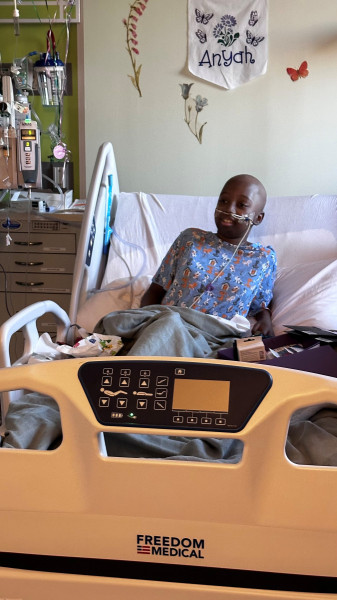
Two to three weeks after transplant, signs will indicate that the new stem cells are growing. Patients can be discharged when their blood counts keep increasing and there’s no fever or infection. Anyah spent six weeks in the hospital and then stayed at the Ronald McDonald House under close monitoring during the acute recovery phase.
“There were moments when I was there to comfort her, to pray for her, to lift her up and hold her up,” Rachel said. “But there were also moments where she was like, ‘Do you need a hug Mom?’”
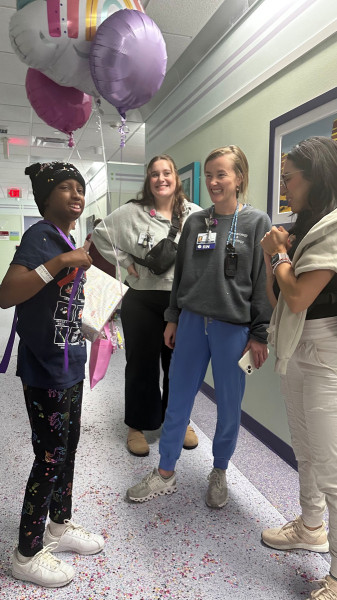
It was an empowering and inspiring highlight, Rachel said, when Anyah rang the bell to celebrate her discharge. They came home right before Christmas 2024. Anyah was prescribed almost 20 medications at first. Now she’s down to just aspirin, Vitamin D and a medication to control for iron overload.
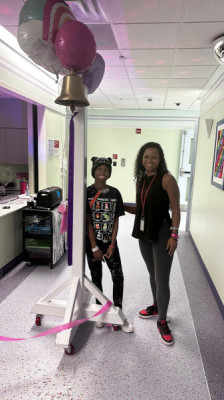 “It is really joyful news that she is now one year out from her transplant and doing so well, and at much less risk for complications,” Dr. Eames said. “Transplant outcomes have gotten better and better over the years. We have a very holistic team and wrap our arms around the entire family and support the sibling who’s the donor, support the parents and extended family.”
Anyah says she feels amazing. A Cook Children’s patient ambassador, she happily chats about the art activities, facility dogs and the kindness she experiences from hospital staff. She shared a bit of advice for other patients: “Keep the bad energy away. Keep the positive energy near you.”
Dr. Johnson said Anyah will continue to follow up with her stroke and transplant teams. But she’s considered cured of SCD. Dr. Johnson pointed out Anyah’s knack for looking on the bright side during the hard times, which included a hospital readmission for severe nausea.
“She really was very minimal on complaining,” Dr. Johnson said. “She would say, ‘My hair's starting to come out, but that's OK. It's going to grow back.’ She just radiates positivity. I don't know that I've encountered too many kids like her, considering the challenges she was facing.”
Families should know that the Cook Children’s Sickle Cell Disease Program offers a variety of therapy options depending on the severity of disease, Dr. Johnson pointed out.
“Our goal is to support your child to thrive and live the best life they can,” she said.
RELATED STORIES:
Sickle Cell Disease: Leading-Edge Treatment Brings Hope
Screenings Aim to Prevent Stroke for Children with Sickle Cell Disease
Sickle Cell Disease Treatment Gives Toddler Fresh Start
The Sickle Cell Program at Cook Children’s serves children and young adults as part of the Cook Children's Hematology and Oncology Center. The program offers testing, diagnosis, treatments such as pain management, blood transfusions and surgery, as well as groundbreaking research. Listen here as Dr. Johnson explains more.