

Sickle Cell Disease: Leading-Edge Treatment Brings Hope
World Sickle Cell Awareness Day falls on June 19, a time to highlight new advances in treating the genetic disorder.
Two Cook Children’s patients underwent gene-editing therapy for sickle cell disease (SCD) in 2024 through a clinical trial. The goal was to alter their DNA so that they start producing more fetal hemoglobin, which carries oxygen more efficiently than the misshapen red blood cells of a person with SCD.
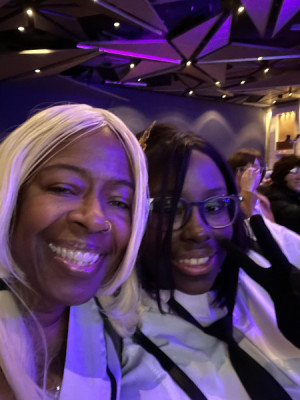 One of the participants in that clinical trial, Ashlynn Malone of Little Elm, no longer experiences SCD pain since receiving a transplant of her edited stem cells at Cook Children’s Medical Center – Fort Worth in July 2024.
Before the transplant, Ashlynn often ended up in the hospital with a severe pain crisis. She had to be careful not to overexert herself, which tended to trigger the pain flare-ups. The severity of Ashlynn’s SCD made her a candidate for the RUBY Trial.
Thanks to that therapy last year at age 19, she’s now able to work, exercise and explore her passion for travel. Gene editing didn’t technically cure her disorder – but it has stopped the cycle of frequent pain episodes that was limiting her lifestyle.
“I can enjoy my 20s without having to worry about my health so much,” Ashlynn said. “I feel like my chains have finally been broken, and I get to do all the things I want to do.”
An estimated 100,000 people in the United States have SCD, an inherited disorder in which red blood cells bend into a sickle shape, like the curve of a crescent moon. SCD causes pain, anemia, organ damage and other complications when those sickled cells tangle up in the blood vessels.
Cook Children’s hematologist Clarissa Johnson, M.D. leads the Sickle Cell Program at Cook Children’s, which offers diagnosis, treatment, stroke screening, clinical trials and more.
“It’s been encouraging in the last several years to see a lot more treatments that we can offer,” Dr. Johnson said. “Gene editing is a great example of how progress in science can improve the lives of patients. It’s also a great example of how the willingness to participate in clinical trials can help advance the field, because there had to be someone who said ‘I’m willing to try this’ when it was still very much an unknown.”
The RUBY Trial measured the safety and effectiveness of the experimental technology for editing genes of patients with SCD. Participants had their stem cells collected and sent to a lab on the East Coast, where the therapy manufacturer made tweaks to the cell composition. The next step was chemotherapy to make room for the body to receive the new cells. Then the participants received an infusion of their own cells edited to produce fetal hemoglobin – and healthier blood as a result.
Departments across Cook Children’s played a role in the RUBY Trial, now concluded. The effort involved the research, apheresis, radiology, lab, pharmacy and hematology departments, along with the stem cell transplant physicians and team.
“Cook Children's involvement in the RUBY Trial has opened new horizons for gene editing therapy, offering hope and transformative possibilities for patients with sickle cell disease at our institution,” said Meg Moffer, coordinator of the Cellular Immunotherapy Program.
Dr. Johnson said gene-editing therapy is an exciting development that inspires hope for the future in SCD care. Every clinical trial involves risk along with the potential benefit, she pointed out.
 “This has been a life-altering experience for the people who went through this clinical trial. I think they are pioneers to have the bravery to do that,” Dr. Johnson said. “As the clinician, I’m not the one who has to do the treatment. I can give the information, give the advice and encouragement, but they still have to be the person to say, ‘I’m going to give this a try.’
“To me that’s very brave, and I’m always very happy when someone takes that chance and the outcome for them is really good, which it has been for our patients.”
Ashlynn wanted to share her story as a tool to help educate the public about SCD. She urged patients to find out more about gene-editing treatment options.
“Do your research and look into it. It could be right for you. I’m happy that I went through with it,” she said. “I hope my experiences and journey through this treatment can help light up the way for other people who suffer from sickle cell.”
RELATED STORIES
Stopping the Pain: Genetic Therapy Treats Sickle Cell Disease
Clinical Trial Aims to Treat Sickle Cell Disease with Genetic Therapy
The Sickle Cell Program at Cook Children’s serves children and young adults as part of the Cook Children's Hematology and Oncology Center. The program offers testing, diagnosis, treatments such as pain management, blood transfusions and surgery, as well as groundbreaking research. Listen here as Dr. Johnson explains more.
