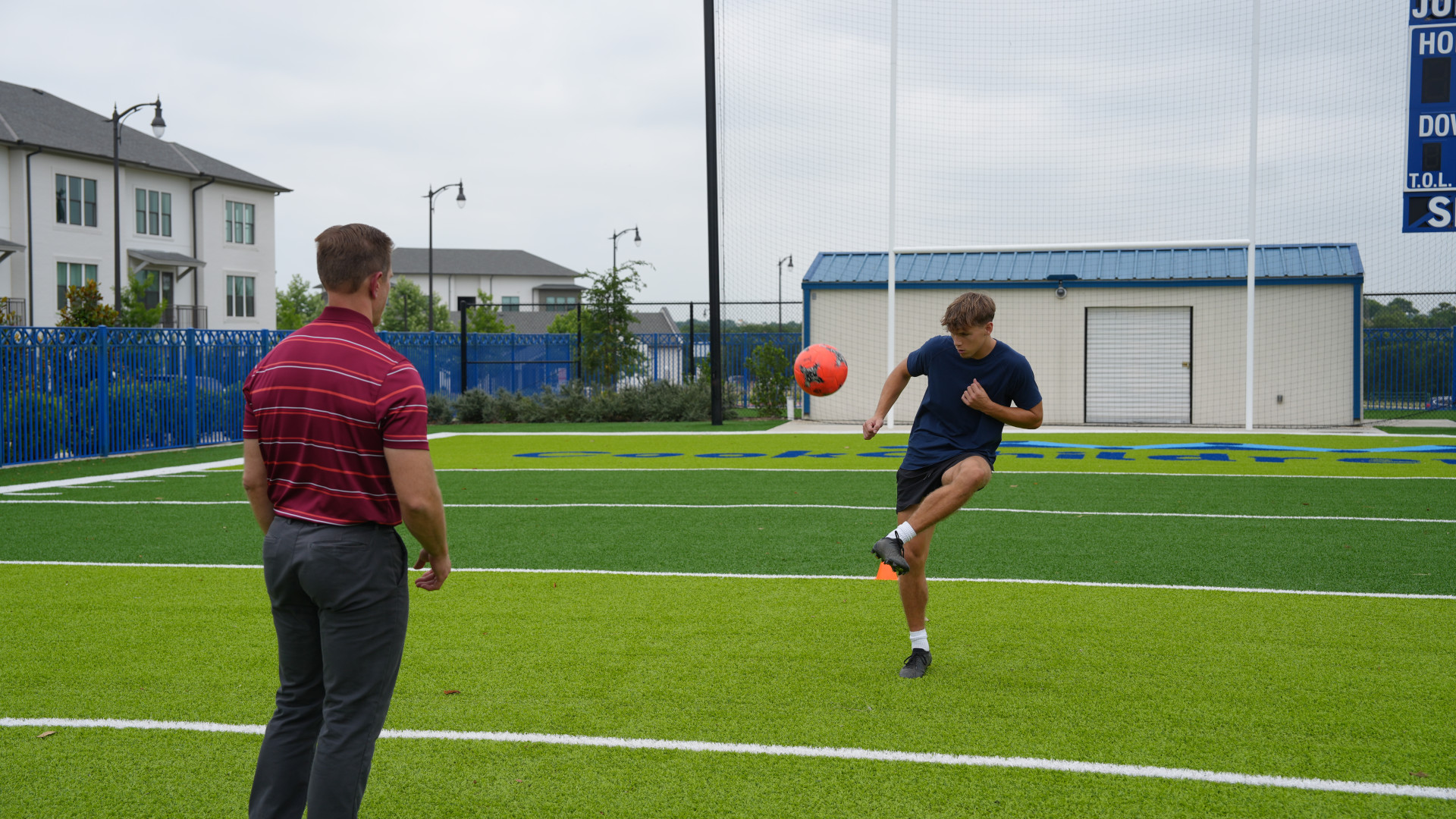
Sports Injury Prevention with Jeffrey Bass
As young athletes head back to practices, games and competitions, many parents are looking for ways to help their children stay healthy and avoid injuries. In the latest episode of For Kids' Sake, Jeffrey Bass, MS, ATC, LAT, OPE-C, athletic trainer with Cook Children's Orthopedics & Sports Medicine, shares practical advice on injury prevention, concussion awareness, hydration, recovery and sports safety.
Here's an edited Q&A from the conversation.
Q: What's one of the biggest misconceptions parents have about sports injury prevention?
Bass: Many parents focus on game day. They focus on when the whistle blows or when the competition starts. What often gets overlooked is everything that happens before that. Preparation, practice habits, warmups, conditioning and recovery all play an important role in helping reduce injury risk and improve performance.
Q: What does a good injury prevention routine look like before practice or a game?
Bass: It starts with a proper warmup. We want to warm up before we stretch, not stretch before we warm up. The goal is to create blood flow, get muscles and joints ready to perform, and make warmups a consistent part of every practice routine.
Sports are all about routines, and creating healthy routines can help reduce injury frequency.
Q: Does playing one sport year-round increase injury risk?
Bass: Research suggests that sports specialization can contribute to higher injury rates and burnout. Younger athletes should be encouraged to participate in multiple sports.
As young athletes grow and mature, their interests usually become clearer. In many cases, specialization happens naturally over time rather than needing to happen at a very young age.
The goal should be helping kids enjoy sports while developing a variety of skills.
Q: What are some signs that an athlete may be pushing too hard?
Bass: Parents and coaches should pay attention to changes in performance, soreness, swelling, stiffness and limping.
Athletes are often pleasers. They don't want to disappoint coaches, teammates or parents, and sometimes they don't immediately report that something is hurting.
That's why communication is so important. The earlier we identify a problem, the more options we have to help the athlete recover and continue participating safely.
Q: Why is it important for athletes to be honest about injuries?
Bass: Many athletes worry that reporting an injury will immediately take them out of competition. What I want them to understand is that athletic trainers and sports medicine professionals are advocates for the athlete.
Our goal is not to keep them from participating. Our goal is to help them recover, perform at their best and stay healthy over the long term.
Building trust helps athletes feel more comfortable speaking up when something doesn't feel right.
Q: What should parents know about concussions?
Bass: Concussions are medically classified as traumatic brain injuries, and they deserve serious attention.
One of the most important things parents need to know is that no two concussions are exactly alike. A concussion may look very different from athlete to athlete. Some athletes may experience headaches. Others may become sensitive to light or sound. Some may struggle with sleep, concentration or mood changes.
If symptoms develop after a collision, fall or impact, it's important to have the athlete evaluated by a medical professional.
Q: Can athletes drink too much water?
Bass: Parents ask that question quite a bit.
While it is technically possible to overhydrate under certain circumstances, most young athletes are much more likely to be under-hydrated than over-hydrated.
Hydration should be consistent throughout the day. Athletes should not wait until they feel thirsty to start drinking fluids, especially during practices and competitions in hot weather.
Q: Is heat illness preventable?
Bass: Heat illness is one of the most preventable sports injuries we see.
Proper hydration, acclimatization to heat, regular breaks and recognizing warning signs early can make a tremendous difference.
Parents should pay attention to symptoms like headaches, cramping, fatigue, dizziness and unusual behavior changes during or after physical activity in the heat.
When athletes begin experiencing heat-related symptoms, it's important to cool them down, rehydrate and seek medical attention when necessary.
Q: What's one thing every athlete should do before practice?
Bass: Say thank you.
Thank the parents, caregivers, coaches, teammates and everyone else who helps make it possible for you to participate.
Playing sports is a privilege, and gratitude is something every athlete can carry with them onto the field, court or track.
The Bottom Line
Preventing sports injuries isn't about one single technique or piece of equipment. It starts with consistent habits: proper warmups, good nutrition, hydration, recovery and honest communication when something doesn't feel right.
By helping young athletes build healthy routines and recognize warning signs early, parents can play an important role in keeping kids healthy, safe and in the game.