

Stopping the Pain: Genetic Therapy Treats Sickle Cell Disease
Gene editing delivers a breakthrough for Cook Children's first patient in clinical trial.
Whenever his lower back started to throb, Triston Tate knew a full-blown pain crisis was about to hit as a result of Sickle Cell Disease (SCD).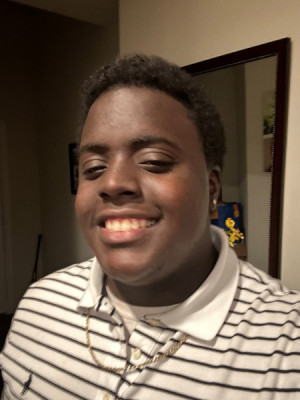
The pain would spread to his knee or arm, pulsing like a heartbeat. Prescription pain medication didn’t help. Episodes were severe enough to send Triston to the hospital on a regular basis.
Not anymore. Thanks to a research study underway at Cook Children’s and other sites nationwide, Triston received a particular type of genetic therapy for people with SCD. It isn’t a cure – but for Triston, the therapy has been life-changing. His cycle of pain and frequent hospitalization has stopped.
Back in September 2023, Triston’s health care team at Cook Children’s mobilized stem cells in his bone marrow to the bloodstream. Those stem cells were collected and sent to a lab on the East Coast, where the therapy manufacturer, Editas Medicine, Inc., made some tweaks in a process called gene editing.
Then in January 2024, Triston’s modified stem cells were ready. During an infusion at Cook Children’s, those cells entered his body to help make healthier blood.
“They took a part of me, made it better, then gave it back to me,” he explained.
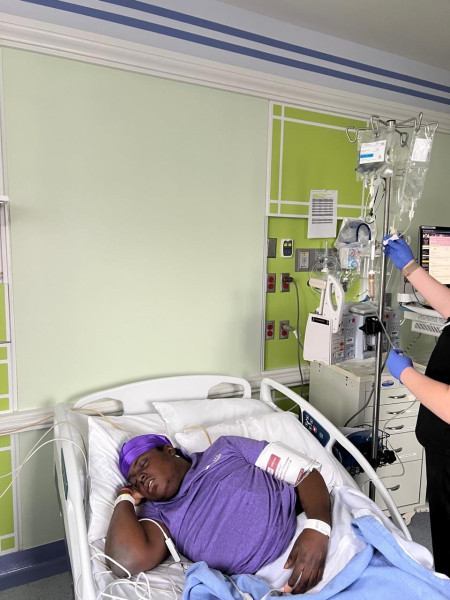 The 22-year-old Burleson resident became the first patient at Cook Children’s to undergo the treatment as part of the RUBY Trial. The trial’s second patient at Cook Children’s received the therapy in July 2024, while three others have been approved to participate.
“The prior clinical trials and current experience have been very encouraging regarding the benefit of this treatment for our patients with severe sickle cell disease,” said Cook Children’s hematologist Clarissa Johnson, M.D. “The focus on developing new treatments and improving current treatments gives us hope for the future in sickle cell disease care.” 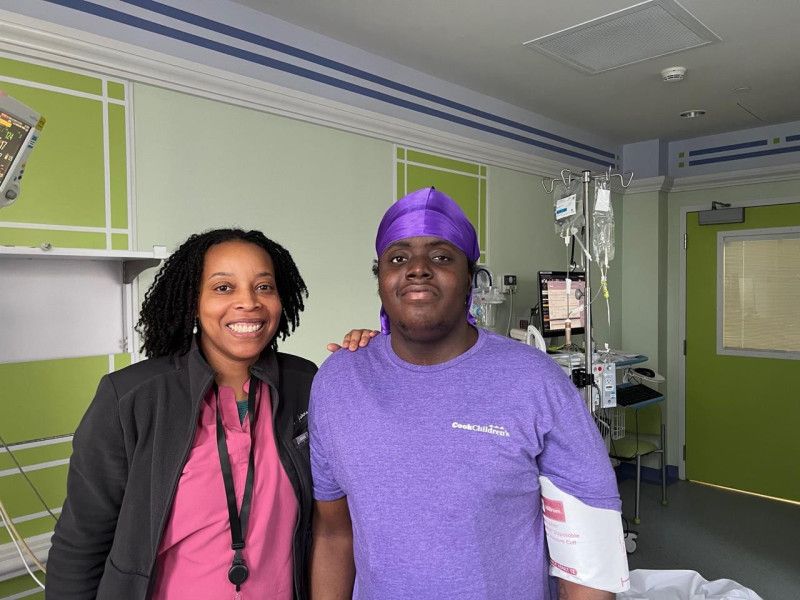
The RUBY Trial measures the safety and effectiveness of an experimental technology for editing the genes of people with SCD. Enrollment for new patients ages 12 and up is closed. But the company anticipates recruiting patients 11 and younger, Dr. Johnson said.
Triston met the criteria for the RUBY Trial because he had one pain crisis after another. He estimates he was hospitalized at least 100 times. He couldn’t work or go to college.
“It just got so bad,” he said. “I was hurting, taking pain medicine almost every day and being in the hospital every month for like two years straight. It was getting old. I needed to make something happen.”
Still, he hesitated at first. He was reluctant to spend a month or so of recovery in the hospital, which the treatment requires. But Triston eventually signed on because he wanted fewer SCD complications.
After his cells were collected and modified, they were shipped back to Fort Worth on dry ice.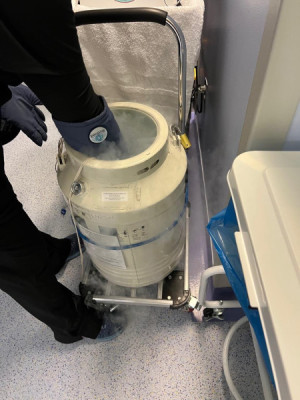
Gretchen Eames, M.D., Medical Director of the Cook Children’s Stem Cell Transplant Program, oversaw the next step: chemotherapy followed by an infusion process that put Triston’s edited cells into his body, traveling to his bone marrow.
“Patients require chemotherapy before the cell product infusion in order to ‘make space’ in the bone marrow for the manufactured cells to move in and take hold,” Dr. Eames said. “After four days of chemotherapy, the cells arrive frozen at the bedside and are then thawed out in a warm water thermal bath and then infused.”
Chemotherapy caused Triston’s throat to be sore, the only side effect of chemo he noticed. In the weeks after the transplant, he slept a lot, played card games with his mom, and passed the time on the PlayStation at Cook Children’s . He was discharged from the hospital once he could consistently create white blood cells and no longer needed frequent transfusions of red blood cells and platelets.
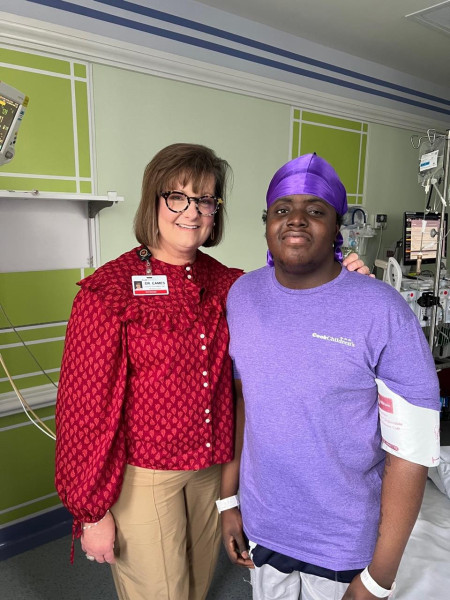 Like other participants in the RUBY Trial, he’ll be monitored by doctors for two years.
Seven months later, Triston reports he’s not had another pain crisis. Now he has more energy, a job and can keep up with his friends. He described the treatment as simple, smooth and successful.
“It works,” he said. “I don’t even take pain medicine anymore,” he said. “It’s a blessing I don’t have to go through that pain anymore.”
Dr. Eames said gene editing trials such as the RUBY Trial have been transformational in improving the quality of life and overall outcomes for patients with SCD.
“We are so excited to be able to offer this exciting new cellular therapy here in Fort Worth, close to home for many of our patients -- and to be soon able to offer it to many more patients throughout Texas and our neighboring states,” she said.
FACTS ABOUT SICKLE CELL:
September is National Sickle Cell Awareness Month. Here’s what you need to know:
- An estimated 100,000 people in the United States have SCD, an inherited disorder.
- A genetic mutation causes the red blood cells to curve like crescent moons rather than round discs.
- The cells get clumped up in the blood vessels instead of flowing smoothly, which causes pain and can lead to anemia, organ damage, stroke or other complications.
RELATED STORIES:
Clinical Trial Aims to Treat Sickle Cell Disease with Genetic Therapy
Find Your Treatment Options
 The Sickle Cell Program at Cook Children’s serves about 400 children, teens and young adults. The program provides testing, diagnosis, treatment, groundbreaking research and other care. Learn more here.
