

What Parents Need to Know About the Measles Vaccine
As the measles outbreak that began in West Texas spreads, state numbers continue to show that the majority of cases have been among people who are unvaccinated or whose vaccination status is unknown.
Marc Mazade, M.D., Cook Children’s medical director of Infection Prevention and Control, encourages anyone who has not received the vaccine to do so. Vaccinations not only protect you, but also help limit the spread to others.
As of March 14, the Texas Department of State Health Services reported 259 cases of measles in Texas.
“I'm worried. It's a real dangerous situation right now,” Dr. Mazade said. “There are lots of people who are eligible to receive the vaccine and haven't. There are areas where vaccine uptake has been really poor and it is likely to rip through these communities like wildfire, like it did in West Texas.”
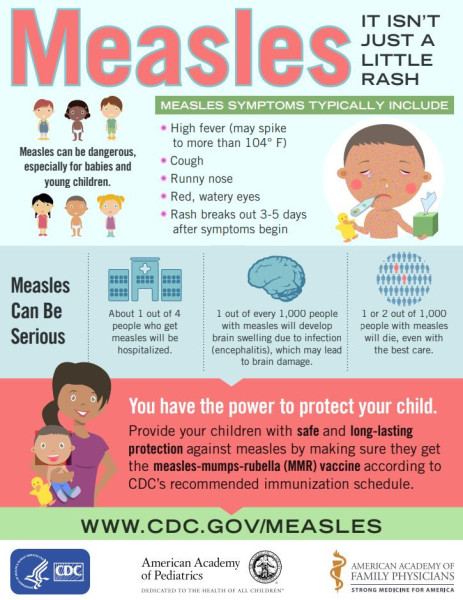 The best way to prevent getting and spreading the virus is to get the measles, mumps and rubella (MMR) vaccine. We talked with Dr. Mazade about what makes this vaccine effective, who can get it and why vaccination is important.
Measles is one of the most contagious diseases humans have faced. Descriptions of the disease date back to at least the 9th century, according to the World Health Organization (WHO), and became more widespread in the 16th century. Prior to the vaccine, the Centers for Disease Control and Prevention (CDC) estimates three to four million people became infected per year, and 400 to 500 died.
Before the measles vaccine, which became available in its current form in 1968, most everyone got measles, Dr. Mazade said. While measles can be mild, it is “pretty miserable.” The virus can cause a fever from 104 to 106 degrees, congestion, cough and a red rash that spreads across the body. Complications from the measles are not uncommon, including ear infections and pneumonia. As of March 14, one child has died from the current measles outbreak.
“People don’t understand how dangerous it is and how dangerous vaccine preventable diseases are,” Dr. Mazade said. “It can be really serious for people who are pregnant, people with immunodeficiencies and people who are on immunosuppressants that would make them more susceptible.”
Herd Immunity
The current measles outbreak shows just how contagious it is.
In general, measles has not been transmitted within the U.S. for years due to herd immunity.
Herd immunity is the idea that when enough people are vaccinated against a disease, it is much harder for the disease to spread. Herd immunity for measles is reached when 90% of a population is vaccinated, Dr. Mazade said.
Imagine a group of 100 people spread out across a room. Ninety of them have been vaccinated and cannot get or give anyone else measles. One person in the room brings in the virus.
Perhaps the people nearby are all vaccinated; the virus will likely not spread or will only spread to a few people. But if only half of the people are vaccinated, the infected person is likely standing near at least one other unvaccinated person. The disease can spread through the community, and can do so at an increasing rate.
With measles, face-to-face contact is not required to contract the disease, Dr. Mazade said. The infectious aerosol that is created when someone with measles coughs or sneezes fills the entire air space and even lingers in the air for up to two hours after a person with measles leaves the area. To go off of the room metaphor, measles can spread throughout a space quickly and endanger more people.
For years, the U.S. was like the first room. Sometimes, an unvaccinated person would travel abroad and bring back measles, but it was not able to spread due to herd immunity. In 2000, the U.S. documented zero cases of measles, and the virus was declared eliminated from the United States.
About 92 to 94% of a population needs to be vaccinated in order to achieve herd immunity for measles, according to the American Academy of Pediatrics. The current outbreak is due to that vaccination percentage dropping, Dr. Mazade said. Over the past few years, fewer and fewer people received the MMR vaccine.
Misinformation about vaccines has contributed to that decrease. Mazade encouraged people to seek direct sources for accurate vaccine information. The CDC, WHO and Cook Children’s vaccine resource page are good places to find accurate information.
Asking your doctor directly may be the best way to get information on your vaccine questions.
“Trust your doctor,” Dr. Mazade said. “He or she is the best source of information about vaccines and vaccine safety.”
Getting Vaccinated
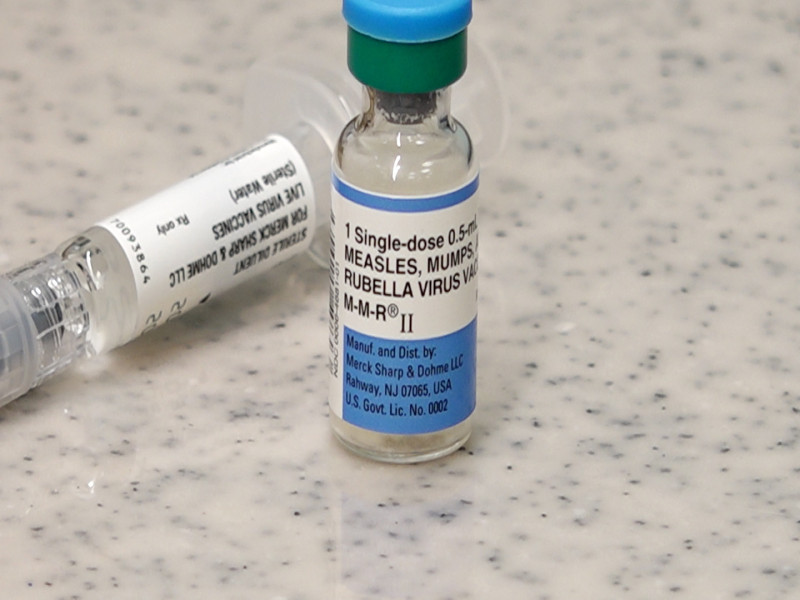 Fortunately, future measles outbreaks are preventable.
The MMR vaccine is safe and available for unvaccinated adults to receive -- and it is extremely effective. The first dose grants about 93% immunity and the second, and final, dose grants 97% immunity. This means that 97 out of 100 vaccinated people exposed to measles will not become sick.
The measles vaccine can be administered to children who are 12 months old and is part of the recommended vaccine schedule that the CDC recommends. If you did not get the vaccine as a child -- or are not sure if you did -- talk to your doctor.
Some people may want their children to get the vaccine early due to the outbreak. As of now, this is not recommended by our local health department. Babies who are younger than six months will likely not respond to the vaccine and not achieve immunity, Dr. Mazade said. Even if the baby has been exposed to measles, the vaccine is not recommended at this age. Dr. Mazade recommends talking to your doctor if you have concerns about measles exposure.
Even if this outbreak slows down, it is still important to get vaccinated.
“If people who are fully eligible are not fully vaccinated, we will be in the spot time and time again,” Dr. Mazade said. “Until we have a huge outbreak with lots of sick people."
Vaccinations and immunizations
Here are a few resources and tips for finding a place to take your child for immunizations.
- Check with your child’s doctor. Ask which vaccines are due and make an appointment. If your child needs a doctor, see our locations or call 211 for help.
- Visit a public health vaccine clinic. Anyone from any county can call Tarrant County Public Health at 817-248-6299 to make an appointment or to find a walk-in clinic.
- Check with your local school district for vaccine events.
- Enter your zip code at Vaccines.gov to find other options.
