Unseen Spread: Infectious Disease Expert Explains How Measles Spreads and How to Stay Protected
Written by Marc Mazade, M.D., MPH, medical director of Infection Control and Prevention at Cook Children's
To vaccinate for measles or not? For many parents the decision is still up in the air.
 Q: In August 2026, an outbreak was reported in the Journal of Infectious Diseases that most people probably missed. What happened?
A: A traveler had fever, cough and congestion while flying from Europe to Colorado in May 2025.
His eyes were red. He stayed overnight in a hotel, went back through the airport again, then flew to North Dakota.
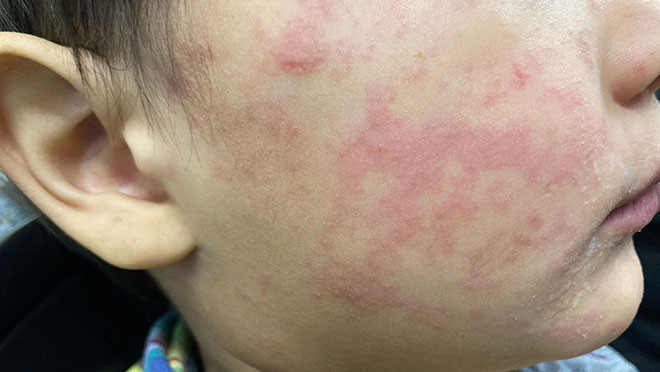
A rash developed two days after he traveled from Europe to Colorado and one day after flying from Denver to North Dakota.
He had measles. He had not been vaccinated, and measles is very contagious.
At least 15 passengers on his two flights contracted measles, including two who were infants too young to receive the vaccine.
At the Denver airport, seven others who were exposed eventually developed measles.
Seven people exposed at Denver International Airport were infected. One was an airport shop clerk working in the main terminal during the traveler's arrival. The other six were passengers who likely shared restrooms or a coffee shop with him on his departure day, despite waiting at gates up to 1,500 feet away.
An additional two people contracted the virus from the original 15 infected passengers, bringing the outbreak total to 17. The full extent of exposures and resulting measles cases in Europe remains unknown.
Q: How long after exposure to measles can people start to show symptoms?
A: The incubation period is 10 to 14 days, which is when most people get sick. Occasionally symptoms can start in as few as 7 days to as many as 18 days later.
Q: When could the traveler have infected others, and how easily does measles spread?
A: The measles virus spreads through respiratory droplets when an infected person coughs or sneezes. The virus can also linger in the air in tiny particles for up to two hours after an infected person leaves an enclosed space with poor ventilation, such as an exam room or jetway.
This double punch led to the high number of secondary infections in this outbreak.
Seating charts from the two flights show the impact: most infected passengers sat within two rows of the traveler. However, one infant who contracted the virus was seated 12 rows ahead and across a bulkhead.
Infected individuals can transmit measles from four days before the rash appears through four days after its onset.
Q: Is measles dangerous?
A: Measles is serious. Five of the 18 patients end up in the hospital. Common complications include breathing difficulties, though more severe conditions can also develop.
Q: How effective is the measles vaccine, when is it administered, and why is it recommended?
A: The measles vaccine is 97% effective when given in two doses, typically administered at 12 to 15 months and 4 to 6 years of age. Some children cannot receive the vaccine because they are too young or have weakened immune systems that cannot process a live virus. We vaccinate as many people as we can to protect them and to protect ourselves from measles.
Q: Where did the gentleman get measles?
A: From an ongoing measles outbreak the United States, I am afraid.
Sources:
Fowler, J.J. et al. (2026). Multiple measles transmission events associated with a single traveler arriving in the United States, May 2025. Journal of Infectious Diseases 234(2), e254–e262. https://doi.org/10.1093/infdis/jiag129.