Don't Be Scared, Be Prepared: Halloween Safety Tips
Safety is the key to a fun and memorable Halloween. Before trick-or-treating begins, experts from Cook Children’s Health Care System are offering advice to help families prepare for an enjoyable night. Laura Romano, D.O., a pediatric hospitalist, Eric Gonzalez, program manager for injury prevention, and Sharon Evans trauma injury prevention manager, breakdown essential tips from visibility on dark streets to candy safety. Don’t be scared this Halloween, be prepared.
Visibility and Costume Safety
The superheroes, princesses, monsters and movie characters are about to suit up for their Halloween adventure! Before stepping out the door, Evans tells families to make sure their costumed kids can be seen in dark and low lighting. 
To stay visible in the dark, make sure to have at least one of these:
- Flashlights or headlamps
- Glow sticks
- Reflective tapes/elements on the costume
- Light up Halloween buckets
Costume tips:
- Masks: Avoid using one, but if a child will be wearing one, make sure it does not obstruct their vision.
- Length: They should be able to walk, run, and climb stairs without tripping.
- Props: Securely attach and make sure there is nothing sharp.
Staying Safe on Foot
“There’s always an increased risk for a child to be hit by a car during Halloween, but you and your child should follow the same pedestrian rules they should follow every day,” said Evans.
The essentials
- Be aware of your surroundings.
- Look both ways before crossing the street.
- Make sure the driver truly sees you before crossing. Make eye contact with the driver and wait for them to motion you to cross.
- Cross at crosswalks or designated pedestrian zones, never the middle of the street.
Driving and Vehicle Precautions
If you are driving on Halloween, help take care of all the kids and families walking from house to house.
When driving
- Be on high alert for kids crossing unexpectedly.
- Reduce your speed in neighborhoods.
- Take extra time at stop signs.
Driving with a child passenger
- Kids need to be properly secured in their car seat, booster or seat belt.
- The costumes should not interfere with their seatbelt. If it does, change into a costume once at your destination.
- No one should be riding in a truck bed or tailgate of an SUV or truck.
When can my child go trick-or-treating on their own?
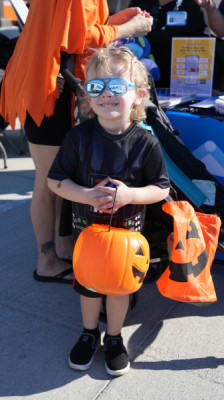 If a child is under 10, an adult needs to accompany them to ensure they are crossing the street safely and taking proper precautions.
Evans explains that each child is different, and parents should use their discretion if they are older than 10.
“Some children are rule followers and will do whatever they are told to. Other children may have poor impulse control and will need an adult to accompany them,” said Evans. “Parents know their child best.”
Teens on Halloween
“Be the uncool parent for one more day,” said Dr. Romano.
Your teenager can go trick-or-treating independently, but there are a few things you should know before they go:
- Who are the friends they are going with?
- Who are the caregivers of their friends?
- What is their planned route?
- When do they need to be picked up or when do they need to be home?
Establish a family code
- Dr. Romano recommends creating a family code. This can be a secret word or phrase in your family that your teenager can use if they need help from you to leave an uncomfortable situation without drawing attention from their friends.
Candy inspection and Ingestion Safety
The treats for many kids are the best part of the night, and we all want that to remain fun. To do that, experts encourage families to have kids wait to eat their candy until they get home. Then do an inspection of the candy. Tampered Halloween candy is very rare, but it’s important to check.
What to look for when inspecting candy: 
- Is the packaging original and unopened?
- Is there anything unusual or unfamiliar about the candy?
- Carefully review unfamiliar candy for THC-infused snacks accidentally handed out on Halloween. This is a newer candy concern since some THC-infused snacks and gummies closely resemble popular candy.
- Check the ingredients if your child has a food allergy.
Ingestion emergencies
- Children are naturally curious and often put things in their mouths, including glow sticks. If parents think a child swallowed something, but the situation doesn't appear life-threatening, they can contact the North Texas Poison Center at 1-800-222-1222 for guidance.
- If the child is experiencing a serious emergency or there are concerns about their safety, call 911 immediately.