Boo! When Childhood Fears and Phobias Are More Than Just a Halloween Scare
For some children, everyday things like a bug can be scarier than Halloween monsters. Learn how parents and caregivers can help children overcome their fears.
When Fear Becomes More Than Fright
Halloween is just around the corner, bringing costumes, spooky decorations and plenty of pretend monsters. But for some children and teenagers, the scariest things aren’t ghosts or spooky pumpkins. Something as small as a bug can trigger overwhelming fear and anxiety.
 According to Amanda L. Moen, Ph.D., a licensed psychologist at Cook Children’s Health Care System, fear is a normal part of childhood development.
“Fear is an emotion that basically tells us there is a potential threat in the environment that we should be aware of,” Dr. Moen said.
However, when fear becomes intense, persistent or interferes with everyday activities, it may be a sign of a phobia.
“Our bodies will have an intense alert response to a potential threat, and often that intensity is out of proportion to the level of actual danger in the environment,” Dr. Moen explained.
A Small Bug, a Big Fear
For 8-year-old Joseph Jones, an encounter with a bug could turn an ordinary day into a frightening experience.
 “I noticed that he had a huge fear of bugs. He had very strong, loud, fearful reactions to any type of bug,” said his mother, Laura Jones. “He would scream, cry, throw himself on the ground or run away. There was a lot of fear and anxiety when it came to the bugs.”
Joseph loves playing outdoors, but his fear became so overwhelming that he avoided going outside, walking through the yard or entering certain rooms in his home alone.
“He was constantly looking around and very hyperaware, constantly looking for bugs,” Laura said.
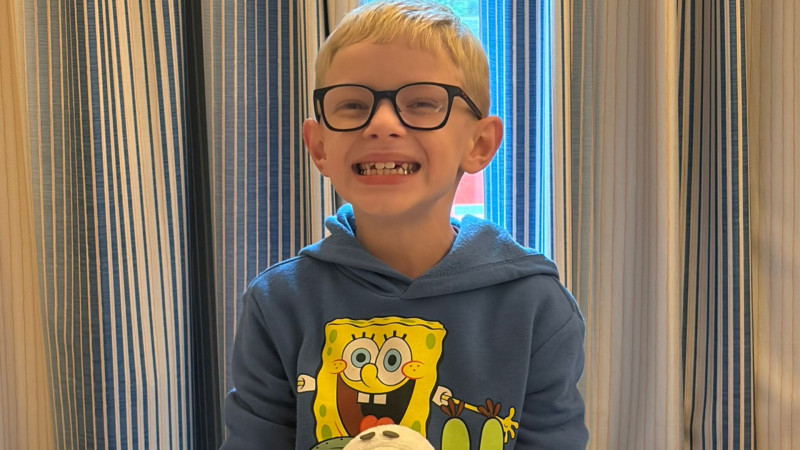 Seeking help, the family turned to Cook Children’s, where Dr. Moen helped Joseph and his mother develop strategies to manage his anxiety through gradual exposure and supportive language. Instead of immediately removing an insect, Laura learned to acknowledge Joseph’s fear while encouraging him to face the situation.
Within the first month, Joseph showed significant improvement when encountering bugs. Today, he can encounter bugs without the intense reactions he once experienced.
“He will come to me and say, ‘There’s a bug in the trash can. Can you get it for me?’ and I will just praise his calmness,” Laura said. “He is a completely different child.”
Facing Fears, One Step at a Time
While a parent’s first instinct may be to protect a frightened child, Dr. Moen explained that repeatedly removing the source of fear or offering excessive reassurance can unintentionally reinforce anxiety.
Instead, she recommends gradual exposure, allowing children to confront their fears in small, manageable steps while receiving encouragement and emotional support.
“We want to think about, ‘How could I make a small dose of that distress happen for my child?’” Dr. Moen said.
 As children become more comfortable, parents can gradually increase the challenge while celebrating their progress.
For example, a child afraid of spiders might begin by looking at pictures, then reading books or watching videos before eventually observing a spider from a safe distance and moving closer when appropriate.
Dr. Moen encourages parents to validate their child’s feelings with supportive statements such as, “I can see that you are feeling really scared right now, and I know you are so brave.”
Laura said learning to change her own reactions was just as important as helping Joseph face his fears.
“I would encourage him to get close to a bug and then tell him, ‘Hey, you’re brave and you can do this!’” Laura said. “That phrase goes such a long way.”
Helping Children Enjoy Halloween
With Halloween quickly approaching, Dr. Moen encourages parents to prepare children who may be frightened by costumes, decorations or other seasonal surprises.
 Rather than immediately exposing a child to something overwhelming, parents can begin with pictures or other less intimidating experiences and gradually build the child’s confidence.
If a child’s fear becomes so intense that it prevents them from enjoying activities such as trick-or-treating, Dr. Moen recommends seeking professional help.
For Laura, seeking help for Joseph at an early age showed her how much early intervention could improve his everyday life and gave her a new sense of confidence as a mom.
“It feels like I have done something right as a mom. It feels like I got him the help that he needed,” she said. “Now I feel like, ‘Guess what? We did that, dude. We did it together, and we are OK now.’”