

Respiratory illnesses are increasing across North Texas: Know where to go for care
Respiratory illnesses, including flu, RSV and the common cold, are spreading throughout North Texas and leading to high patient volumes at Cook Children's emergency departments and Urgent Care Centers (UCCs).
On Wednesday, Nov. 4 alone, Cook Children's Medical Ce nter - Fort Worth saw 608 patients in the Emergency Department and the seven UCCs saw 880 patients.
From Oct. 25 to Oct. 30, 25.5% of patients tested positive for Influenza A and 47.5% tested positive for Rhinovirus at the medical center in Fort Worth.
Cook Children’s Medical Center – Prosper is also experiencing high patient volumes, with most cases at the emergency department being respiratory-related illnesses. Of the 52 patients tested last week, 24 tested positive for Influenza A.
“When large numbers of children are coming into the emergency department, wait times go up,” said Natalie Carpenter, director of Emergency Services at Cook Children's. “We have to treat patients in order of the severity of their illness, so that means children with mild symptoms may be in the waiting room for long periods.”
When a child isn't feeling well, knowing where to go for care can help them get the right treatment as quickly as possible.
Start With Your Pediatrician
If your child is sick, contact your pediatrician first whenever possible. Your pediatrician knows your child's health history and can help you determine whether your child should be seen in the office, a UCC or the emergency department.
Many Respiratory Illnesses Can Be Managed at Home
Most children with mild respiratory illnesses can recover at home with rest and supportive care.
To help your child feel more comfortable:
- Encourage plenty of fluids to prevent dehydration.
- Offer electrolyte drinks or popsicles if appropriate.
- Use saline nasal drops to help relieve congestion.
- Consider a cool-mist humidifier to make breathing more comfortable.
- Use acetaminophen or ibuprofen as directed to reduce fever or discomfort. Do not give ibuprofen to infants younger than 6 months.
A fever is considered a temperature of 100.4 degrees or higher.
Babies younger than 2 months old with a fever of 100.4 degrees or higher should be evaluated immediately in an emergency department.
Children with a fever lasting longer than four to five days, or a fever that continues to rise despite medication, should be evaluated by a physician.
Know the Signs That Your Child Needs Immediate Medical Attention
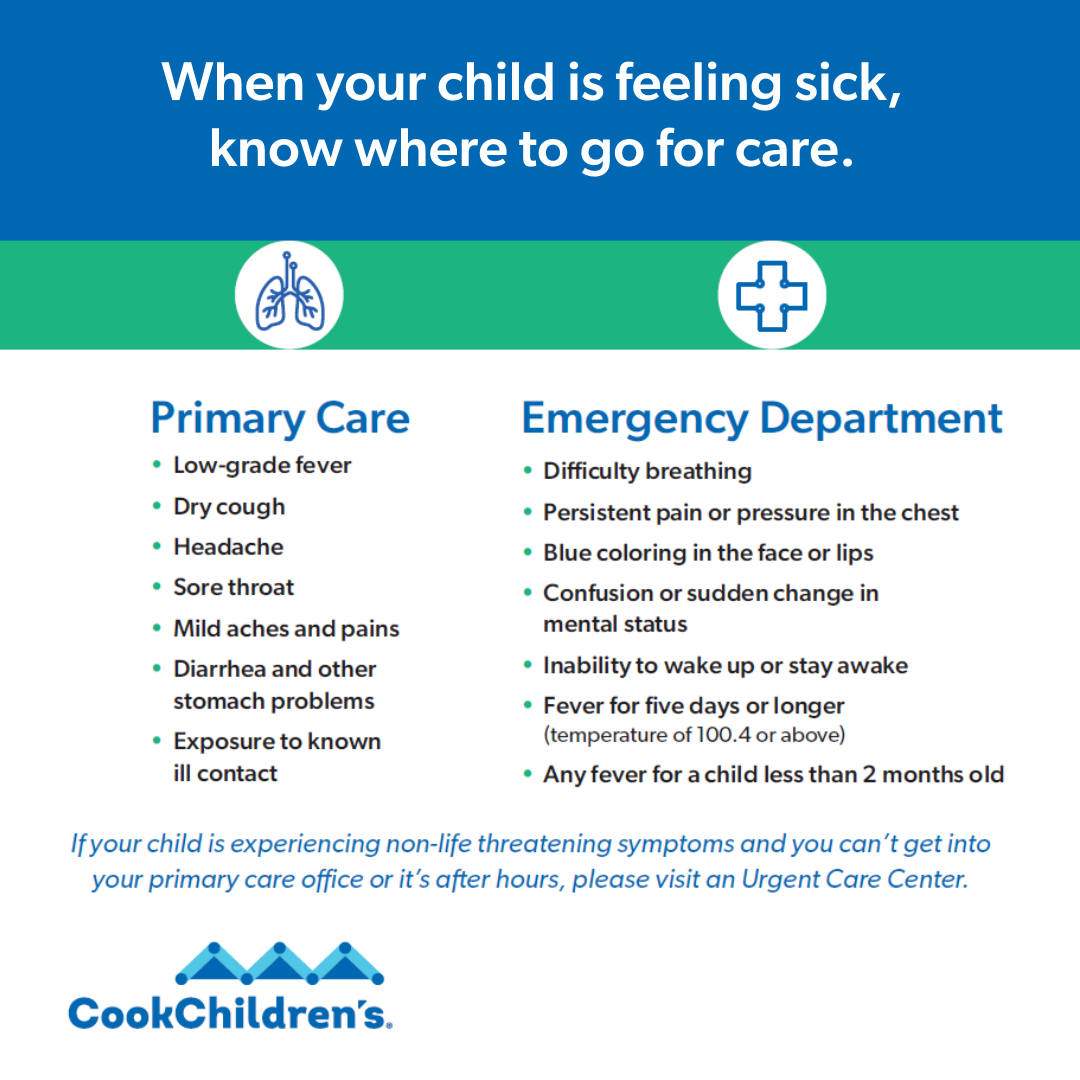 While most respiratory illnesses improve with supportive care, some symptoms require immediate medical evaluation.
Signs of respiratory distress:
- Increased number of breaths per minute
- Increased heart rate
- Bluish color around the mouth, on the lips, or on the fingernails
- Pale or grayish skin
- Grunting sound during exhale
- Nose flaring
- The chest appears to sink in with each breath
- Head bobbing when breathing in
- Change in alertness
Signs of dehydration:
- Urine output significantly below the child’s normal(at least once every 8 hours)
- Not producing tears when crying and eyes appear sunken
- In infants, the soft spot on top of their heads looks sunken
- Dried mucus membranes (lining within the nostrils, mouth, throat)
- Sleepy and unresponsive
If your child exhibits any of these signs, seek immediate care at a UCC or the emergency department. Reserving visits to urgent care or the emergency department for truly urgent needs helps ensure timely care for those who need it most, reduces wait times for everyone, conserves resources and limits your child’s exposure to other viruses.
Help Prevent the Spread of Illness
Cook Children’s encourages families to take precautions and practice prevention when it comes to flu and other viruses.
Families can help protect children and others by:
- Keeping sick children home from school, childcare and activities
- Washing hands frequently with soap and water
- Covering coughs and sneezes
- Avoiding touching the eyes, nose and mouth
- Limiting contact with people who are sick
- Staying up-to-date on recommended flu vaccines
