

Understanding Red Dye and Its Impact on Children

The United States Food and Drug Administration (FDA) banned Red Dye 3 on Jan. 15, 2025. The FDA approved the dye in 1960. Janet Gaytan, a registered dietitian nutritionist at Cook Children’s Health System, explained the FDA ban was based on the Delaney Clause of the Federal Food, Drug, and Cosmetic Act. This clause allows the ban of food or color additives if they are found to cause cancer in humans or animals.
Studies have shown an increased risk of thyroid cancer in male rats exposed to high levels of Red Dye 3, said Lily Han, M.D., a pediatrician at Cook Children’s Pediatrics Windhaven.
Red Dye 3 imparts a bright cherry-red color to foods and medications, said Dr. Han. The dye is often found in fruit punch, colored sprinkles, red frosting, medications, and a variety of snacks.
In 1990, the FDA previously banned Red Dye 3 from cosmetics. “Of note, the FDA reports there has been no evidence yet of cancer in humans,” said Dr. Han.
Manufacturers have until January 2027 to remove it from food products and until January 2028 to remove it from medications.
Dr. Han, an obesity medicine specialist, emphasized the importance of nutrition.
“Nutrition is the fuel for our body, not only does it provide us with an energy source,” said Dr. Han.
She explains nutrition enables strong muscles, bones, and teeth; improves mental health, helping us think clearly and be more alert; maintains a healthy weight; prevents chronic diseases; and boosts immunity.
Gaytan advised families to examine food labels. She recommended looking for options low in saturated fat, sodium, and added sugar, as consuming large amounts of these items may cause future health issues. Instead, she suggested choosing options high in fiber, iron, calcium, or vitamin D.
Families should follow the MyPlate guidelines for well-balanced nourishment.
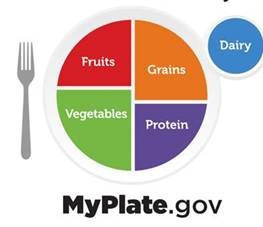
“Aim to make half of your plate whole fruits and vegetables and the other half lean proteins and whole grains,” Gaytan said. “Pair your meal with low-fat milk, fortified soy milk, or water.”
Han advises to look for these alternatives to Red Dye 3.
“Look for natural coloring from fruits or vegetables,” said Dr. Han. “Avoid products with artificial colors, especially Red Dye 3.”
Alternatives to Red Dye 3:
· Beet or Elderberry juice
· Anthocyanin (coloring from purple cabbage and berries)
· Beta carotene (orange to reddish coloring)
Although Red Dye 3 is now banned, Red Dye 40 is still approved for use.
“While some studies suggest it (red dye 40) may cause hyperactivity in sensitive individuals, most children do not experience any effects and the FDA continues to monitor ongoing research regarding its safety,” said Gaytan.
She adds everything in moderation can be part of a balanced diet.
“So do not feel bad about enjoying your favorite ‘fun foods’,” said Gaytan.
For questions regarding your child’s nutrition, ask your provider or a registered dietitian.
About Cook Children's
Cook Children’s is more than a health care system: we strive to be an extension of your family, growing with your child from their first steps to adulthood. By collaborating to deliver on our Promise—to improve the well-being of every child in our care and our communities, we connect the dots for our patients. Between primary and specialty. Between home and medical home. Between short-term care and long-term health.
Based in Fort Worth, Texas, we’re 10,000+ dedicated team members strong, passionately caring for over 2 million patient encounters each year. Our integrated, not-for-profit organization spans two medical centers (including our state-of-the-art location in Prosper), two surgery centers, a physician network, home health services and a health plan. It also includes Child Study Center at Cook Children's, Cook Children's Health Services Inc., and Cook Children's Health Foundation. In 2024, Forbes named Cook Children’s the top health care employer in the U.S., and third on the list of ‘America’s Best Large Employers.’
And our impact extends beyond the borders of Texas. We proudly treat children from virtually every state in the nation and 32 countries. By seeing the world through the eyes of children and their families from all backgrounds, we’re able to shape health care suited to them: connected by kindness, imagination and respect—with an extra dose of magical wonder.
Discover more at cookchildrens.org.
