

The Ultimate Holiday Safety Checklist
Essential advice for protecting your family during holiday travel and home celebrations.
Child Car Safety
Holidays often mean more car trips as families drive to visit relatives. Sharon Evans, trauma injury prevention manager for Cook Children’s Health Care System, explains that during the holidays, there is an increase in motor vehicle collisions and related injuries.
Texas law requires children under the age of 8 and those under 4 feet 9 inches to be in a child safety seat. Failure to properly restrain a child can result in a ticket of up to $250. Despite these laws, NHTSA data shows that 46% of car seats are installed incorrectly.
“There are more kids in the car than there are seatbelts and/or car seats, or the car is loaded with gifts and food,” said Evans. “So parents don’t make the child sit in their car seat, booster seat or wear their seat belt.”
Unfortunately, that leaves children unprotected in a crash and often results in severe injuries or death.
“Don’t skip on safety over this holiday season,” said Evans, “make sure you and your children are buckled up correctly on every ride, no exceptions.”
A Child Passenger Safety Technician (CPST) can help ensure a child is safely and correctly secured in their car seat. Cook Children’s Health Care System has 66 CPSTs across North Texas.
The Injury Prevention Collaborative offers free car seat checks with a CPST. Additionally, assistance is available to families who may need a car seat. To schedule an appointment, please call 682-885-2634 or click the link. You must have your child with you, unless you are an expectant parent.
Know the Four Stages of Car Seats
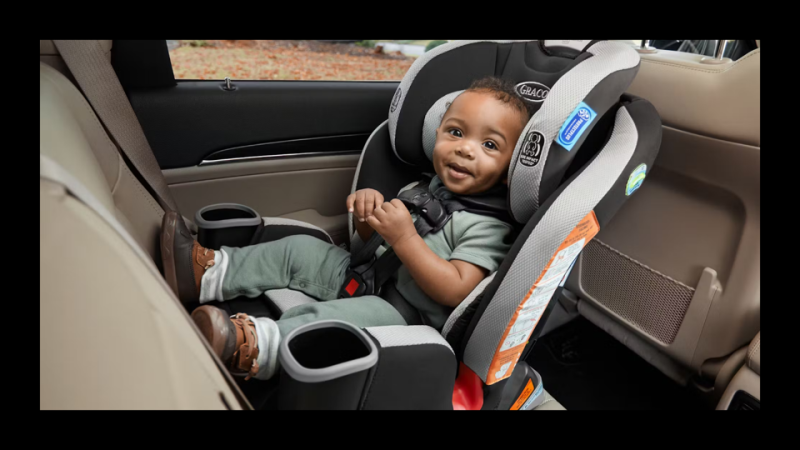 1. Rear-facing
Rear-facing car seats are the first stage of restraint for children ranging from newborns to preschoolers. This stage supports their head, neck, and back while riding in a vehicle until they meet the maximum weight OR height of their car seat. Experts highly recommend keeping your child in a rear-facing car seat for as long as possible, as it is the safest option available.
2. Forward-facing 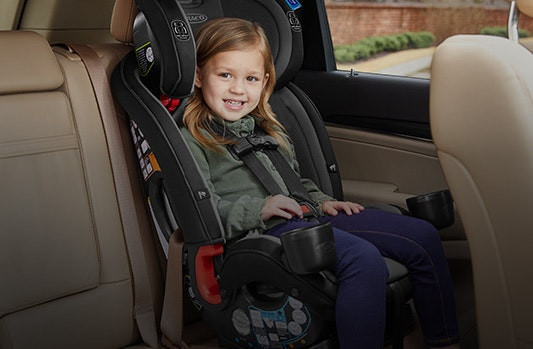
Forward-facing is the second stage of car seats for preschoolers through school-age kids. Children should remain in a forward-facing car seat with a five-point harness until they meet the maximum weight OR height, then move into a booster seat.
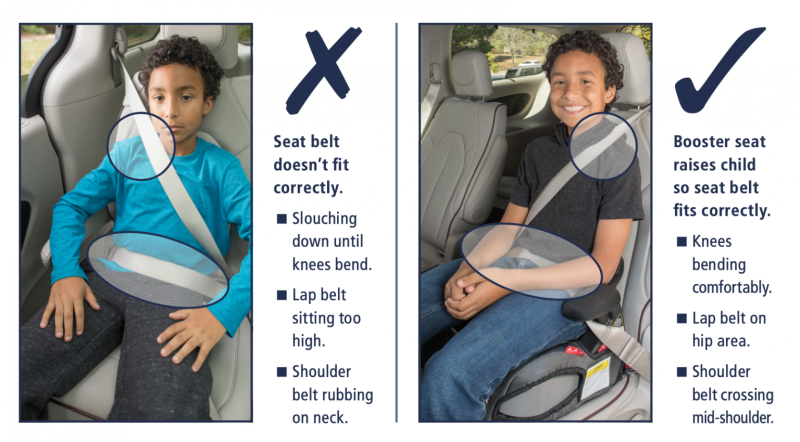 3. Booster
Children must be at least four years old before transitioning into a booster seat. The booster seat stage is crucial for children who have outgrown a harnessed car seat, but do not yet fit safely behind a lap-shoulder belt. Still, booster seats are skipped over all too often.
4. Seat Belt 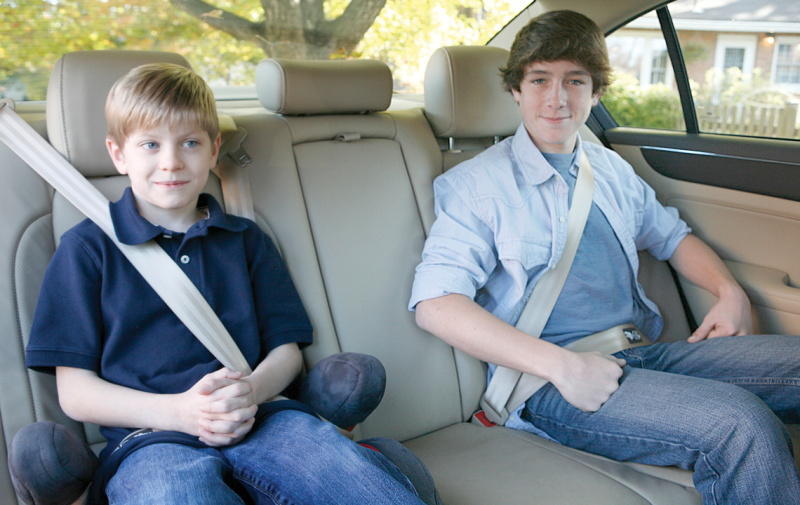
A seat belt is the final stage of restraint. The safest time to transition to a seat belt is when your child is at least 4’ 9”, or 57 inches tall. Although the law states that children can transition to seatbelts at eight years old, Evans cautions that many children won’t reach 57 inches in height and should therefore remain in a booster seat until closer to 10 or 12 years old.
Firearm Safety
According to the 2024 Community Health Needs Assessment of households with guns in our eight-county service area, approximately 1 in 5 children live in a home with guns that are not always safely locked away.
Between 2022 and 2024, Cook Children's Health Care System in Fort Worth treated 179 individuals for firearm-related injuries. 10 were fatal and 169 were non-fatal. The majority of fatalities were from handguns and 136 were unintentional firearm injuries.
The Aim For Safety program focuses on educating about firearm safety to decrease the number of youth injured or killed by a firearm.
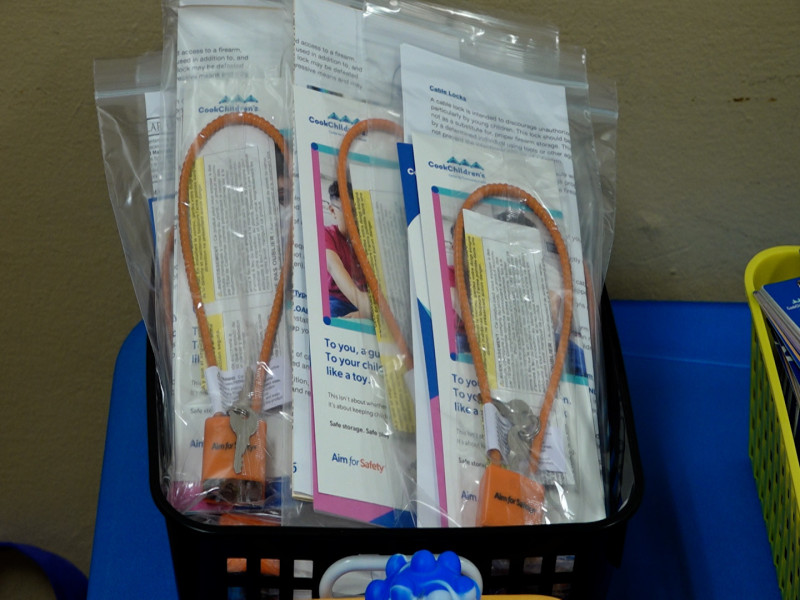 The program shares these safety tips:
- Safe Storage
- Store firearms unloaded and in locked locations, out of reach of children.
- Use cable locks and gun boxes.
- Secure ammunition separately.
- If You See a Gun
- Stop.
- Don't touch.
- Run away.
- Tell a grown-up.
- Safe Play
- Ask the parents of your child's friends if they have guns in their homes and how they are being stored.
- If you are asked about your guns, don't be offended.
- Never aim BB guns or pellet guns at another person.
Poison Prevention
More than 800 children are treated at Cook Children's Health Care System every year due to accidental poisoning, and 65% of those poisonings are medication-related. According to the 2024 Community Health Needs Assessment, 1 in 2 children live in homes where medications are not always locked up and 4 in 7 children live in homes where cleaning products are not always stored in a locked area.
Tips for Poison Prevention
- Safe Medication Dosing
- Follow the dosing directions listed on the medication by using the appropriate measuring items, such as a medicine cup or oral syringe.
- Double dosing is NOT twice as effective, and in many instances can cause internal damage.
- Adult medications may be too strong for children and should not be given in half doses. Only give medicine to your child that is intended for children.
- Print the medication schedule to keep the right dosage for your family.
- Safe Storage
- Many people leave medications on bathroom and kitchen counters as well as bedroom nightstands as a visual reminder to take them. Avoid unintentional injury and store medication up high, locked, and out of reach.
- Hang purses and personal bags up high so children cannot reach prescriptions, vitamins, or other regularly used medications.
- Remember, when visiting friends and family, it is ok to have an open discussion about safe storage.
- Safe Disposal
- Visit a medication drop box at a local pharmacy. For more information on poison prevention, visit www.meddropbox.org.
- The best disposal option is to find a drug take-back location, which may be found in retail, hospital, pharmacies, and/or law enforcement facilities.
- Removing any unused or expired medication in the home can reduce the risk of access.
Safe Sleep
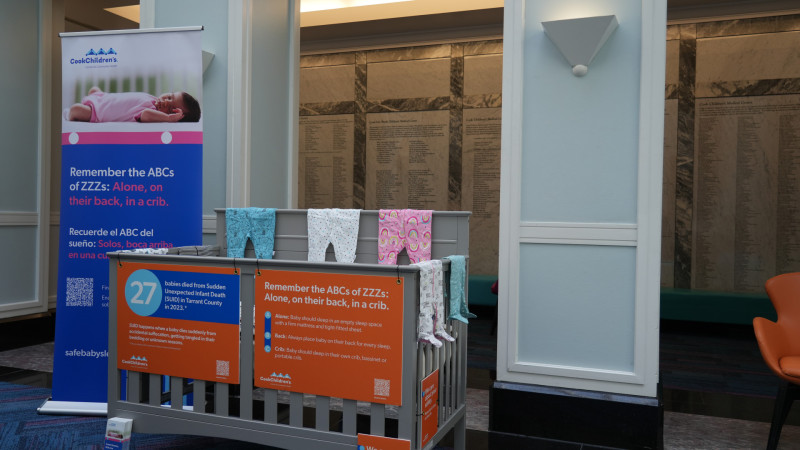 Each year in the United States, 3,500 babies die unexpectedly during sleep, according to the Centers for Disease Control and Prevention (CDC). In Tarrant County, between 2018 and 2022, there were 124 deaths due to Sudden Unexpected Infant Death (SUID).
Sudden Unexpected Infant Death (SUID) can happen in any sleep environment, but it is less likely to happen if the baby is in their own crib, bassinet, or portable crib," explained Samantha St. John, safe sleep program coordinator at Cook Children's Center for Community Health.
Caregivers should remember the ABC's of Safe Sleep:
- Alone: The sleep space should be clear of any soft items, such as blankets, stuffed animals, pillows, and bumper pads, leaving only a mattress with a tight-fitted sheet.
- Back: Babies should always be placed flat on their back for every nap and every night.
- Crib: A crib, bassinet, or portable play yard with a firm, flat mattress and a fitted sheet is the safest sleep surface.
