

The Power of Practice: A Child Life Specialist's Guide to Fostering Gratitude in Your Family
By Ashley Pagenkopf, MS, CCLS, Child Life Specialist at Cook Children's
As we approach the season of gratitude followed immediately by the season of gift-giving and receiving, it’s easy to feel the whiplash of these two periods. These seasons can make for a tough ending to the year for parents and caregivers. There is an influx of desire and wants for all of us. Social media and other media are filled with things we hope we can have. We are consumed with wish lists right after we have given thanks for the blessings of the year.  While the Thanksgiving holiday is set aside to reflect on all the good gifts of the year, research repeatedly shows that gratitude as a practice is beneficial for physical, mental and spiritual health. However, focusing on our blessings for one month a year isn’t sufficient. The practice of gratitude must extend beyond November to truly benefit everyone. Depression, sadness, and hopelessness are continually rising, especially among young people, yet research tells us that the practice of gratitude is a simple and effective way to combat the crisis we are facing.
So how do we teach gratitude to our kids? I have a mix of personalities in my house. For one kiddo, “thank you” comes quickly and easily, while another sees the empty half of every glass and often misses the good. It can feel near impossible to convince my more negative kiddo that good things surround her. To be honest, if I focus on the things that are hard or that I dislike in life, I also feel quite overwhelmed, and it can be difficult to convince me to be thankful for any of the good things. This is why gratitude is a practice. And that is we need to do first… practice.
Practice Gratitude
First, we cannot ask our kids to do things that we are unwilling to do ourselves. Start by practicing gratitude and then work with your kids to do the same.
There are many ways to do this, but a simple gratitude journal is a great start. There are specific gratitude journals for kids and teens, or you can simply use a notebook. I spend time writing down three things I’m grateful for each day. If you do this every day, after a year, you will have a record of 1,000 things for which you are grateful.
I have also heard of gratitude jars that families look through at the end of the year. It’s so encouraging to look back through a gratitude journal and see all the good gifts of life.
You can also practice gratitude by asking about the highs and lows of the day. This is great to do in the car or at the dinner table. When we encourage each other to look for the good in the day or situation, it helps to retrain our brains to focus on the positive. This establishes healthy neural pathways.
It’s also good to take a mindful moment and name things you are grateful for in a moment – cool air, a comfortable chair, the ability to take deep breaths.
The practice of gratitude can be difficult to start, but once you begin, it can be a helpful practice in a world that often feels sad and burdensome. You quickly begin to realize that there are huge gifts and good even in the midst of the hardest of experiences. Gratitude leads to more joy and more hope as you acknowledge even the small gifts in the moments and days.
Practice Generosity
When we take time to give things away, either to others or for others, we witness the practice of gratitude. 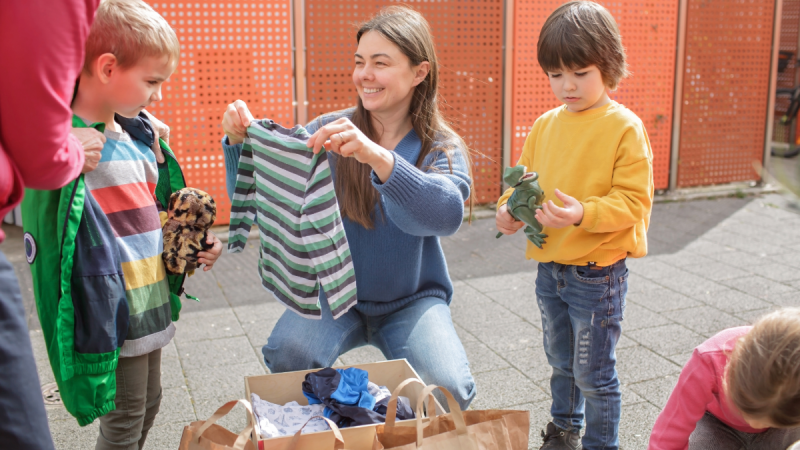 Gratitude is contagious. Watching others offer thanks for our generosity helps us, as humans, to remember the good gifts we have been given and, in turn, to be thankful for them.
We can help our kids practice generosity in lots of practical ways. We can help them pick out one of their toys to give to a child who may not have one or pass on clothes they no longer wear. We can encourage them to share with their peers and classmates.
During this season, my family often chooses an organization to donate to so that our girls have the opportunity to practice generosity in a hands-on way. This year, they each filled a Samaritan’s Purse shoebox for a child. Continued generosity reminds us all to think of others. This often leads us to be grateful for the many ways that others have been generous to us.
Serve Others
It is also true that when we serve others, gratitude often follows. The beauty of serving others, like generosity, is that the focus is taken off yourself and off material things. The focus is on other human beings.
Serving combats the constant thought of wanting or needing more. Serving others often puts us in a place to see others’ vulnerability and struggles face-to-face. This leads to desiring to be more generous with our time and resources while simultaneously recognizing the good and important parts of our lives.
Teaching our children to serve others also allows them to experience other’s gratitude and joy. This could look like visiting a shelter or nursing home, making dinner for a neighbor, offering to clean a house or mowing a person’s yard. Any time we prioritize serving others, we open space in our hearts to see the good in our own lives and the lives of others.
Cultivating gratitude in our own hearts and in our children’s hearts does not happen overnight. However, with time and intentionality, we can help our children to grow in gratitude. What are some things that you are grateful for this year? Go share those answers with your kids and ask them the same question.
Child Life at Cook Children's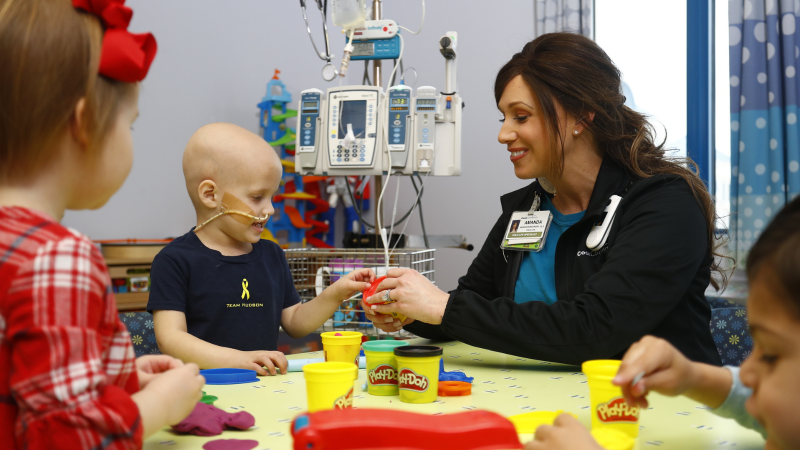 Children and teens of all ages can feel stressed or worried while visiting the hospital or clinic. The unfamiliar environment, loss of control, fear of pain and lack of routine are among the most common anxieties young patients feel during a health care encounter. Cook Children's child life specialists help patients and family members express and work through their concerns, as well as help make their stay at the medical center feel more normal.
When visiting Cook Children's, you can expect a child life specialist to offer assistance with coping, developmentally appropriate explanations of diagnoses and treatments, emotional support and opportunities for distraction and play. Child life specialists work with the medical team to ensure each child's needs are addressed in the most nurturing atmosphere possible.
The Child Life department at Cook Children's includes not only Child Life specialists, but also activity coordinators that help facilitate meaningful play opportunities for patients and siblings visiting the hospital. Visit our website to learn more.
