Swimmer to Survivor: Spinal Cord Stroke Paralyzes Competitive Swimmer
In a matter of hours, Madisyn Green went from athlete to quadriplegic. Now, 11 years later, she’s recounting her journey and sharing her miracle story.
By Ashley Antle
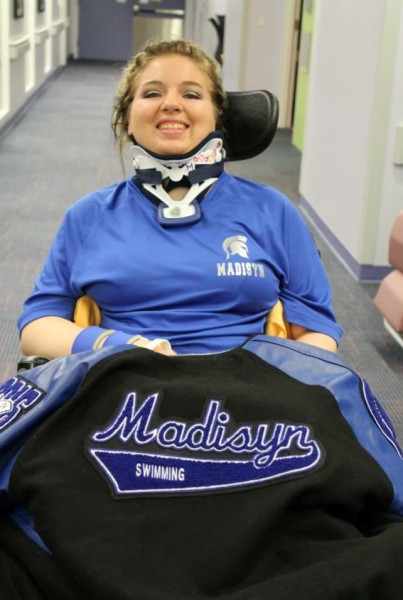
It came to her like a whisper. The subtle, yet undeniable urge to stand. Something Madisyn Green, then 15, hadn’t been able to do on her own for months after being told she would live the rest of her life as a quadriplegic and never walk again.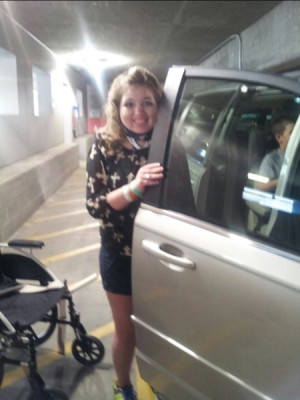
There, in the physical therapy room at Cook Children’s Medical Center, while alone in a moment of rest, Madisyn used all of her strength to push herself up from her therapy mat and stand on her own two feet. Untethered to any physical therapists, she relied on her faith, grit and resilience to do what was once thought impossible.
“That one day I heard like a whisper and there wasn't anyone around,” Green said. “I was on the mat and I just felt the urge to stand up. I couldn't move from my neck down. I couldn't move at all. So, I stood up for like a minute, and then I pulled back down and just immediately went into tears.”
In the days that followed, Green could force a wiggle here or a subtle movement there.
“You could barely see it, but it was a wiggle. First my index finger and just little things started happening. It was miraculous,” she said.
A Grim Prognosis
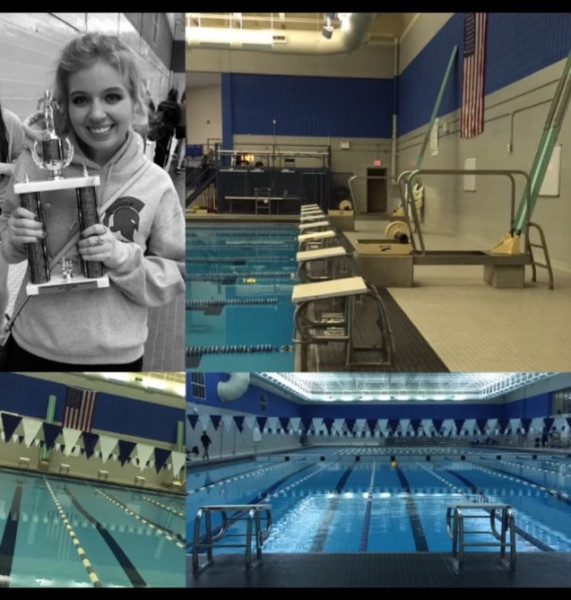
Green’s miracle story began May 9, 2013. She was a healthy 15-year-old and an accomplished competitive swimmer. But while at swim practice, a seemingly minor jar to her neck while planting her feet in the pool turned tragic.
 “The pool was very shallow,” Green said. “So I just sat on the edge and scooted in and I guess I jarred my neck. So I practiced for two to three hours. And after I left the pool and was getting ready in the locker room, I just started going tingly and numb on my shoulders.”
Green became weak and her eyes were bloodshot. Concerned with her condition, a member of the swim facility’s staff called 911. Upon assessment, paramedics determined she was likely having an anxiety attack from the stress of tests earlier in the day and did not need to be transported to a medical facility. Madisyn’s mom arrived shortly after to take her home to rest.
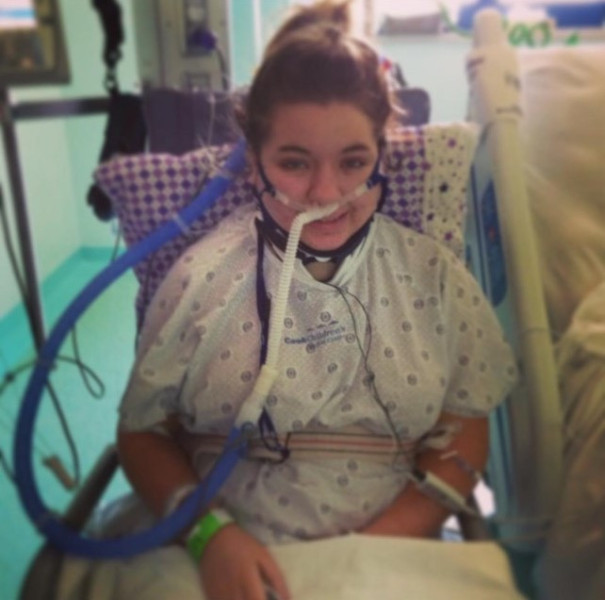
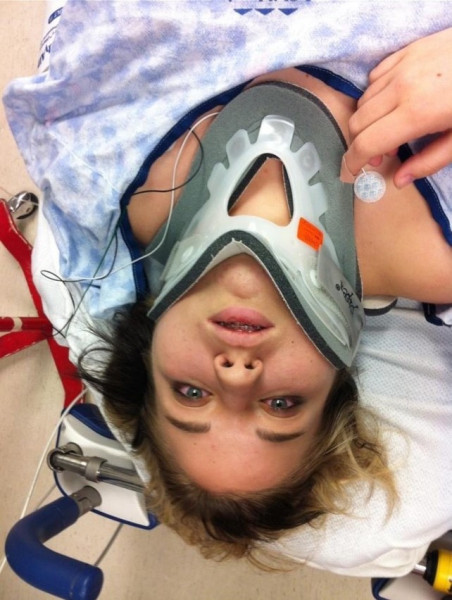
But once in the driveway at home, Green wasn’t able to get herself out of the car. At first, her mom, Cody Bazan, thought Madisyn was being a playful teen, but soon realized something was very wrong. Bazan turned the car around and headed straight for Cook Children’s Medical Center’s Emergency Department. By the time they arrived, Green was paralyzed from the neck down, unable to do anything but blink her eyes.
Physicians ran a battery of tests and were able to determine that Green had a spinal cord stroke. A spinal cord stroke in a child is rare, especially in a healthy child without any known pre-existing or underlying conditions, much like Green.
Doctors turned their attention to figuring out why.
“I did hear that I saw like the whole Neuro team at Cook Children’s, and they had other specialists that were working around the clock trying to figure out what was wrong with me,” Green said. “They did tell me that my condition was not in a medical book.”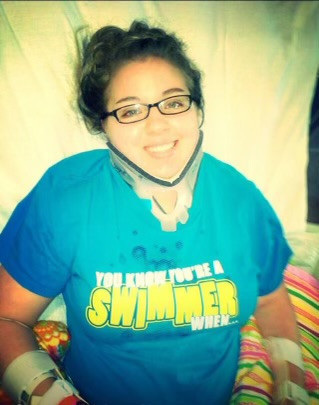
Physicians were eventually able to determine that Green did, in fact, have a rare, undetected pre-existing condition likely present since birth. It’s called congenital spinal stenosis, or narrowing of the spinal column. The seemingly slight jolt she took when entering the pool was enough to cause her spinal cord in the narrowed area to swell, cutting off blood supply and leading to the stroke. Doctors told Green that any jolt, bump or hit, even a minor one, could have elicited the response. It was just a matter of time. They also said she was fortunate to not have drowned in the pool that day.
Green’s prognosis was grim with little chance of recovering any movement lost from the catastrophic stroke.
“Spinal cord strokes, because of their inherent nature, probably carry less potential to recover and improve compared to other injuries of the central nervous system,” said Fernando Acosta Jr., M.D., neurologist and associate medical director of Movement Disorders at Cook Children’s Jane and John Justin Institute for Mind Health. Dr. Acosta is one of the physicians that treated Green.
All indications were that Green would be a life-long quadriplegic and never walk, or swim, again.
“Basically, all I could do was stare at the ceiling,” Green said.
Mindset Shift
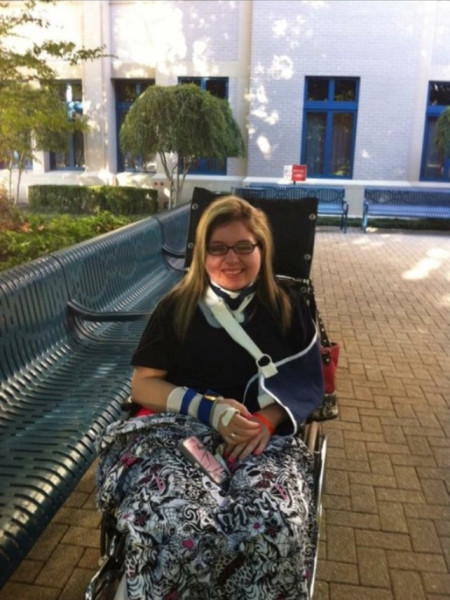
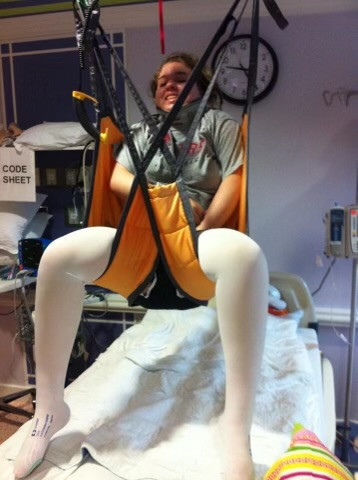
After a few days in the ICU, Green was moved to the Rehabilitation Unit to gain as much function as possible while learning to live in her new body. She also underwent spinal stenosis surgery, after which she contracted pneumonia and had to be transferred back to the ICU.
The setback was one of her lowest points, but it brought her to her turning point.
“I've grown up a very faithful person and very positive,” she said. “At first, I was like, ’Why me, God? Why did this happen to me?’ But I turned my attitude around and I prayed about it. That's when I was like I've got to change my mindset. To get this done, I have to rely on my faith and God and his plan.”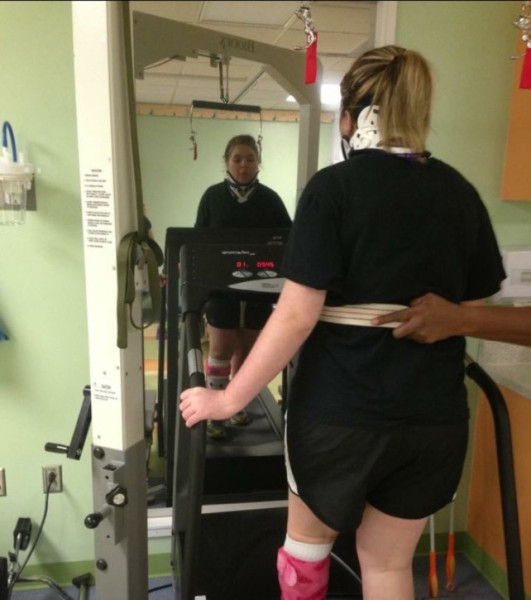
To change her mindset, Green started by changing her view. If all she could do was stare at the ceiling and walls, she determined that everything within her eyesight would be inspirational. The walls of the hospital room she called home at the time were covered in motivational signs and posters, including a Cook Children’s t-shirt she picked out from the gift shop.
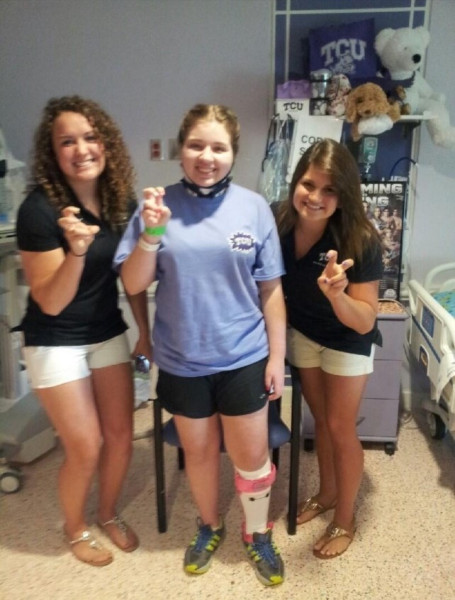
“I had it hung up and I said, ‘That's my walking out shirt. I will wear it when I walk out of here.’”
Eager to help Green cope with her new normal, many tried to convince her to accept the reality of her circumstances. But, like any true athlete, Green refused to give up. Every day she pushed her body to new limits and beyond. And, like any true teenager, she had a little fun along the way.
“The nurses there were phenomenal,” she said. “I was always hanging out and getting in trouble at the nurses station. I remember getting in the wheelchair and I would use my one good leg to roll down there, and I would stay up there all night. I had a snack drawer and they'd come hang out with me and we'd eat snacks and they'd help me do my hair and my makeup. Everyone there was so great and so supportive. But it was a test of my faith and endurance.”
Madisyn’s Miracle
Within three months, that miracle moment that started as a whisper grew to a triumphant roar.
 On August 22, 2013, wearing her “walking out” shirt, Green did what she said she would do, and walked out of Cook Children’s Medical Center to return home for the first time since that fateful swim.
She and many others contribute her recovery to her faith and positivity.
“The amazing thing here is that I was not sure if she would ever walk again and, quite frankly, was not expecting her to walk again,” Dr. Acosta said. “When she first came to see me and she had some braces on and was walking, I was amazed. Her recovery is a testament to the hard work she put in while in the Rehab Unit and after she left the Rehab Unit. She was a competitive swimmer, so she knew she would have to train as hard as she ever has trained to get to walk again. Her willingness to work hard, combined with the dedication and efforts that our Neurorehab staff exhibit daily with our patients, all came together to provide this unexpected and impressive outcome in her case.”
Today, Green walks with the help of nothing more than a brace on one leg, drives a car and works full time at a local pain management clinic where she often has the opportunity to share her story with patients. In her free time, you’ll find her hanging out with friends, family and her dog, Waddles.
“All the doctors basically said, ‘You've outdone every prognosis and everything we've had planned for you or we expected of you,’” she said. “‘You've overdone our expectations and you're a miracle child.’”
Untold: The Stories of Cook Children's 
“Untold: The Stories of Cook Children's" is a podcast series that delves into the inspiring journeys of Cook Children's patients, families, staff, and physicians like you've never heard before. Listen to the podcast on Apple Podcasts, Spotify or watch on YouTube.