Safe Steps to Prevent Medication Poisoning
Measure the correct dose and keep medications out of children's reach to help prevent accidental overdose.
About 35,000 young children need emergency care every year because they swallowed the wrong medication or took too much, according to a national safety campaign.
That statistic comes from Up and Away and Out of Sight, a platform that raises awareness of the danger of overdoses that happen accidently. Prescription medications, over-the-counter medications, vitamins and supplements can all be harmful if they aren’t used as intended.
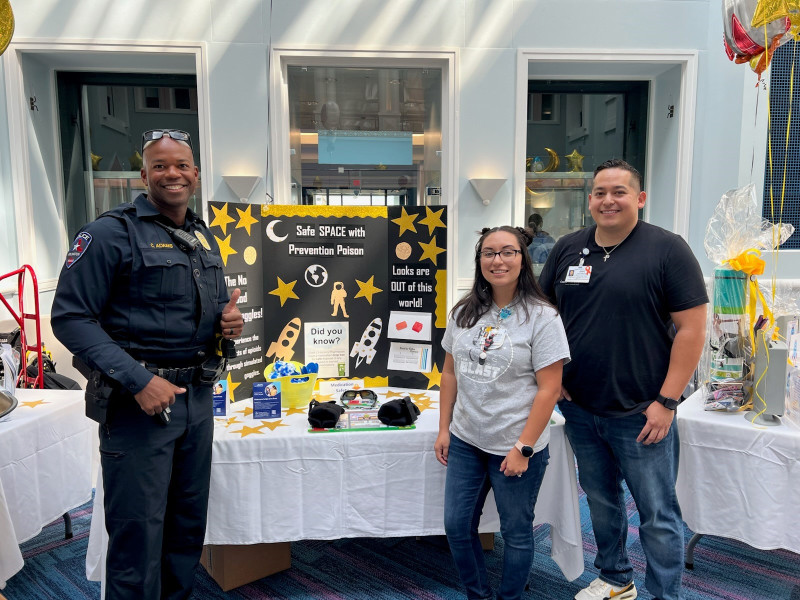
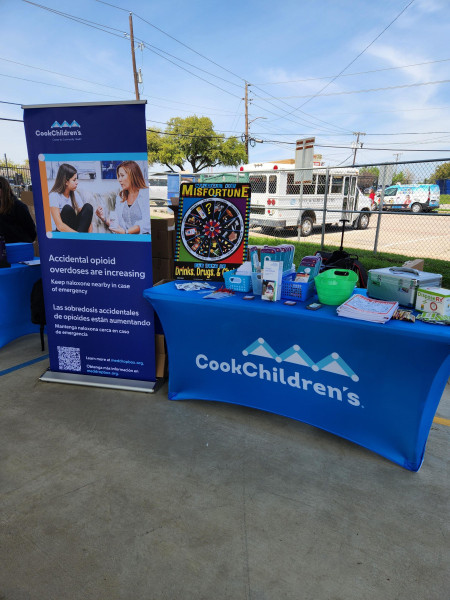
 March 16-22 is National Poison Prevention Week, a chance to educate parents and caregivers about the importance of keeping children and teens safe from ingesting substances that can be dangerous. Poison prevention at Cook Children’s falls under the scope of injury prevention along with gun safety, drowning prevention, safe baby sleep and vehicle safety through the Center for Community Health.
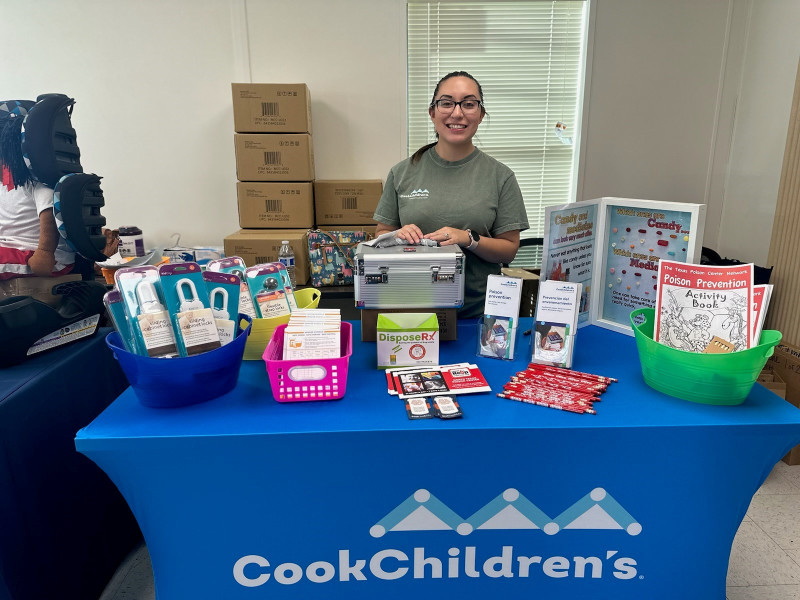
Schools, clubs, libraries and organizations such as North Texas Poison Center work in partnership with the Center for Community Health. The center’s poison prevention program distributes medication lock boxes, cabinet locks and kits for disposing of unused medications.
“Education and resources are shared at each level to help influence safer practices while the messaging stays consistent,” said Klaressa Broughton, program coordinator. “We use social media ads, trainings, parent group presentations, local community events and health fairs for the greatest reach and overall impact.”
Three Key Points
You can help prevent accidental overdoses with these layers of protection:
1. Safe dosing – Follow a medication schedule checklist to make sure your child gets the right amount at the right time. Set an alert on your phone to remind you when it’s time for another dose. Measure accurately using an oral syringe, dosing cup or dropper. Follow the instructions on the bottle.
2. Safe storage – Keep medications in a locked cabinet that children can’t access. According to the Cook Children’s 2024 parent/caregiver survey covering an eight-county service area of North Texas, about 570,400 children live in homes where medications aren’t always locked up.
3. Safe disposal – Remove any unused or expired medication from the home by taking it to a designated drop box. Don’t flush them down the toilet or pour them in the sink.
Medication safety can be an extra challenge, Broughton said, when families are traveling or when houseguests bring medications into your home. Good communication is needed if a child stays with multiple caregivers.
“A common mistake is double-dosing,” she said. “Similarly, it’s important to not take a medication that is not prescribed to you or for your age range. It may be very harmful.”
Ask Your Pediatrician
Karen Evans, M.D. points out that medications for children are usually calculated based on weight. When writing a new prescription, she explains the dosing instructions with the parents of her patients at Cook Children's Pediatrics Parkwood in Frisco while in the office.
“That opens the door for the parent to ask questions,” she said, adding that pediatricians and pharmacists are happy to answer those questions.
From her experience as a mom with three kids, Dr. Evans offered a tip: If your child is sick, have a syringe or dosing spoon washed and handy in case your child wakes up with fever in the middle of the night. Review the dosing instructions ahead of time. Making a plan for dispensing medication can help prevent mistakes when you’re exhausted.
Never try to trick a child by saying medicine is candy, Dr. Evans advised.
She also emphasized the risk of teens sharing medication with other teens. Parents should talk with their teens about taking medications only from trusted adults. Even if a friend at school offers what appears to be a familiar brand of pain reliever, you can’t be sure what the substance is, Dr. Evans said.
Warning signs of potential overdose include change in the child’s behavior or awareness, vomiting, choking, trouble breathing, seizures or not responding. Call 911 and get medical help right away.
Contact the Texas Poison Center at 1-800-222-1222.
RELATED STORY
Cook Children's Sees Increase in Emergency Care for Marijuana Ingestion
Taking a Community Approach
Cook Children’s Center for Community Health takes a team approach by working with coalitions across North Texas. Our primary service area consists of Collin, Denton, Grayson, Hood, Johnson, Parker, Tarrant and Wise counties. For more information about joining our Injury Prevention Collaborative, please reach out to injury.prevention@cookchildrens.org.