Preventing Hot Car Tragedies: Experts Offer Vital Tips as Texas Sees Spike in Child Deaths
Updated August 28, 2025
Texas surpassed its number of hot car deaths from 2024 on July 14, according to the Texas Department of Health Services (DSHS). A sixth and seventh fatality was reported in August in North Texas.
The increase contributes to the more than 20 hot car deaths reported nationwide this year as of August 26. Vehicular heatstroke is the second-leading cause of vehicle-related deaths in children under 15, trailing only car crashes.
Experts from Cook Children's Health Care System, Viviana Esparza, program coordinator at the Center for Community Health, and Sharon Evans, trauma injury prevention manager, emphasize the preventable nature of these tragedies.
“It can happen to anyone but it is 100% preventable,” Esparza said.
She notes that 52% of hot car child deaths occur when a child is forgotten. According to kidsandcars.org, parents can suffer from exhaustion due to lack of sleep, stress, and changes in their normal routine. Any one of these can cause a parent or caregiver's memory to fail at a time when you least expect it.
“Parents need to realize this can happen to anyone,” Evans said. “They aren’t bad parents but they get distracted or there’s a change in their routine. Make it a habit to put something you need in the back seat with the child.”
Twenty-five percent of hot car child deaths are due to a child gaining access to an unlocked vehicle or a child getting the keys. Evans recommends teaching toddlers and preschool-aged children to honk the horn if they become trapped, enabling them to draw attention to the vehicle.
Esparza says the third most common is knowingly leaving a child in a vehicle for a quick errand. DSHS emphasizes that a cracked window does not protect a child or pet from heatstroke.
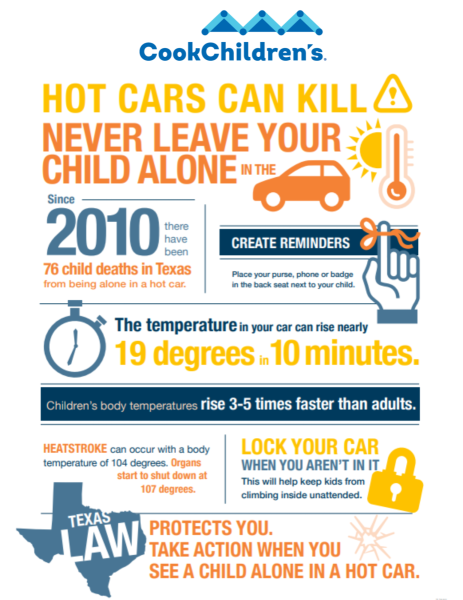
“A car heats up about 20 degrees in 10 minutes and the temperature just keeps growing after that, often reaching 130-140 degrees in 30 minutes to an hour,” Evans said.
Esparza encourages families to remember the acronym A.C.T. to prevent heatstroke:
- A: AVOID heatstroke and other heat-related injuries by never leaving your child alone in a car, not even for a minute. When the vehicle is at home, keep the doors locked and keys or key fobs out of a child's reach.
- C: CREATE reminders. Place an item you need, such as a bag, wallet, or cellphone, in the back of your car or next to your child. This is especially important if you're not following your normal routine. If your child is with a care provider, ensure vehicle-related procedures are in place, such as vehicle searches or locking vehicles when not in use. Use technology to your advantage and use apps or other communication methods to stay connected with your childcare provider.
- T: TAKE action. If you see a child alone in a car, call 9-1-1. Emergency personnel want you to call, and they are trained to respond swiftly to these situations. One call could save a life.