

Prevent Furniture Tip-Over Tragedies: How to Keep Your Child Safe
Recent CPSC dresser recall serves as a reminder of the dangers of unsecured furniture
By Charlotte Settle
On May 2, 2024, the Consumer Product Safety Commission (CPSC) recalled the Mill Valley Jr.—a six-drawer kids’ dresser sold exclusively at Rooms to Go—after determining it to be a tip-over risk. The distributor, LFN Ltd., is offering a free, updated replacement to anyone who bought the recalled model. Until these replacements arrive, the CPSC is urging consumers to keep their families away from the dresser.
This dresser recall is the first action CPSC has taken under the STURDY (Stop Tip-overs of Unstable, Risky Dressers on Youth) standard since it went into effect in 2023. STURDY requires rigorous safety testing for the stability of dressers, armoires, wardrobes, and other clothing storage units, and the Mill Valley Jr. violated the performance requirements.
Furniture tipping is an often overlooked, yet all-too-frequent cause of injury and death in children. In honor of National Safety Month, we’re highlighting the risks of tip-overs and how to prevent them.
How Big of a Risk is Furniture Tipping?
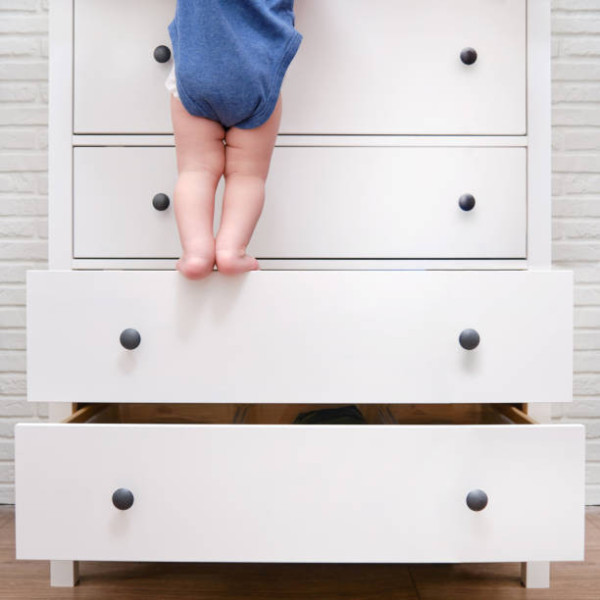
Every year, hospital emergency rooms see thousands of injuries and dozens of deaths—the majority of which occur in children under six years old—from furniture tipping. Though Cook Children’s hasn’t encountered a tipping-related fatality in many years, serious injuries persist.
“We've had liver lacerations, pancreatic lacerations, and broken bones as a result of furniture falling on kids,” said Cook Children’s Trauma Injury Prevention Coordinator, Sharon Evans.
According to Evans, dressers, bookshelves, and televisions are the top three culprits in tip-over cases. The majority of incidents involve climbing or the application of force, so if you know your child likes to climb or hang on furniture, their risk for harm is even higher.
How to Prevent Tip-Over Incidents
- Anchor It!: A quick, simple, and effective way to protect your kids is to anchor all furniture, TVs, and appliances to the wall. Many products now come with anchor kits, but if yours doesn’t, you can find them at home improvement stores like Home Depot or Lowe’s.
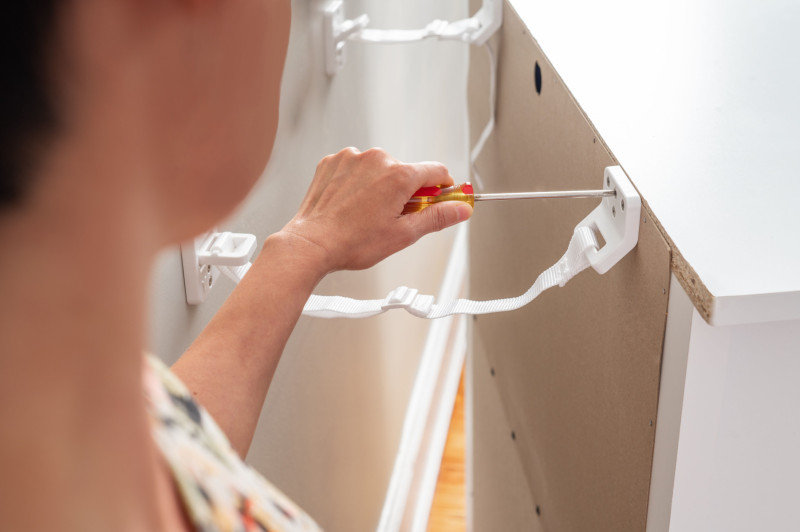
- Make sure your furniture is STURDY compliant: The CPSC STURDY standard requires all dressers, armoires, wardrobes, and other clothing storage units to undergo rigorous testing for stability—and include anchor kits. To ensure the utmost safety of your furniture, ask the seller or manufacturer if it is STURDY compliant before you buy.
- Store your heaviest items at the bottom of your furniture: When loading up a dresser or bookshelf, place your heaviest clothing, books, and any other weighty items in the bottom drawer or shelf. Reserve your lightest items for top shelves and drawers.
- Keep tempting items off of furniture: To prevent your children from climbing, keep tempting items like toys, remote controls, or anything else they might want to get a hold of away from the top of furniture.
- Keep TV cords out of reach of children: Ensure any cords or wires are out of reach to prevent your child from pulling a TV or piece of furniture over.
- Supervise children in rooms where these safety tips have not been implemented: Until you follow these guidelines, supervise your children closely around all furniture, TVs, and appliances.
A Quick Fix That Saves Lives
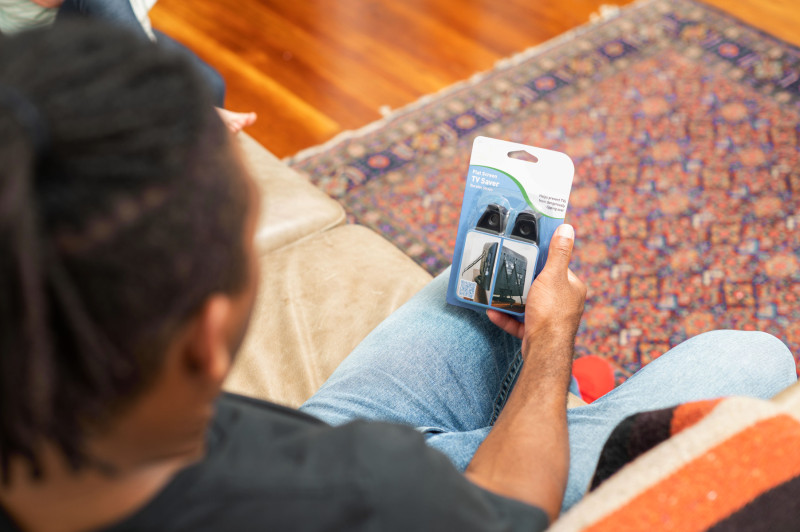
Evans implores parents to consider anchoring furniture as another simple, yet vital step in childproofing their home. The time it takes to complete the task pales in comparison to the peace of mind of knowing your child is safe.
“These things can be easy to blow off because you don't think it's going to happen to you,” Evans said. “But it does happen, and it's way easier to repair a wall than it is to repair a child.”
To learn more about how to anchor furniture and prevent tip-overs, visit https://www.anchorit.gov/.
About Cook Children's Health Care System
Cook Children’s is more than a health care system: we strive to be an extension of your family, growing with your child from their first steps to adulthood. By collaborating to deliver on our Promise—to improve the well-being of every child in our care and our communities, we connect the dots for our patients. Between primary and specialty. Between home and medical home. Between short-term care and long-term health.
Based in Fort Worth, Texas, we’re 9,700+ dedicated team members strong, passionately caring for over 2 million patient encounters each year. Our integrated, not-for-profit organization spans two medical centers (including our state-of-the-art location in Prosper), two surgery centers, a physician network, home health services and a health plan. It also includes Child Study Center at Cook Children's, Cook Children's Health Services Inc., and Cook Children's Health Foundation. In 2024, Forbes named Cook Children’s the top health care employer in the U.S., and third on the list of ‘America’s Best Large Employers.’
And our impact extends beyond the borders of Texas. We proudly treat children from virtually every state in the nation and 32 countries. By seeing the world through the eyes of children and their families from all backgrounds, we’re able to shape health care suited to them: connected by kindness, imagination and respect—with an extra dose of magical wonder.
Discover more at cookchildrens.org.
