'Oh good, they’re here': New Jet Carries New Hope
Cook Children’s retires twin turboprop and commissions second emergency transport jet for faster, more comfortable patient transport
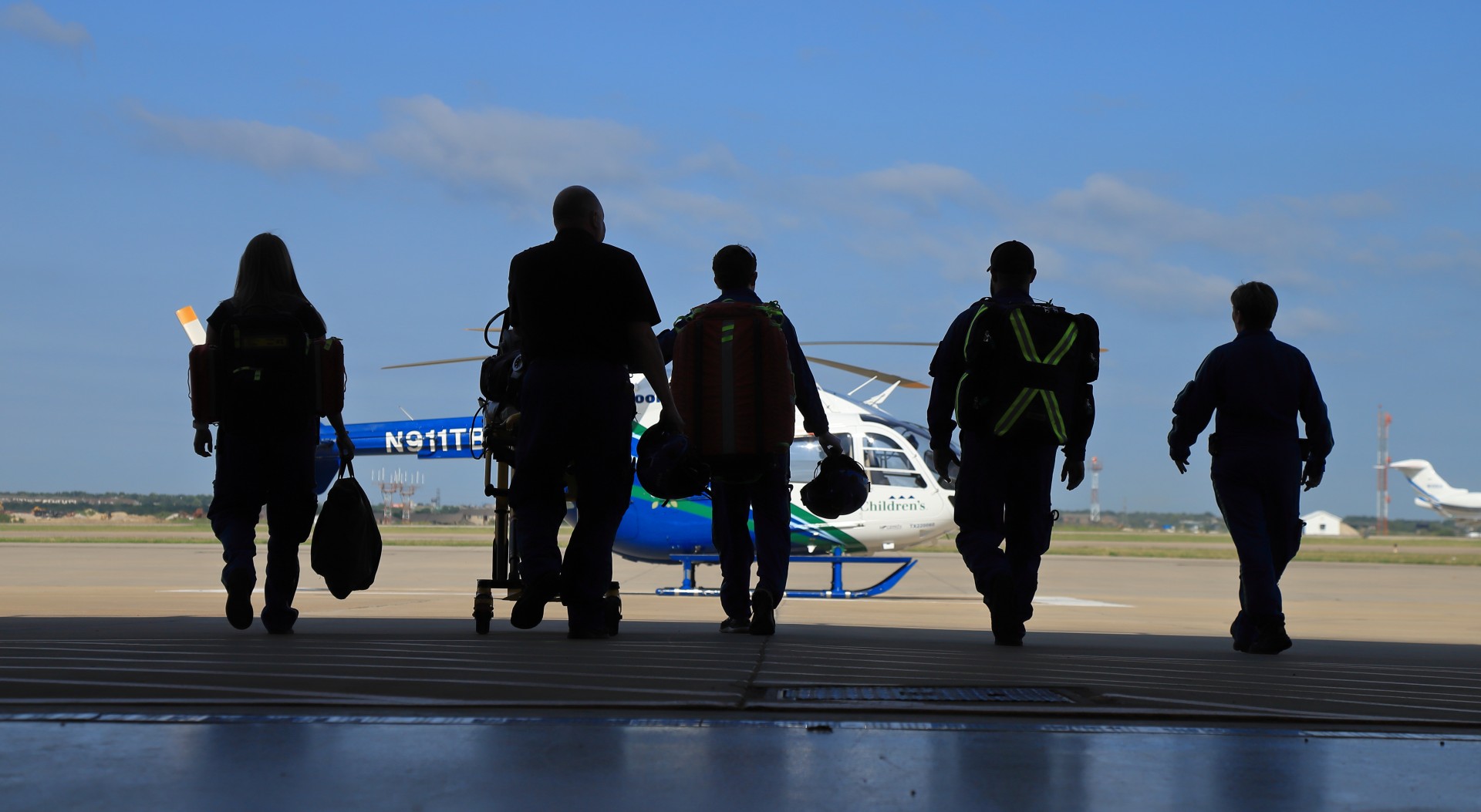 To a parent living through their most terrifying moment, only one thing matters - that help is on the way for their child experiencing a medical crisis. Nothing brings relief like the sight of Cook Children’s Teddy Bear Transport team, clad in their signature blue jumpsuits, and armed with the skill and equipment to care for the tiniest babies and sickest children, in the air or on the ground.
With a moment’s notice, this team of critical care experts can be wheels up in one of Cook Children’s air ambulances to travel to points all over the United States, Canada and Mexico. While these aircraft are known to air traffic controllers by their unique call signs, to the anxious parents waiting on the ground, these identifiers are more than a string of letters and numbers. They are a declaration of the help and hope on the way.
“We’re walking in on a family’s worst and darkest day, and we are always cognizant of that,” said Deana McLelland, RN, Cook Children’s Teddy Bear Transport nurse. “They are always relieved to see us. I like to say our name is ‘Oh good, they’re here’ because that’s what we always hear when we walk in to pick up the tiniest of babies or the sickest of kids. I love taking care of them and feel so lucky that this is my job. I get emotional just talking about it.”
McLelland has been doing this job for 29 years. She is an original member of the Teddy Bear Transport team, having joined during its start up after working as a critical care nurse at Cook Children’s Medical Center for 6 years.
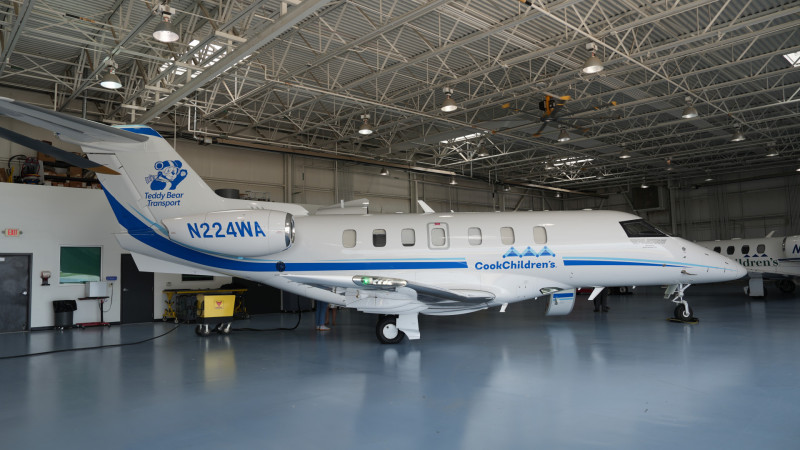
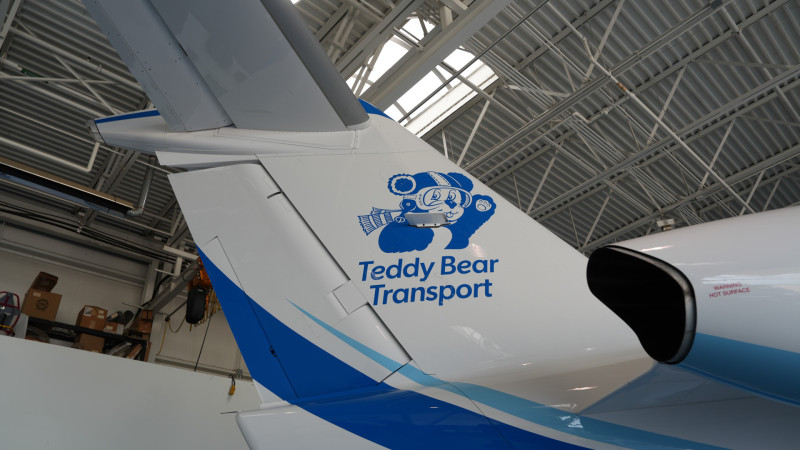
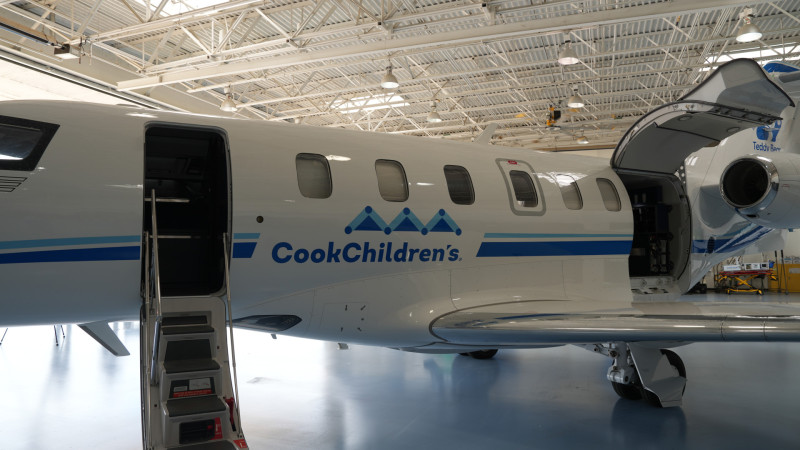
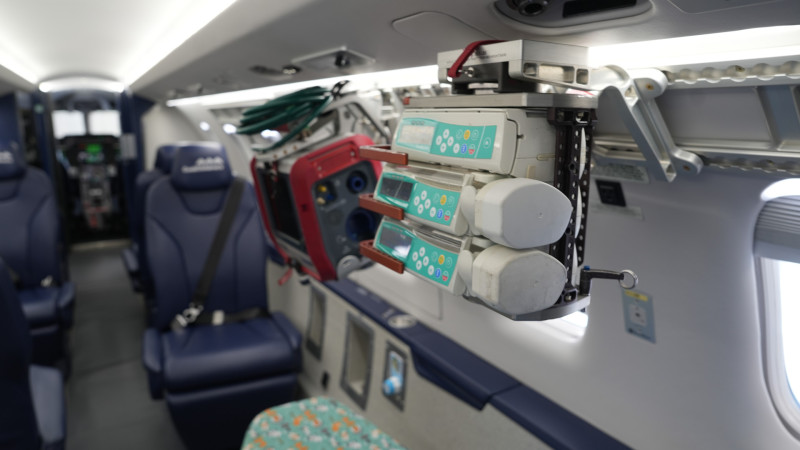
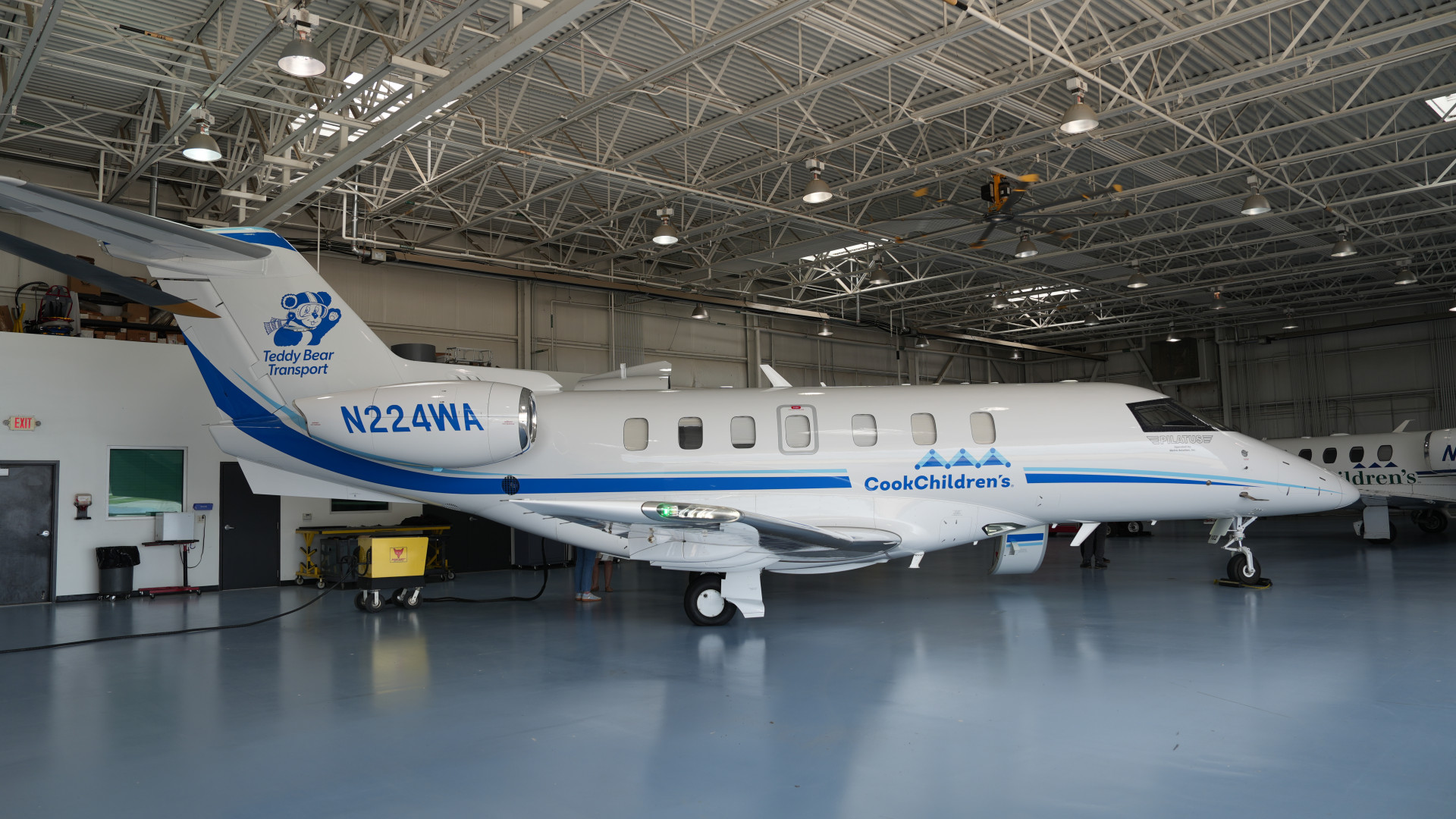
In May, she climbed aboard and began flying the friendly skies in a new addition to Cook Children’s fleet of mobile intensive care units - a Pilatus PC24 twin engine jet. The aircraft replaces one of two Cook Children’s airplanes currently in operation and enhances the health system’s ability to transport sick and injured children to Cook Children’s Medical Center for care.
“Our older airplane, which is a 1982 Beechcraft King Air twin turboprop, has served us well, but it’s time to retire,” said Stacy Putman, Cook Children’s director of Transport. “Now, we’ll have two jets to transport children from all over the country and even internationally from Canada and Mexico.”
Rapid Response
In emergency medicine, every minute counts. Cook Children’s new jet is bigger and faster than its turboprop predecessor, and can travel further distances before needing to refuel. To sick children and anxious parents, this means they get the help they need sooner.
 Teddy Bear Transport averages about 30 flights per month. Many of those bring children back to North Texas to receive care close to home after becoming sick or injured while traveling. Premature babies or critically ill children from rural areas of Texas and surrounding states who need advanced care in Cook Children’s neonatal, pediatric or cardiovascular intensive care units are transported by air, too. Teddy Bear Transport also regularly flies infants diagnosed with a rare and severe genetic disorder called congenital hyperinsulinism (HI) to Cook Children’s Hyperinsulinism Center, one of only six HI Centers of Excellence in the world. Congenital hyperinsulinism can lead to dangerously low blood sugar in infants. Without timely intervention, these infants are at risk of seizures and permanent brain damage.
Cabin Features
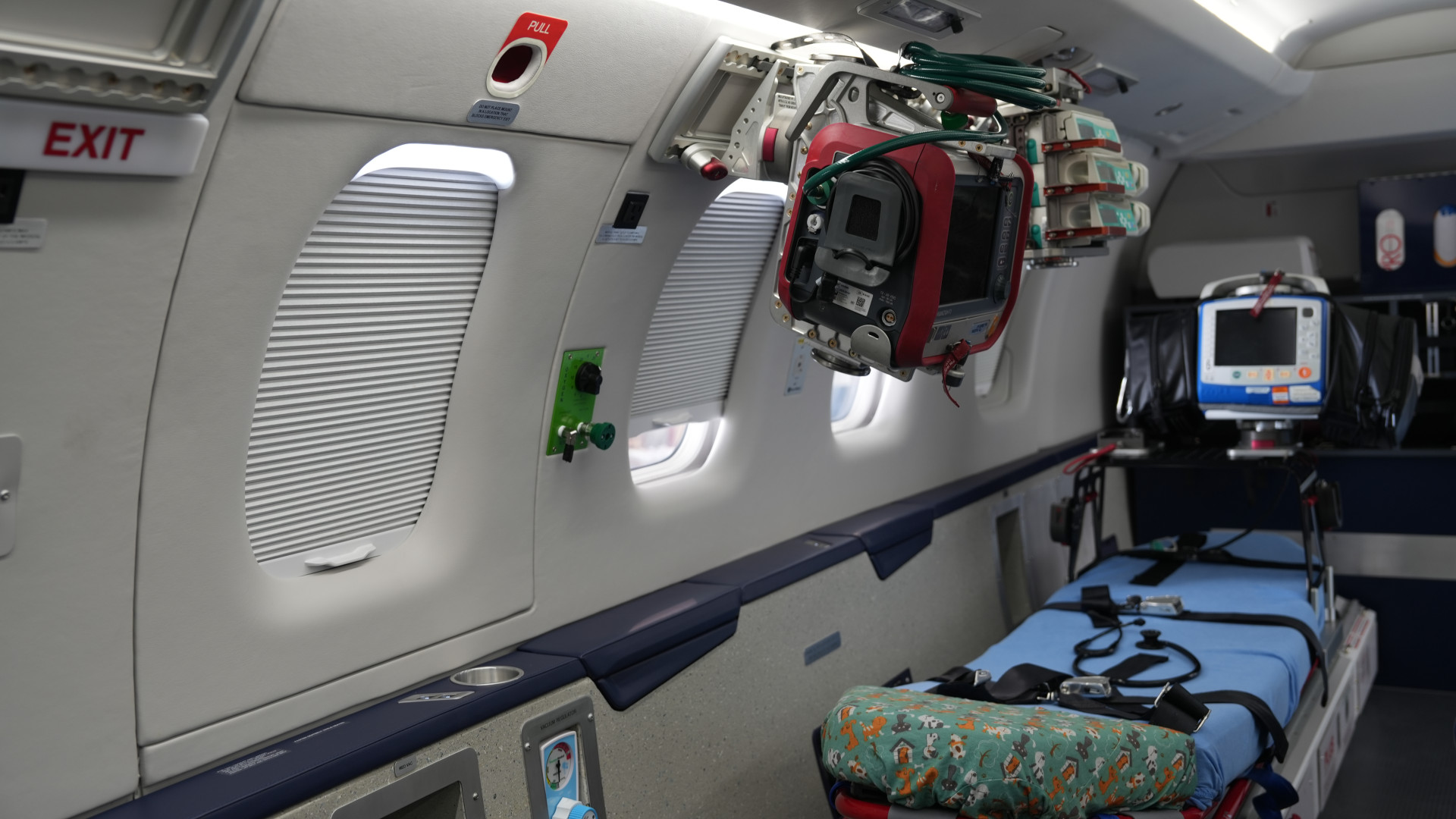 The new jet joins a transport fleet that includes a Cessna Citation Encore+ jet, an American Eurocopter 145 helicopter and six specialty/critical care ambulances. All are equipped with medical technology comparable to what is used in neonatal and pediatric intensive care units.
“We are a mobile ICU,” Putman said. “So everything we can do in our pediatric or neonatal ICU, we can do in the airplane. We can even transport cardiovascular ICU patients on ECMO (advanced life support).”
Every transport carries a team that includes a nurse, paramedic and respiratory therapist. They are the elite of the elite when it comes to pediatric emergency medicine, as they must be as proficient in caring for a micro-preemie born at 21-weeks as they are at caring for an 18-year-old teenager. Expert skill is a must, coupled with the composure to deliver care while flying through the air or traveling the highways below.
In addition to having a little extra in-flight leg room for the transport team, the bigger plane allows for more equipment, staff and passengers when needed.
“When we transport kids on ECMO, it doubles our equipment and our on-board staff,” McLelland said. “This jet gives us more room to take anyone we need with us, and that includes parents. In the past we’ve only been able to take one parent with us because of our team configuration, but this allows us the seating to bring two with us if necessary. Sometimes that child’s survival is on the line and we don’t feel good about leaving one parent behind if we don’t have to, so this is a really important feature for keeping the family together in these critical moments.”
Engineered for Safety
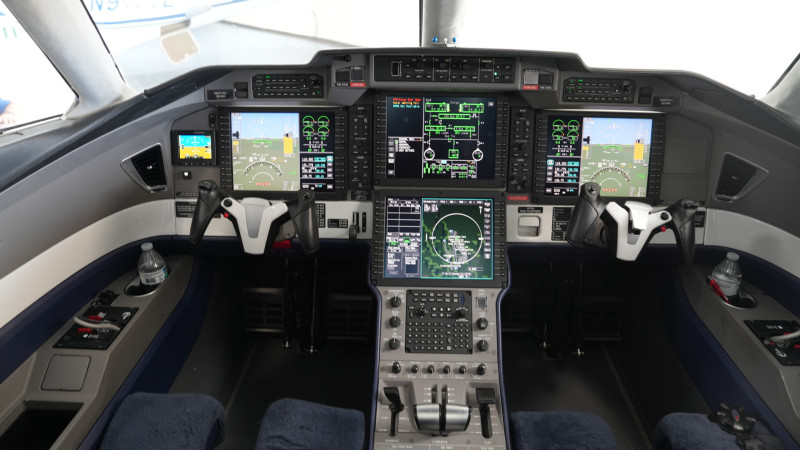
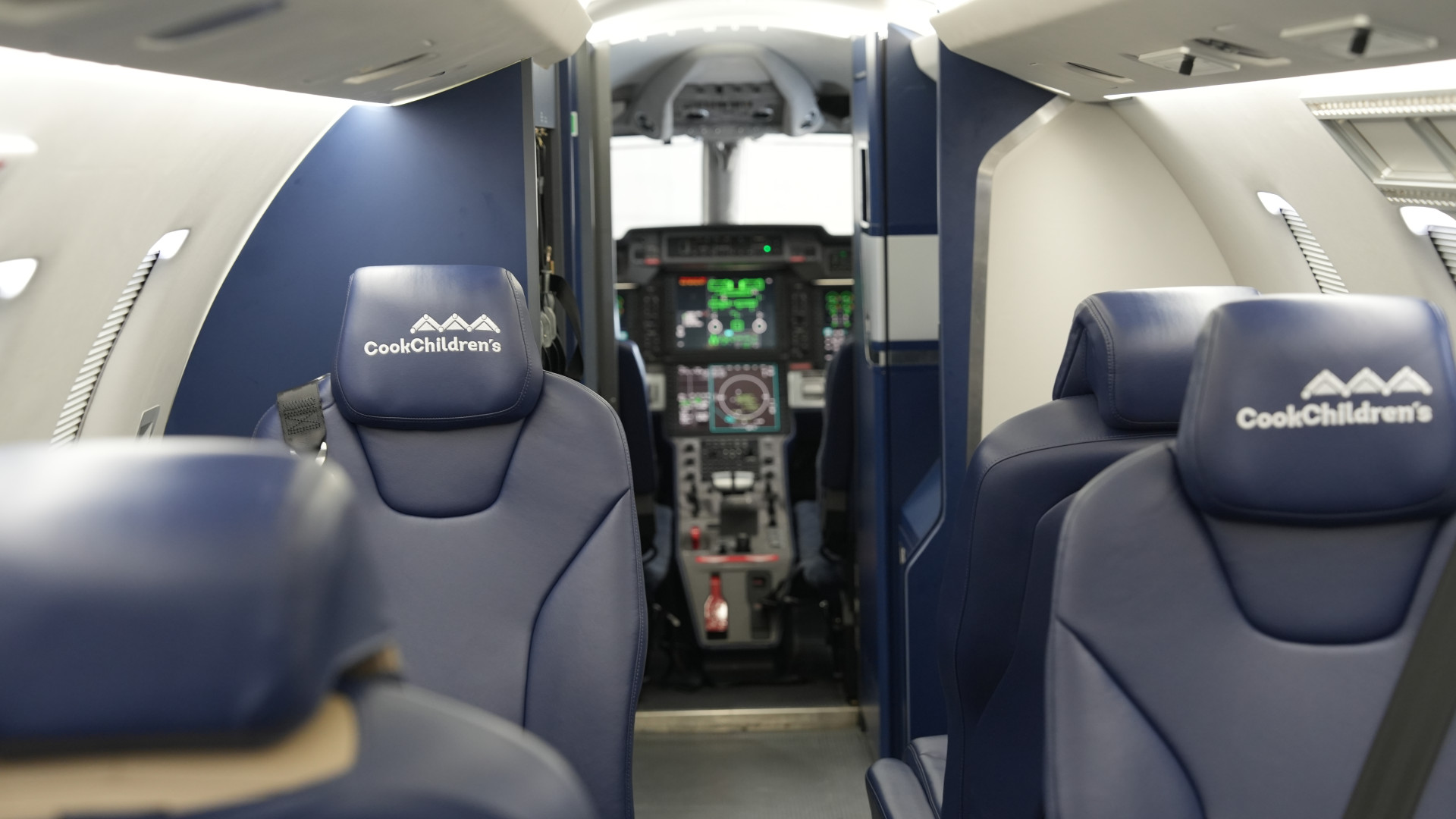 In addition to its critical care capabilities, both of Cook Children’s jets are equipped with leading-edge safety features, including a Wide Area Augmentation System (WAAS) and Traffic Collision Avoidance System (TCAS). The WAAS enhances GPS navigation, turning it into a precision guidance system that allows aircraft to land in lower visibility and at smaller regional airports, like those in rural areas frequented by Teddy Bear Transport. One of the most important safety features of modern-day jets, the TCAS prevents potential mid-air collisions by giving pilots a heads up warning of aircraft in the area and, if needed, escape guidance to avoid collision.
Other on-board assists, like a Nexrad weather radar and a terrain warning system, guide pilots in flying above storms, avoiding dangerous wind sheer and navigating obstacles on the ground.
Grounded, But Not For Long
Even after 29 years, McLelland says her job never gets old.
“Every time that motor starts, my heart skips a beat,” she said. “Every day is a new place, a new diagnosis and a new family, and I love the variety. I still say I cannot believe I get paid to do this job.”
When a breast cancer diagnosis last year temporarily grounded her, McLelland persevered and returned to work in March after a six-month leave of absence.
“When all of this cancer stuff started, my doctor asked what three things scared me the most,” McLelland said. “I told him leaving my job was one of them and he assured me I would go back to the work I love. I could not wait to get back. I’m really lucky to get to do it for as long as I have, and I’m not done.”
McLelland can’t wait to step aboard for her first transport in the new plane. Although flying on new wings, her wheels-up preparation will be the same as it has been for two decades—suit up and pray up.
“Every single morning on the way into work, I pray for my patients and their families,” she said. “And I pray for my crew that we will be wise and discerning and tender and take good care of the children we transport.”
Teddy Bear Transport by the Numbers:
Operates 24/7/365
4,100 transports annually
10,000 referral calls handled each year by dispatch
Staff includes 60 neonatal/pediatric nurses, paramedics and respiratory therapists