

Lifeguard Your Child: 5 Water Safety Tips for Parents
With summer travel beginning for many families, maintaining water safety awareness is crucial for everyone, regardless of age or location. Whether you're near swimming pools, lakes, or beaches, potential hazards exist, but proper preparation can help prevent tragedies.
Drowning is the leading cause of accidental death for children ages 1 to 4, and the second leading cause for kids 1-14 in Texas. 88% of drownings occur with at least one adult present.
That’s scary information, but there are steps you can take to help protect your child around water, whether it is swim time, unplanned time around water or even bath time:
1. Designate a Water Watcher to ensure constant visual supervision.
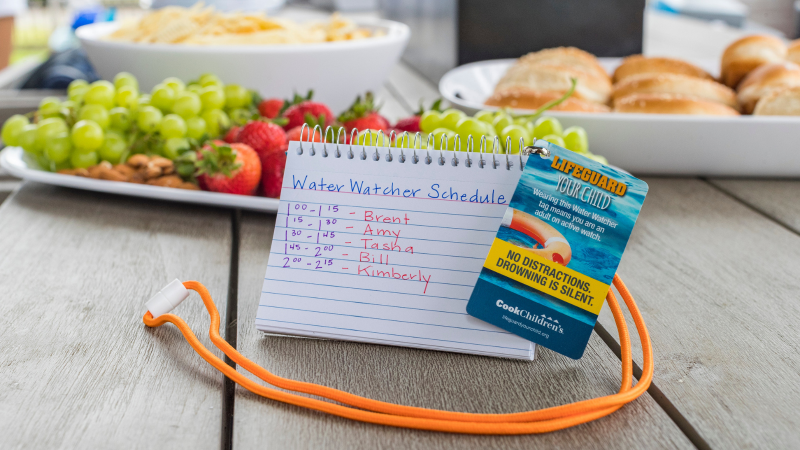 Drowning occurs silently, so designate a Water Watcher to watch children in and around all water, even when a lifeguard is present. A Water Watcher should be in-reach of the children in the pool. The safest way is to be in the pool with them.
- A Water Watcher tag can be used to designate responsible adults to watch the water when you have a party at the pool, lake or beach. At social gatherings, 10-15 minute shifts are recommended. During that time, Water Watchers should not be distracted by conversations, cell phones, reading, etc.
- Stay alert. There isn’t a more important responsibility.
2. Keep backyards and bathrooms safe.
- Dump all water buckets and empty kiddie pools when they are not in use.
- Install multiple barriers in areas leading to pools and spas: pool fences, self-closing, self-latching gates and door alarms.
- Keep pool area picked up and clear of toys and other items which might attract an unsupervised child.
- Never leave children unattended in the bathtub. Keep a towel and bath supplies close at hand, so you do not have to leave during bath time.
- Install safety latches on toilets
3. Wear lifejackets.
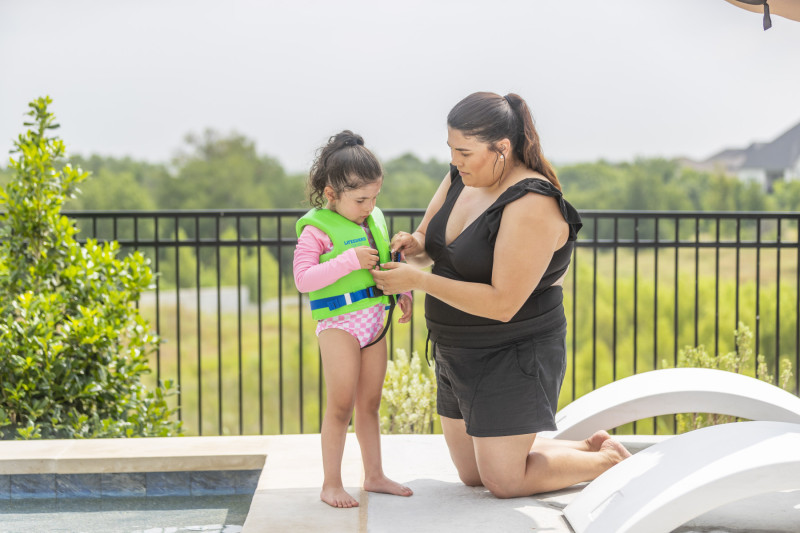 The single most important thing when it comes to open water safety is a life vest. Especially in murky water with a current, it can be the difference between life and death. If the lifejacket doesn’t say “ U.S. Coast Guard-Approved” or “USCG approved,” you can assume it’s not safe. Always check the label.
- As your child grows, the lifejacket needs to meet their new weight. Get a new lifejacket if there are rips and tears or if the straps are fraying.
- Do not rely on floats or other toys to keep children safe.
4. Sign up for CPR and swim lessons.
- Studies show that formal swim lessons for children under age 4 reduce drowning by 88 percent.
- Take swim lessons with your child if you don’t know how to swim yourself. Even adults who are strong swimmers should never swim alone.
- Need help finding swim lessons? Check out this list of providers in the Tarrant County Area. If you’re not in Tarrant County, you may want to contact your local YMCA, Red Cross, or parks and recreation center for information in your area.
- Learning CPR can be the difference between life and death while waiting for emergency personnel to arrive. Check your local Red Cross and YMCA for CPR classes.
 5. Have a safety plan in place.
- If an emergency does happen, remember that seconds count. Call 911 immediately and then begin CPR while EMS is in route.
- Know water conditions before you get into open water. Water conditions in lakes and oceans can vary on a daily basis.
Related Stories
- Lifeguard Your Child: Prevent Bathtub Drownings
- Lifeguard Your Child: Don’t Take a Vacation From Water Safety
- What Color Is Your Child's Swimsuit? Experts Say Choose Safety Over Fashion
- In the Words of a Grieving Mother: Teenagers & Open Water Drowning
- What's a Water Watcher Tag? How One Item in Every Household Can Help Prevent Drownings
- Checklist: Keeping Your Pool Safe for All Swimmers
- Keeping Kids Afloat: Infant Swimming Resource Self-Rescue
- Swim Lessons Save Lives: Answering Top Questions With a Professional Swim Instructor
- Try on for Size: Tips for Best Fit, Safe Practices for Wearing Life Jackets
About The Lifeguard Your Child ™ Campaign
Cook Children's Lifeguard Your Child Campaign encourages parents everywhere to create a safety plan for ANY time their children are around water—whether its swim time, unplanned time around water, or even bath time. Water safety is important at any age, and when it comes to drowning, every second counts. It’s silent and can happen in an instant. Drowning is the leading cause of accidental death for children ages 1 to 4, and the second leading cause for kids ages 1-14 in Texas. But with your help, we can change that.
Together, we are asking everyone to Lifeguard Your Child around water. Click here to learn more about how to get involved or create an awareness campaign in your community.
