

Is it Flu? What Parents Need to Know This Flu Season
The holiday season has passed, but the flu season continues. The season began Sept. 28, 2025, and runs through May 23, 2026. Cook Children’s Health Care System provides pediatric health care for eight counties in the North Texas region with medical centers in Tarrant and Denton counties. Both counties have reported high influenza activity.
The Tarrant County Public Health Department reports an increase of 17.5% of cases for adults and children. Denton County Public Health Department has reported 318 positive flu cases and 35 hospitalizations as of Dec. 27, 2025. While the state has not reported any pediatric deaths, there have been eight in the United States.
Cook Children’s pediatricians are sharing what parents should know when it comes to the flu and other respiratory illnesses.
Signs and Symptoms
Flu, RSV and COVID-19 are caused by different viruses, but all are upper respiratory illnesses that share similar symptoms such as:
- Fever
- Cough
- Fatigue
- Sore throat
- Runny or stuffy nose
- Muscle pain and body aches
- Headache
- Vomiting and diarrhea
- Loss of appetite, taste, or smell
- Shortness of breath
 Managing Symptoms
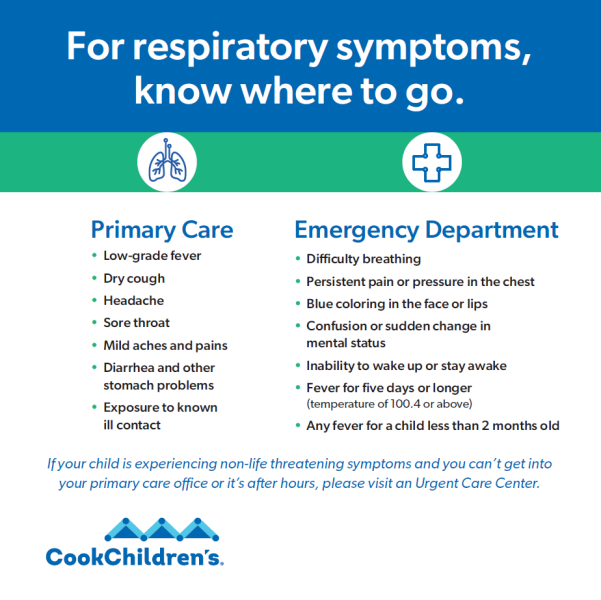
If your child is sick, call your pediatrician first. They can help you decide whether to take your child to the doctor's office, urgent care, or the emergency room. For many children, viral illnesses like the flu, RSV, and COVID-19 can be managed at home with supportive care. Over-the-counter medications like acetaminophen or ibuprofen can help reduce fever and discomfort. Avoid ibuprofen in infants younger than 6 months.
Maintaining hydration is crucial. Please encourage your child to drink fluids and consider giving them electrolyte drinks or popsicles. Saline nasal drops and cool-mist humidifiers can help alleviate congestion.
A fever is defined as a temperature of 100.4 or above. A temperature above 100.4 in babies less than 2 months old is a medical emergency and needs to be evaluated in the emergency room. Any fever lasting longer than four to five days, or one that continues to climb and does not break with fever reducers, should be evaluated by a physician.
When to Seek Medical Attention
While most cases can be managed at home, it's essential to recognize the signs of respiratory distress or dehydration, which require immediate medical attention.
Signs of respiratory distress:
- Increased number of breaths per minute
- Increased heart rate
- Bluish color around the mouth, on the lips, or on the fingernails
- Pale or grayish skin
- Grunting sound during exhale
- Nose flaring
- The chest appears to sink in with each breath
- Head bobbing when breathing in
- Change in alertness
Signs of dehydration:
- Urine output is significantly below the child’s normal (at least once every 8 hours)
- Not producing tears when crying and the eyes appear sunken
- In infants, the soft spot on top of their heads looks sunken
- Dried mucus membranes (lining within the nostrils, mouth, throat)
- Sleepy and unresponsive
If your child exhibits any of these signs, seek immediate care at an urgent care facility or the emergency department. Reserving visits to urgent care or the emergency department for truly urgent needs helps ensure timely care for those who need it most, reduces waiting times for everyone, conserves resources, and limits your child’s exposure to other viruses.
Prevention is key
Kara Starnes, D.O., medical director of Urgent Care at Cook Children’s, encourages parents to practice prevention. Dr. Starnes says one key way to prevent the flu is vaccination.
“The flu vaccine provides the best chance at preventing the more serious complications of the flu,” said Dr. Starnes. “While a flu vaccine may not always completely prevent the flu, it typically makes the illness much less severe and of a shorter duration. It is not too late to get a flu shot, even if you or your child has had the flu.”
- Keep your children at home and away from public areas if they are not feeling well
- Wash your hands
- Cover your nose and mouth when sneezing and coughing
- Avoid touching your nose, mouth and eyes
- Avoid close contact with people who are sick
- Get a flu vaccine for you and your child
