

From Patient to Physician: Seeing Cancer Care from Both Sides
As a 12-year-old with Hodgkin’s lymphoma, Chelsee Greer, D.O., learned some of the hard lessons of cancer that now shape how she treats the disease in children.
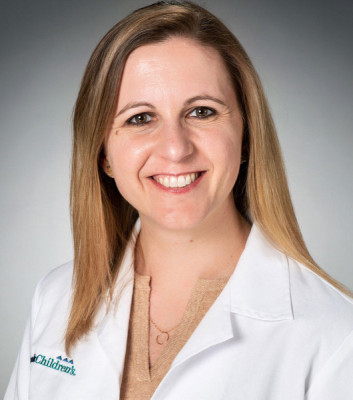
Dr. Greer, who leads the Neuroblastoma Program at the Cook Children’s Hematology and Oncology Center, knows from personal experience what it’s like to receive treatment for cancer at Cook Children’s. She knows how it feels to undergo a biopsy, receive a cancer diagnosis, and experience the toll that chemotherapy takes on the body.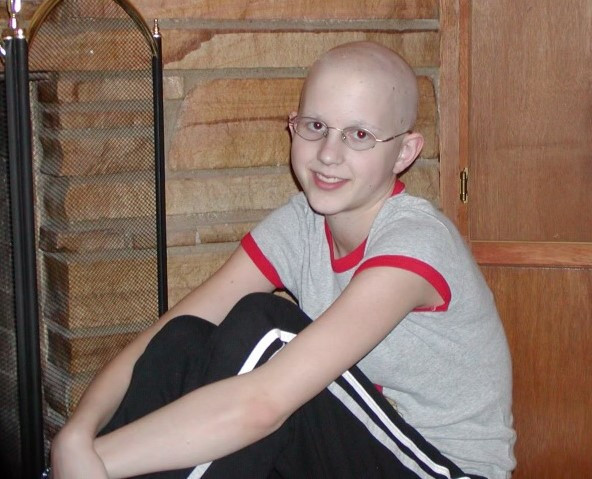
Getting treated for cancer in adolescence even shaped a life goal: She made up her mind that one day she’d work as an oncologist at Cook Children’s Medical Center – Fort Worth, the same place she came for those chemo infusions as a preteen patient.
“My journey's pretty unique,” said Dr. Greer, who joined Cook Children’s in 2023. “I know a lot of people attain their goals, but not too many people say when they're 12 that they're going to come back and be the doctor who was taking care of them. I get to do that, so I feel very grateful.”
At the Neuroblastoma Program, Dr. Greer works to help children and teens the way her doctors helped her. She coordinates a team approach. Treatment options for neuroblastoma include chemotherapy, immunotherapy, transplant, radiation and surgery.
“Many children with neuroblastoma present with advanced stage disease, and it is a very complicated, intensive, long treatment journey,” said Kenneth Heym, M.D., Medical Director, Cook Children’s Oncology. “It takes someone with expertise in that specific area who’s really going to dedicate themselves to this disease and this group of patients.”
Dr. Greer understands that cancer feels overwhelming. But she assures her patients that she and the Cook Children’s oncology team are by their side. They’ll make a plan and take it one day at a time.
Memories of having cancer translate into the empathy in Dr. Greer’s approach. She never assumes she knows exactly what her patients and their families are experiencing. That’s because everyone’s circumstances are unique to them. But her empathy stems in part from what she went through:
- Initial uncertainty about what was causing her symptoms
- Long drives from West Texas for five rounds of chemo
- Lodging at Ronald McDonald House and extended-stay hotels
- Several hospitalizations from complications
Dr. Heym points to Dr. Greer as an inspiration for the accomplishments that pay off through diligence and determination. Dr. Heym uses the word “amazing” to describe the colleague he met long before she earned her medical degree.
“She comes off as somebody who has been doing this a lot longer, both in her knowledge base, which is incredibly extensive and shows her dedication to study, and in her clinical skill and the way she carries herself and leads her team,” he said. “It’s clearly beyond what you’d expect from someone at that stage in their career.”
Dr. Greer took a fast track through high school and college before graduating in 2016 from the Texas College of Osteopathic Medicine (TCOM). She went on to do a pediatric residency and research into the long-term risks of cancer medicines for certain patients.
Dr. Greer also sees patients with other types of cancer in the medical center or the outpatient clinic. She derives her passion as a physician from the relationships that develop in an environment of stress and vulnerability.
“That's really why I do what I do,” she said. “Because we care so much, we're going to take great care of the child. The bonds form really strong, really fast, and that is important to help them through everything.”
September is National Childhood Cancer Awareness Month, which gives us the chance to spotlight Dr. Greer's unique expertise. She sees the patient perspective through a lens of awareness and extra sensitivity. Because she’s been there.
Hodgkin’s Lymphoma
Chelsee Greer was an athletic and studious seventh-grader who played soccer, ran cross country, and did homework late into the night. She kept such a busy schedule that her parents weren’t initially worried when she became extremely tired in March 2002. But then came a low fever, night sweats, swollen glands in her neck, and unexplained weight loss. Her first doctor suspected a case of the flu or mononucleosis.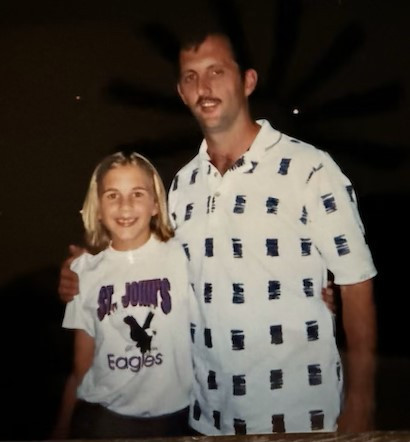
Her fatigue got worse. At school she was so exhausted she would nap in the locker room during lunch. After the school year ended, she slept through much of a family trip to the beach.
“My mom was like, ‘Something’s really wrong,’” Dr. Greer remembers. Another doctor in Odessa ordered a CT scan, and when the results came back, he summoned the family to an evening meeting in his office. The CT scan pointed to lymphoma, the doctor said. They’d need a biopsy to be sure.
Those words didn’t make sense to Dr. Greer at the time. But she figured it wasn’t good news. Her parents were crying. They had to leave for Cook Children’s right away.
So the next morning the Greers drove four and a half hours to Fort Worth. A lymph node biopsy confirmed she did indeed have cancer. Dr. Greer was one of about 8,600 people in the United States diagnosed each year with Hodgkin’s lymphoma, a type of cancer involving the immune system.
Lymphoma had spread throughout her abdomen and pelvis. The fatigue, fever and other symptoms were her body’s inflammatory response. Doctors at Cook Children’s planned to treat the cancer with five rounds of chemotherapy followed by radiation.
W. Paul Bowman, M.D., became Dr. Greer’s primary oncologist. He remembers her as a 12-year-old with a knack for listening and asking questions.
“She was smart, inquisitive and engaged,” Dr. Bowman said. “She had a sense of commitment and was goal-oriented to put this disease behind her. She was an advocate for herself.”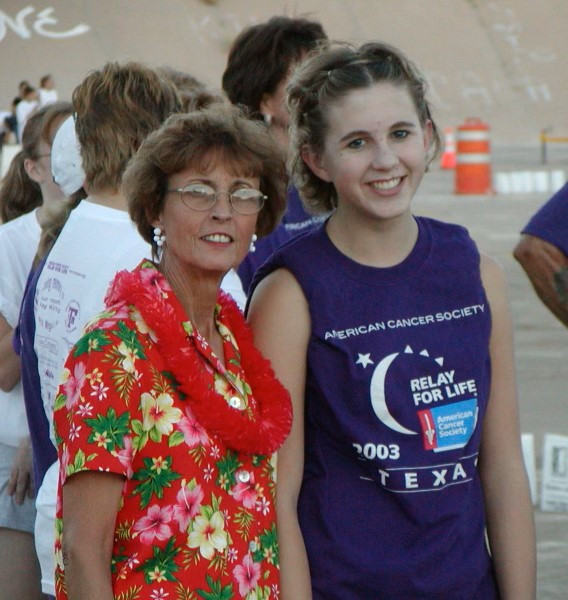
Dr. Greer saw firsthand how childhood cancer turns life upside down for the whole family. Her mom took a leave from work so that they could make chemotherapy appointments in Fort Worth for a week at a time. Friends, relatives and neighbors pitched in to help her dad take care of her younger sister back in Odessa.
In addition to the treatments in Fort Worth, she occasionally came for checkups closer to home at Cook Children’s Pediatric Specialties Midland.
“She didn’t feel sorry for herself,” said Julie Jolly, RN, at the Midland clinic. “She just knew this was a hurdle she was going to get over, and her life goals were going to be met.”
There were hard days when Dr. Greer dealt with vomiting from nausea, painful mouth sores and other reactions to the chemo. Her hair fell out. Complications put her in the hospital a few times. She couldn’t attend school in person, so she received homebound instruction for part of eighth grade. But there were bright spots too, including her appreciation for the infusion center nurses.
“My parents were super amazing. My support system -- my grandparents, my aunts and uncles, my best friend -- definitely made it a lot easier. And I think during treatment it was just kind of like, ‘All right, this is what we're doing.’”
Chemo treatments started in June 2002, and after the fifth round in November, her cancer was gone. She didn’t need radiation after all.
Moving Forward
Dr. Greer graduated from high school in three years. Then, during her summer breaks in college, she volunteered at the clinic in Midland. Jolly taught her how to check vital signs and perform other procedures. She shadowed Dr. Bowman when he saw oncology patients in Midland. 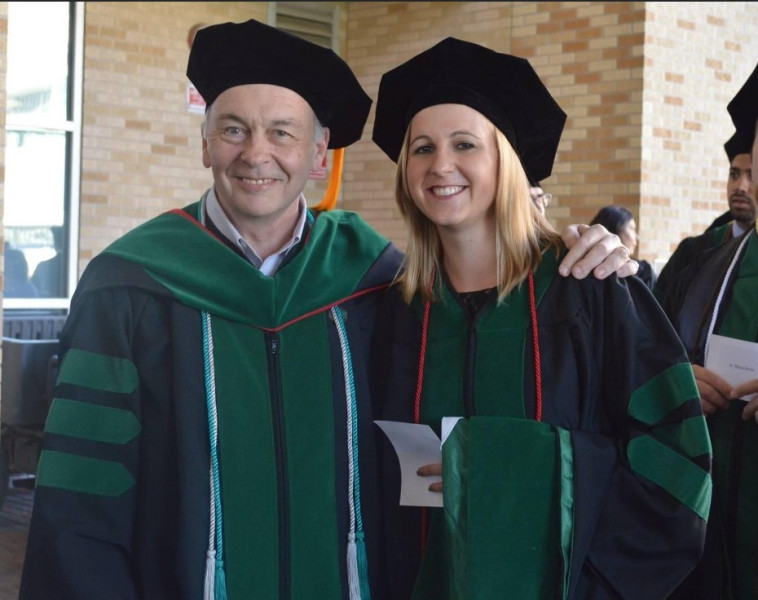
Dr. Greer went to medical school at TCOM, where Dr. Bowman was a teacher and mentor to his former patient. One of her rotations was at Cook Children’s oncology.
“Maybe she’s matured more quickly because of what she went through, but Chelsee has always seemed kind of grown up. I just have such tremendous respect for her,” he said.
Dr. Greer did a pediatric residency at Dell Children’s Medical Center in Austin and a hematology and oncology fellowship at UT Southwestern Medical Center in Dallas. Then she joined the oncology staff at Cook Children’s. As Dr. Bowman puts it … she came back to her roots.
Unique Perspective
Surviving childhood cancer became a driving force in Dr. Greer’s life and medical practice. She sets high standards for herself. She advocates for broader access to health care in underserved communities. Because she remembers the anxiety of waiting after a scan or biopsy, she goes out of her way to communicate those results promptly any time of the day or night.
“I think I have an empathy that's built in that you can't be taught,” she said. “I really know what it's like to be waiting for those test results.”
 She tells her patients that cancer is a big speed bump in life. And she wants them to know she’ll do everything possible to help get them on the other side of the speed bump. Don’t give up on your goals, she advises.
Dr. Greer stands out for her work ethic, attention to detail, and focus on every patient, Dr. Heym said. She’s already done incredible things in pediatric oncology. And Dr. Heym predicts much more to come.
Grit and aspiration propelled her from her first visit to Cook Children’s -- as a 12-year-old facing cancer – to the same health care system, now as a physician and leader in the fight against the disease.
Dr. Heym describes Dr. Greer this way: “Everything you do, do it right, do it to the fullest, make it worthwhile. And then being able to turn that into a life of helping others. You can’t think of a more heartwarming story.”
RELATED STORIES:
Untold: The Stories of Cook Children's 
We're excited to announce the launch of our new podcast, “Untold: The Stories of Cook Children's.” This series will delve into the inspiring journeys of our patients, families, staff, and physicians like you've never heard before. Our first episode features the incredible story of Chelsee Greer, D.O., and her mom Lindee. Together, they share their journey of overcoming cancer and Dr. Greer's dedication to fighting for the health of her patients as an oncologist at Cook Children's. Listen to the podcast on Apple Podcasts, Spotify or watch on YouTube.
No one walks alone.
The Blast is more than a walk – it’s a chance to show kids battling cancer that their Cook Children’s family supports them on their journey. On March 29, 2025, we invite you and your family to walk with us at Panther Island Pavilion and help raise essential funds for more research, treatments and clinical trials. Let’s show these kids, their families and the world that at Cook Children’s, no one walks alone. Visit blastwalk.org to sign up or donate today!
