

Finding Her Voice: How North Texas’ Newest NICU Helped an East Texas Newborn Heal from Vocal Cord Paralysis
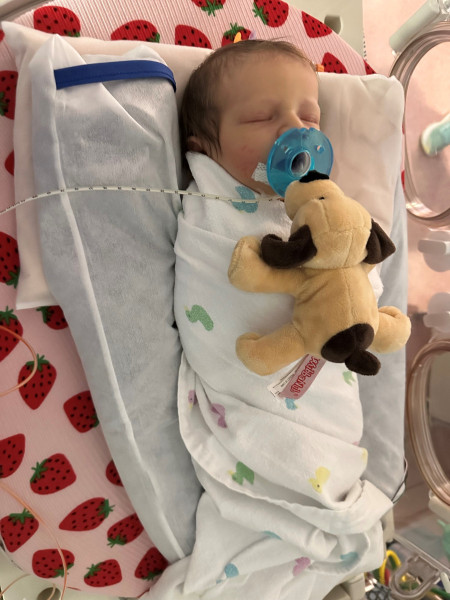 The first ear-splitting wails of a newborn are a beautiful and welcome sound, a sign to their overjoyed parents that their baby’s tiny lungs work well. But Elizabeth Meredith’s initial cries following her birth on Sept. 23, 2025, were weak and mixed with noisy and high-pitched breathing, which is often referred to as stridor. Her raspyness was not normal and an indication of respiratory distress, which spurred the delivery team at the hospital in her East Texas hometown to jump into action.
“When she was born, we noticed pretty quickly that she sounded kind of strange,” said Samantha, Elizabeth’s mother. “Her crying sounded really hoarse and high-pitched. They took her from me pretty quickly to get her checked out.”
Unable to pinpoint the cause of her symptoms, Elizabeth’s pediatrician was concerned she needed a higher level of neonatal care. The doctor recommended the newborn be transferred that evening to the newly opened Neonatal Intensive Care Unit at Cook Children’s Medical Center – Prosper, where neonatologists had the specialized pediatric equipment and capabilities to perform the tests needed to determine a diagnosis. 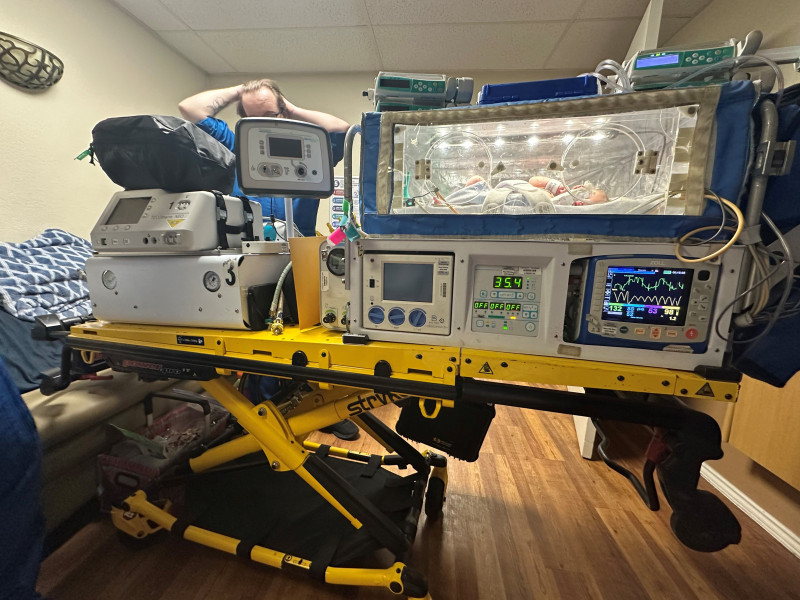 Just before midnight on her first day of life, a Teddy Bear Transport ambulance arrived to transport Elizabeth two hours away to Cook Children’s – Prosper. Her father, Tyler, left soon after and arrived shortly before the sun rose on the next day. Leaving his wife, who was still recovering from birth, at their hometown hospital was hard, Tyler says, but he took comfort in knowing Elizabeth was getting the critical care she needed. Samantha was able to join her husband and daughter in Prosper the following day.
“Even though you hate the fact that you have to be there, there was comfort in knowing that if anything went wrong at all, her NICU care team is there within seconds,” Tyler said. “Having that comfort and no fear of having to worry too much about everything else was very nice.”
A few days into her stay, Elizabeth was diagnosed with vocal cord paralysis, also known as vocal fold paralysis. It is a serious condition in which the movement of one or both vocal cords is compromised. Babies with vocal cord paralysis may have difficulty breathing, feeding and making sounds. The condition can be caused by disorders of the central nervous system, birth trauma, surgical injury or tumors in the chest. Elizabeth’s vocal cord paralysis was deemed idiopathic, meaning there is no known cause.
On the bright side, Elizabeth’s condition was caught early.
“In hindsight, we both separately had the realization that, with her vocal cord being paralyzed, we're glad that she was presenting breathing issues when she was in the hospital,” Samantha said. “If she had not shown symptoms when she did, and we had just been trying to feed her like normal, she could have been aspirating and gotten pneumonia and got really sick. So it's one of those things where you don't want to hear that your baby is having breathing issues and that their crying sounds really weird and funky, but at the same time, we're both really grateful that those symptoms did present because the alternative would've been so much worse.”
New Arrival
The NICU at Cook Children’s – Prosper opened on Sept. 2, 2025. It is the region’s first full-service NICU within a pediatric medical center, and Elizabeth was one of the unit’s first patients. Her care team, led by neonatologists, began charting a course for diagnostic testing soon after she arrived. But first, Tyler got to spend time holding his daughter, something the new parents were not able to do after Elizabeth’s birth due to her precarious condition. 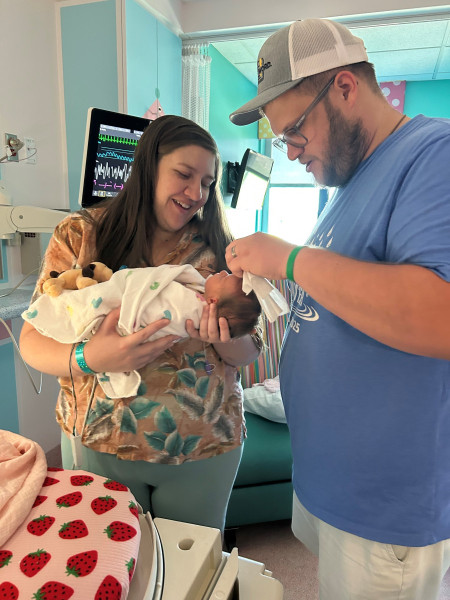 To their surprise, Tyler and Samantha were able to room in with their newborn in the NICU. The unit’s rooms are equipped with all of the amenities a family needs to stay together during a hospital admission. Every patient room is private and includes an ensuite bathroom.
“It was not necessarily what I was expecting, but in such a good way,” Samantha said. “Whenever I think of an NICU, I think of like a big nursery where you're not really allowed to stay in there for a ton of time and you don't really have privacy and all these things. So for us to have our own room and to be able to stay with her the whole time made it a lot easier. We were able to have family come in and visit and that was really nice. The facility was just beautiful.”
Rooming in allows parents and babies to experience those precious moments together that others share at home. The togetherness promotes bonding and healing, says Tiffany Pullom, nurse manager of the NICU.
“Smelling, hearing, and being near parents improves patient outcomes and their developmental growth,” Pullom said. “Including the parents as part of the care team and creating an environment for them to room in with their baby during admission fosters some sense of normalcy during difficult times. This also benefits post-partum moms who don’t anticipate the first moments with their newborn being in a hospital room. We recognize the importance of not only treating the patient but also caring for the needs of the entire family as appropriate.”
Elizabeth spent 10 days in the NICU with her parents by her side. Most of their time was spent learning how to feed Elizabeth so that she did not aspirate during feedings—a common side effect of her condition.
Nutrition is extremely important for healing but also for growth and development,” Pullom said. “Our robust team worked together to ensure Elizabeth had the appropriate nutrients to support her specific needs.”
Using a diagnostic test called a swallow study, a speech therapist assessed her ability to tolerate regular breast milk, formula and thin liquids. A registered dietitian also worked closely with the speech therapist and neonatal providers to ensure Elizabeth received the appropriate nutrient and caloric intake. From there, technicians in the NICU’s Nutrition Lab prepared specialized formula for Elizabeth’s unique needs. 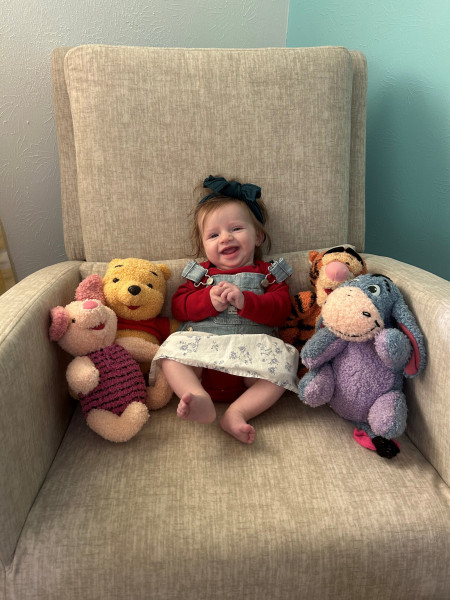 Elizabeth was able to go home on Oct. 2, and will continue to follow-up with her Ear, Nose and Throat specialist at Cook Children’s. Tyler and Samantha have already seen improvement in Elizabeth’s condition and are hopeful that her vocal cord paralysis will resolve on its own.
While Elizabeth’s first days of life did not go how the family imagined it would, they are grateful the NICU at Cook Children’s – Prosper was there to get their baby on the path to healing. They both say their daughter’s care team made all the difference.
“I felt like I saw God at work most through the people that took care of me and took care of her,” Samantha said. “Thinking back over my experience at my hometown hospital and at Cook Children’s, I feel like I need to track down every single nurse and just give them a huge hug and say thank you. I just so strongly felt like they're doing the Lord's work, and not only for me, but for every patient they have every day. They were just huge blessings, and I feel like God put them there for us at the time that he did.”
Happy Birthday, Prosper!
Today marks the 3rd anniversary of Cook Children’s Medical Center – Prosper, which includes an emergency department; surgical and procedural services; an infusion center; an outpatient imaging center; a retail pharmacy; and inpatient units. Since opening its doors on Jan. 9, 2023, the medical center has built out its Pediatric Intensive Care Unit and added services such as the Exercise Respiratory Center, EEG services for monitoring seizures and, most recently, the NICU.
