

Family History Leads to Swift Diagnosis for Brothers with Immune Deficiency
The Antley brothers – Collin, Tyler and Jax – have a lot in common, including their love of the outdoors and spending time playing with cousins. But what really makes the boys relate to one another is their shared immunodeficiency. All three boys have a condition called CARD 11 dominant negative (DN), which causes their immune systems to work improperly and puts them at greater risk of infections. 
Every week, they receive a medication that is injected under the skin. It strengthens their immune systems against the bacteria and viruses that made them frequently ill.
Collin, the oldest Antley child, experienced multiple Staphylococcus aureus (staph) skin infections, ear and respiratory infections during his first four years. He had such frequent ear infections that he needed to have ear tubes put in when he was 3 years old. Collin was found to have low immunoglobulin levels and was started on infusion to raise those levels to normal and protect him from infections.
It was the same for Tyler, the second Antley child. When he was 2 months old, his mother, Ashley Antley, found a bump on his chest.
“Being a pro on staph infections by then, I knew what this was,” she said. “So we went to the hospital.”
 Tyler spent a week at Cook Children’s and underwent testing that indicated his immunoglobulin levels were low. He began receiving an infusion - immunoglobin replacement therapy – every four weeks.
When Jax, the youngest Antley, was born, Ashley scheduled an appointment for a genetic test.
“I wanted to be proactive,” she said. “I had [the doctors] test [his immune system] and his results were the same as Tyler’s so we knew something genetic was going on.”
That’s when the Antley family met Natalia Chaimowitz, M.D., Ph.D., at the Cook Children’s Immunology Clinic. Dr. Chaimowitz studied the boys’ health history, immune system and genetic test results and identified their condition.
Thanks to continued treatment, the boys are doing well.
“Our lives are relatively normal for the most part,” Ashley said. “We work more on preventing infections than healing them now.”
“Their story highlights the importance of family history and prompt and accurate diagnosis,” Dr. Chaimowitz said. “Because of the older boys’ warning signs, Jax got diagnosed more quickly than his brothers. Because we were able to diagnose the boys with an immune defect (CARD11 DN) and treat it, we have been able to decrease the number of infections they experience and improve their quality of life.”
Immunology Clinic
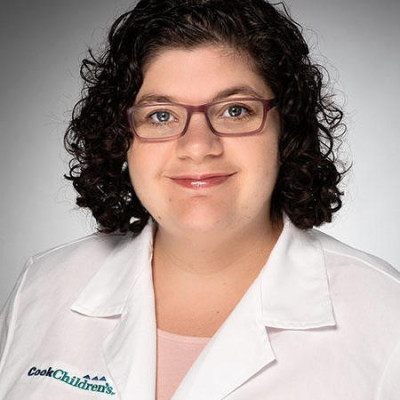
Dr. Chaimowitz was born in Argentina and decided early in life that she wanted to be a pediatrician. Since childhood, she was enamored with medicine and the workings of the human body. She earned her medical degree and a Ph.D. in immunology, focusing her career on primary immune disorders. Dr. Chaimowitz also enjoys spending time with her husband and three daughters, reading and crocheting.
The immunology team at Cook Children’s is dedicated to providing up-to-date therapies and clinical research for many types of disorders. We offer inpatient and outpatient consultations, diagnosis, and other services on the first floor of Dodson Specialty Clinics at 1500 Cooper Street in Fort Worth. If your child’s immune system doesn’t work properly, we can help. To schedule an appointment or find more information, call 682-303-0600 or visit Cook Children's Immunology (cookchildrens.org).
