FACT SHEET: Cook Children’s Neighborhood Health Center Serving Families Living in the Las Vegas Trail Area
Why is the neighborhood health center in Las Vegas Trail significant?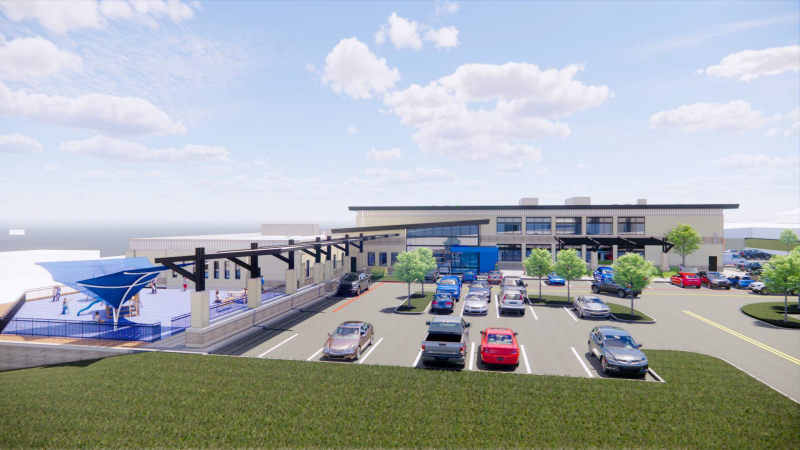 The opening of the neighborhood health center in Las Vegas Trail officially ends three decades of this area (zip codes 76116 and 76108) being a health care desert.
Why was Las Vegas Trail considered a health care desert?
Once a vibrant community catering to Carswell Air Force Base personnel, the Las Vegas Trail (LVT) area significantly declined when the base closed in the early 1990s. The base provided most services, so there was little need for local commercial development or community amenities surrounding LVT apartments and single-family homes. This resulted in the neighborhood's current landscape: predominantly dense multi-family housing with a severe lack of local businesses, jobs or community services (including health care).
What was the impact of the closure of Carswell Air Force Base on the Las Vegas Trail neighborhood?
In 2017, the Fort Worth Star-Telegram published a series of articles on LVT highlighting its years of neglect and growing challenges. Despite representing only 1% of Fort Worth's population, it accounted for approximately 4% of the city's crime. At that time, an estimated 71% of people living in the area were believed to be living at low to very low-income levels. The median household income was $31,495, less than half of Fort Worth's average ($62,187).
Compounding these issues, 67% of households were led by single parents. Access to health care was limited, with 41% relying on public insurance and nearly a quarter having no insurance at all. Local elementary schools saw a 90% student mobility rate, meaning 9 in 10 kids who started kindergarten would leave the school before fifth grade, highlighting extreme instability for families.
What was the response to the Fort Worth Star Telegram’s reporting?
Following the Star Telegram’s reporting, a series of listening sessions, town hall meetings and surveys were conducted to identify the neighborhood’s greatest needs. LVTRise, a local nonprofit organization, was formed in 2018 to address many of those needs. In 2021, the City of Fort Worth hired a third-party to create a roadmap for sustained change in the neighborhood. The result was the Las Vegas Trail Transformation Plan, which you can read more about on the City of Fort Worth’s website.
What are the demographics of residents in Las Vegas Trail?
The Las Vegas Trail area is home to about 14,000 residents in a 1.7-square-mile area. Residents identify themselves as Black, white and Hispanic (roughly one-third per group). The neighborhood also has a 30% transiency rate.
What are some of the top concerns for citizens of Last Vegas Trail?
Top concerns for people living in Las Vegas Trail include transportation, food insecurity, employment, access to health care, mental health and safety.
What is the neighborhood health center in Las Vegas Trail?
The neighborhood health center in Las Vegas Trail is a first-of-its-kind community partnership bringing critical health care and social services to residents in LVT. Partners include Cook Children’s, JPS Health Network, The City of Fort Worth, Fort Worth Police, WestAid, LVT Rise, Tarrant County College and Workforce Solutions for Tarrant County.
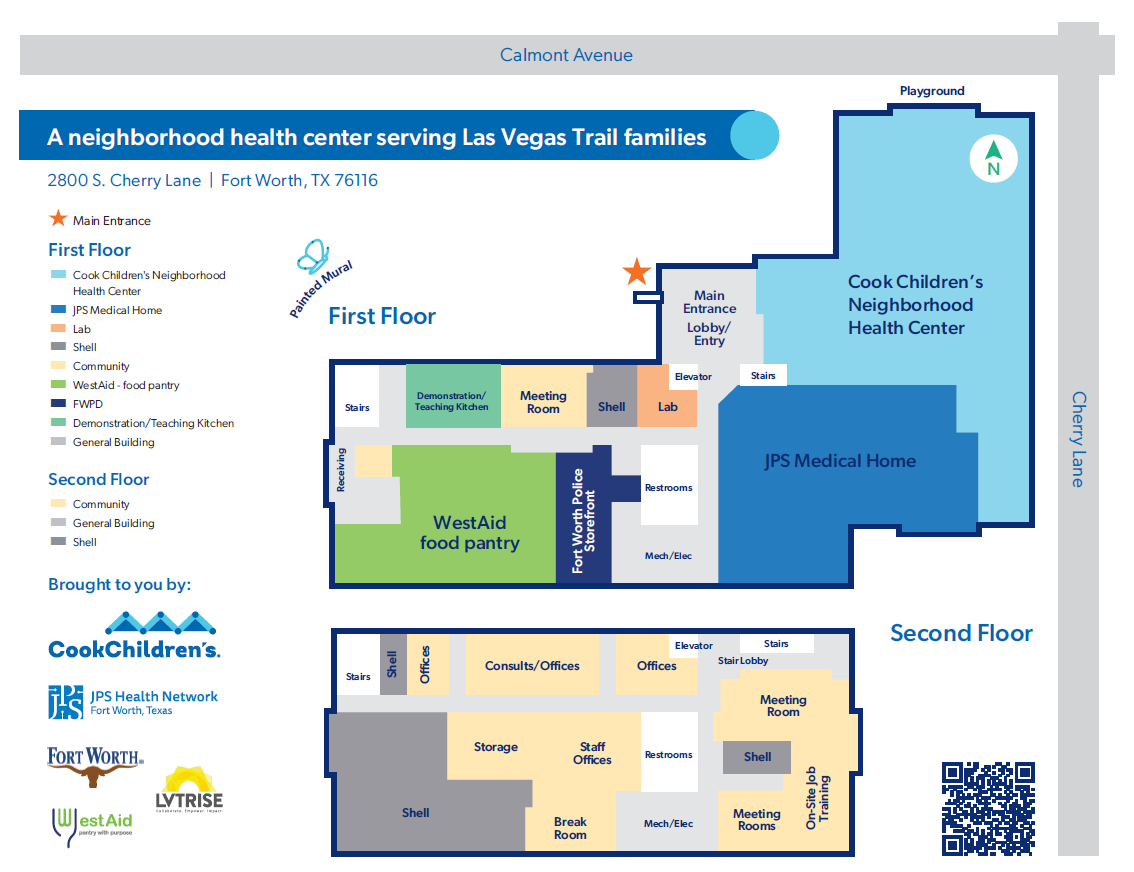
 The neighborhood health center is located in a 40,000-square foot, two-story building encompassing:
- Pediatric medical care through Cook Children’s ninth neighborhood health center
- Adult medical care through JPS’ Adult Medical Home
- Behavioral health services for adults and children
- Prenatal care, women’s health services and family support programs
- Fort Worth Police Storefront to foster community relationships (City of Fort Worth)
- Workforce training program focused on customer service positions in health care (Workforce Solutions, Tarrant County College, Cook Children’s, JPS)
- Social services support such as:
- On-site food pantry (WestAid)
- Demonstration kitchen and full-time nutritionist (Cook Children’s)
- Community education classes for pregnancy, lactation support, asthma, CPR, injury prevention, parenting support, adult health, etc. (Cook Children’s Health Plan, Cook Children’s Center for Community Health, JPS)
- Benefits application help (Medicaid, SNAP, WIC, JPS Health Connect)
The building sits on 3.7 acres of donated land at the intersection of Calmont Avenue and Cherry Lane in west Fort Worth.
Who does the neighborhood health center in Las Vegas Trail serve?
The neighborhood health center will serve more than 100,000 people who live in LVT and surrounding areas, including more than 20,000 children (14 years and younger).
How have residents who live in Las Vegas Trail been receiving medical care?
Adults
Residents typically travel outside the neighborhood for health care, use Rise Community Center computers for virtual care or take advantage of mobile health care units (when they’re in the area).
Children
In 2024, children in this neighborhood accounted for more than 4,000 visits to Cook Children’s Emergency Department and Urgent Care Centers for reasons that were primarily for primary care rather than emergencies or urgent situations.
An additional 7,000 patients are cared for annually at Cook Children’s other neighborhood health center locations, none of which are easily accessible from Las Vegas Trail.
More than 5,500 members of Cook Children’s Health Plan (which provides Medicaid & CHIP) live in Las Vegas Trail, underscoring the critical need for local health care access.
Where can I learn more?
Cook Children’s has more information about services, classes, events and more on its website.