

Every Medication Matters: The Vital Role of Clinical Technicians at the Bedside
When children need medication at Cook Children’s, accurate and fast delivery to the bedside makes all the difference. 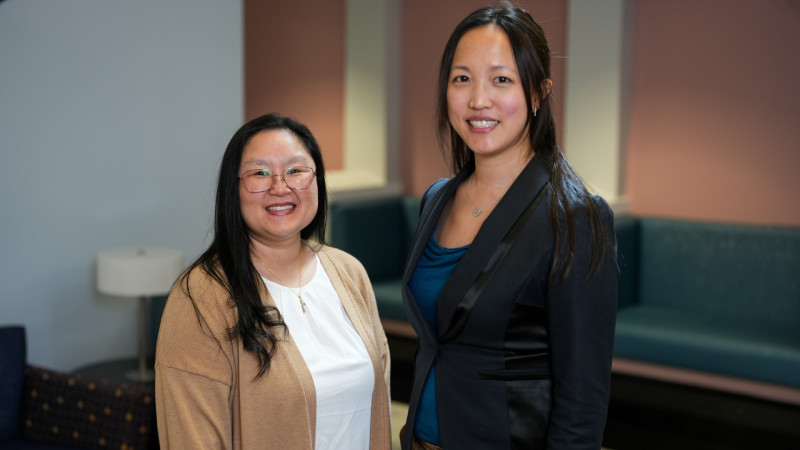 Clinical technicians – specially certified in medication history taking – play a critical role in making that happen. They serve as the liaison between pharmacists, physicians and nurses, ensuring each patient’s medication history is complete and accurate from the start. The program, which serves as a model for medication history programs nationwide, is led by Alice Yeh, Clinical Pharmacy coordinator, and Mary Hernandez, Clinical Pharmacy technician supervisor.
Advancing Patient Safety through Medication Management
Through the clinical technician program, 24 technicians manage more than 95% of medication histories. They take medication histories in the Emergency Department (ED), on inpatient floors, and in the Perioperative area. They run the ED Satellite Pharmacy, while three technicians support outpatient clinics. More than 95% of admitted patients and caregivers interact with clinical technicians to provide accurate home medication lists. Their role is especially important when every second counts.
This accuracy directly impacts patient care. With a complete medication history including updates to the patients’ allergies, physicians can order medications from the retail pharmacy to be delivered to the bedside as part of the “Meds to Beds” program. Clinical technicians also assist with clinical tasks, reorder doses and coordinate discharges so patients leave with everything they need. If a patient is not tolerating a medication or has run out, clinical technicians work closely with pharmacists and the care team to resolve issues quickly. In the Neonatal Intensive Care Unit (NICU), they also review transfer records and vaccine administration schedules to support safe care.
Clinical technicians are cross-trained to provide support 24 hours a day, seven days a week, wherever they are needed in the hospital. In the ED, dedicated clinical technicians are available around the clock to assist pharmacists, improving both safety and turnaround time for medications. During codes, clinical technicians coordinate medication delivery to the bedside and assist the pharmacists with drawing up emergency medication doses.
Through the program, clinical technicians help patients identify and resolve issues with their medications.
“When we take medication histories, we sometimes find patients haven’t been taking their medications at all,” Hernandez said. “Other times, their symptoms are actually side effects from taking a medication incorrectly.”
Expanding a Program That Leads the Field
The clinical technician program began in 2013 to support clinical pharmacist activities on the inpatient units. From 2011 to 2012, pharmacy students piloted medication history taking in the ED. As a result of this pilot, medication history technicians were added in 2015 in the ED, inpatient units, and later, Perioperative Services.
In 2022, the medication history program merged with the clinical technician program, creating a more comprehensive, integrated service supported by additional full-time positions.
Today, the program continues to grow. Pharmacy completion of medication histories has increased from 89% of admissions to 98% in 2025. The team is recognized as a leader in the field.
“We have one of the most robust programs in the country with research dedicated to this,” Yeh said.
That recognition extends beyond Cook Children’s. At a recent Children’s Hospital Association conference, the Cook Children’s program was highlighted as a model for medication history programs nationwide. Hospitals across the country have reached out to learn about the program’s structure and success.
Most importantly, the impact is felt by patients and families every day.
“We take a holistic approach to improving the patient experience, from transitions of care to how we measure success,” Yeh said. “This program makes a difference for patients every day.”
