

Cook Children’s Experts Share Vital Information as Nationwide Measles Cases Reach Alarmingly High Numbers
Cook Children’s experts share vital information on stopping the spread and keeping your kids healthy.
By Charlotte Settle
National Infant Immunization Week (April 22-29) is a yearly observance highlighting the importance of protecting children 2 years and younger from vaccine-preventable diseases (VPDs). The Centers for Disease Control and Prevention and the American Academy of Pediatrics (AAP) recommend that children stay on track with their well-child appointments and routine vaccinations. On-time vaccination is critical to provide protection against potentially life-threatening diseases.
Measles is one of the most contagious infectious diseases on the planet. This year alone, there have been seven outbreaks across the United States, compared to four in 2023. An outbreak is defined as three or more related cases.
“If you’re in a room with someone who has measles and you’re not vaccinated or immune, there’s a 90-95% chance you now have the disease,” said Cook Children’s Infectious Diseases physician, Nicholas Rister, M.D.

So far in 2024, there have been 121 cases of measles across 17 states, according to the Centers for Disease Control and Prevention. Ninety-five percent of these cases have occurred in unvaccinated or under-vaccinated populations. Fifty-six percent of cases, the majority of which have been in children under 5 years old, resulted in hospitalization due to severe complications. Though no cases have been reported in Texas, the virus is spreading rapidly and the Cook Children’s team is prepared.
“Hopefully we won’t need it, but we are developing a workflow so that our clinics know exactly how to recognize, handle, test for, and guide our families through measles,” said Cook Children’s Medical Director for Ambulatory Quality, Alice Phillips, M.D.
Because cases have remained relatively contained over the last few decades, Julee Morrow, M.D. is one of the very few pediatricians at Cook Children’s who has cared for measles patients. She saw an influx of the disease during the last major outbreak from 1989-1991, during which cases in the U.S. spiked to roughly 55,000.
“My partners and I diagnosed about 30 cases here in Fort Worth, and every single one of them had to be admitted to the hospital due to the severity of their infection,” Dr. Morrow said. “If another major outbreak happens, there’s a possibility we could run out of beds.”
Measles is not to be taken lightly—but it is easily preventable. Dr. Rister, Dr. Phillips, and Dr. Morrow shared vital information about the virus, its risks, and vaccination protocols to help families be proactive in protecting their children.
What is measles?
Measles is a highly contagious virus that spreads through the air via coughing and sneezing. It can even enter the body through the mucus membranes of the eyes.
Common symptoms include: 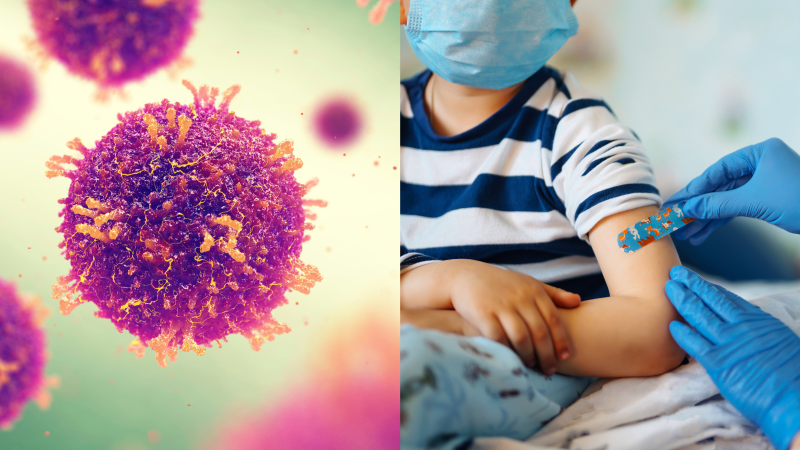
- Fever
- Cough
- Conjunctivitis (red eyes)
- Coryza (runny nose)
- Sore throat
- Rash (after 3-4 days)
What are the risks of measles?
While most people fully recover from measles, it can still pose life-threatening and potentially fatal risks. For every 1,000 children who get measles, one to three will die, even with the best care.
As many as one out of 20 children with measles will also develop pneumonia, which is the most common cause of death from the virus in infants.
One in 1,000 children with measles will develop encephalitis, or severe brain inflammation, which can lead to convulsions, deafness, disability, or death.
Though it is extremely rare, a fatal disease of the central nervous system, SSPE, can appear as late as seven to 10 years after a child is infected.
Who is most at risk?
Any unvaccinated or non-immune person of any age can contract measles, but it is most common in children. Unvaccinated children—particularly infants under 1 year of age—are at the highest risk of severe complications or death.
“Who we need to worry about is not so much ourselves and our staff, but our tiny patients coming through the door,” Dr. Morrow said. “Measles is a disease of unvaccinated people, and our biggest concern is infants and immunocompromised kids.”
Dr. Rister pointed out that unvaccinated pregnant women are also at high risk, as measles can have devastating effects on a developing fetus.
What is the MMR vaccine?
The measles, mumps, and rubella vaccine is a safe, tried-and-true immunization that prevents people from contracting and spreading measles. It is 93% effective after one dose and 97% effective after the recommended two doses.
“There is no reason a disease that is preventable with a safe and effective vaccine should harm one of our children,” Dr. Phillips said.
When should my child get vaccinated?
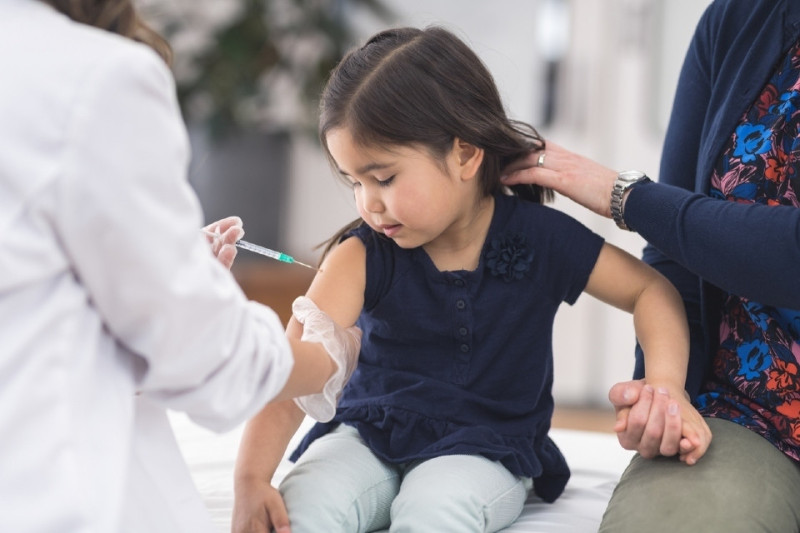
The CDC recommends that children receive two doses of the MMR vaccine—the first between 12 and 15 months old, and the second between 4 and 6 years old.
If you’re an adult and you’re unsure if you’ve completed your vaccines—especially if you are pregnant—ask your doctor to check your vaccination records and make sure you are up to date.
Can my child get vaccinated early for international travel?
If your child is at least 6 months old, they can get one dose of the MMR vaccine before traveling internationally. Plan to get your child fully vaccinated at least two weeks before your trip. Follow the below vaccination schedule from the CDC based on your child’s age:
Infants Under 12 Months Old:
- Get an early dose at 6-11 months
- Follow the recommended schedule and get another dose at 12-15 months and a final dose at 4-6 years
Children Over 12 Months Old:
- Get first dose immediately
- Get second dose 28 days after first dose
Teens and Adults With No Evidence of Immunity*:
- Get first dose immediately
- Get second dose 28 days after first dose
*Evidence of immunity includes at least one of the following: Written documentation of adequate vaccination, laboratory evidence of immunity, laboratory confirmation of measles, or birth in the U.S. before 1957.
What if my child is immunocompromised and can’t get vaccinated?
Dr. Rister said the best way to protect your immunocompromised child is to ensure everyone surrounding them is fully vaccinated—including family, friends, and classmates.
If a case appears in your area and your child is in daycare or another environment around other children, consider keeping them home until the outbreak passes.
What should I do if my child is exposed to measles?
If you think your child has been exposed, call your pediatrician right away. It’s important to alert your doctor before bringing your child to the office. That way, staff can take precautionary measures to prevent further spread and ensure they have the necessary supplies to care for your child.
If your child has a confirmed case of measles, don’t panic—you will receive step-by-step guidance from your physician and the Texas Department of State Health Services. They will evaluate the individual risk of everyone in your household and tell you the exact steps to take to keep everyone safe.
Information from Cook Children’s and the Centers for Disease Control and Prevention:
- CDC: Top 4 Things Parents Need to Know About Measles
- CDC: Measles
- Go here to view photos of measles from the CDC.
- What to know about vaccines and immunizations | Vaccine fact and fiction | Cook Children’s
Related content on CheckupNewsroom.com:
About Cook Children's Health Care System
Cook Children’s is more than a health care system: we strive to be an extension of your family, growing with your child from their first steps to adulthood. By collaborating to deliver on our Promise—to improve the well-being of every child in our care and our communities, we connect the dots for our patients. Between primary and specialty. Between home and medical home. Between short-term care and long-term health.
Based in Fort Worth, Texas, we’re 9,700+ dedicated team members strong, passionately caring for over 2 million patient encounters each year. Our integrated, not-for-profit organization spans two medical centers (including our state-of-the-art location in Prosper), two surgery centers, a physician network, home health services and a health plan. It also includes Child Study Center at Cook Children's, Cook Children's Health Services Inc., and Cook Children's Health Foundation. In 2024, Forbes named Cook Children’s the top health care employer in the U.S., and third on the list of ‘America’s Best Large Employers.’
And our impact extends beyond the borders of Texas. We proudly treat children from virtually every state in the nation and 32 countries. By seeing the world through the eyes of children and their families from all backgrounds, we’re able to shape health care suited to them: connected by kindness, imagination and respect—with an extra dose of magical wonder.
Discover more at cookchildrens.org.
