

Cook Children's Emergency Department Sees Rise in Mycoplasma Pneumonia Cases
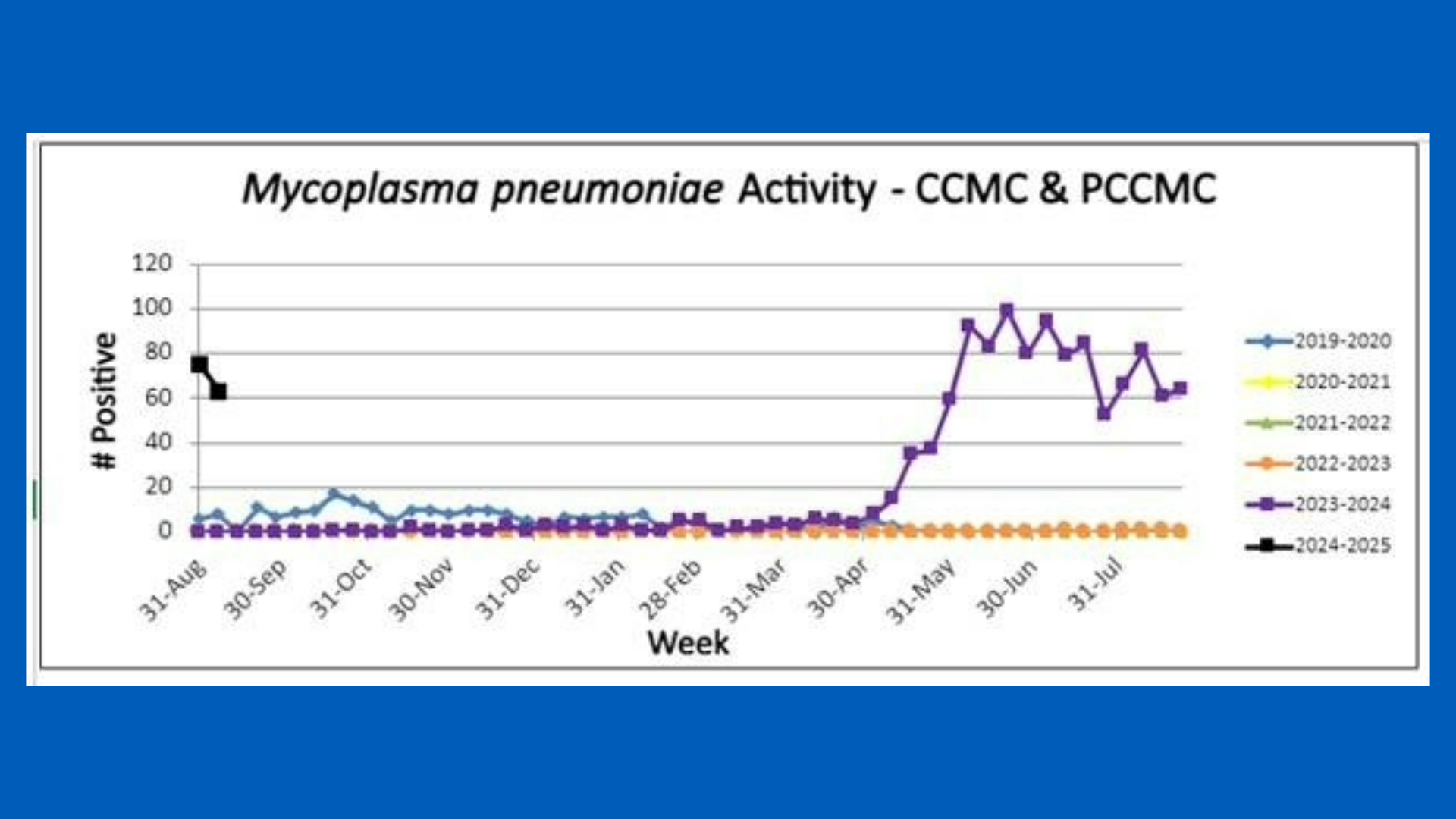
After a spike was first seen in June, the rate of Mycoplasma pneumonia stays high.
A common and highly contagious bacterial infection is hitting kids hard, continuing a surge in Mycoplasma pneumonia cases seen at Cook Children’s throughout the summer.
Since June, the physician’s offices, Urgent Care Centers and Emergency Departments at Cook Children’s have reported high numbers of patients with Mycoplasma pneumonia, sometimes called “walking pneumonia.”
The infection typically causes cold-like symptoms including cough, fever, headache and sore throat. Other symptoms can include nausea, vomiting and diarrhea. Some patients – those with sickle cell disease or autoimmune disorders, for instance – can become severely ill.
Last week at Cook Children’s, 63 out of 463 patients who were tested were positive, or 14%. The same week of September 2023 had a 0% positivity rate.
This type of pneumonia spreads through respiratory droplets in coughs and sneezes. If someone in your house has Mycoplasma pneumonia, there’s a 90% chance someone else in the family will catch it.
“There are patients who will have Mycoplasma infection in their upper respiratory tract like a cold, and there are patients who have Mycoplasma infection in their lower respiratory tract causing pneumonia in their lungs,” said Mary Suzanne Whitworth, M.D., Medical Director of Pediatric Infectious Diseases at Cook Children’s. “Some get sick enough to be in the hospital because they require oxygen.”
The U.S. Centers for Disease Control and Prevention says it can take up to four weeks for symptoms to appear after exposure to the bacteria. Symptoms can last several weeks.
“It’s one of the most contagious infectious diseases we know of. It’s very contagious within families,” Dr. Whitworth said. “The concern is when you have so much more disease in the community, there are more patients presenting with the rarer presentations such as encephalitis, or inflammation of the brain.”
If your child has difficulty breathing or is short of breath, see a doctor right away.
Tips to stop the spread:
- If possible, avoid exposure to people who are sick.
- Keep your child home from daycare or school if they’re sick.
- Teach your child to sneeze or cough into their elbow or a tissue.
- Frequent handwashing helps.
RELATED STORY:
About Cook Children's
Knowing every child’s life is sacred, we promise to improve the well-being of every child in our care and our communities. That’s why Cook Children’s combines the art of caring with the latest technology to provide exceptional care for every child, every day. With more than 60 primary, specialty and urgent care locations throughout Texas, your family can access our top-ranked specialty programs and network of services to meet the unique needs of your child.
