

Child Passenger Safety Week: Protect Your Kids On the Road
These reminders for car seat, booster seat, and seatbelt safety could save your child’s life.
An average of three children are killed per day due to lack of car seat use or improper car seat use—and a staggering three out of four car seats are used incorrectly. Every year, children are rushed to the emergency room to be treated for car-related injuries, some of which occur without the car ever leaving the driveway.
In honor of Child Passenger Safety Week (Sept. 15-20), we asked Cook Children’s Trauma Injury Prevention Coordinator, Sharon Evans, for insights on how to keep your kids safe in the car.
Know the Four Stages of Car Seats
Knowing how to properly restrain your child in the car at every phase of their growth is crucial to their safety.

1. Rear-facing
Rear-facing car seats are the first stage of restraint for children ranging from newborns to preschoolers. This stage supports their head, neck, and back while riding in a vehicle until they meet the maximum weight OR height of their car seat. According to Evans, it is highly recommended by experts to keep your child in a rear- facing car seat for as long as possible, as it is the safest option available.
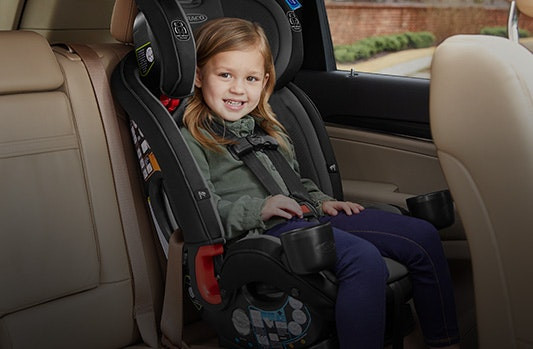
2. Forward-facing
Forward facing is the second stage of car seats for preschoolers through school-age kids. Children should remain in a forward-facing car seat with a five-point harness until they meet the maximum weight OR height before moving to a booster seat.

3. Booster
Children must be at least four years old before transitioning into a booster seat. The booster seat stage is crucial for children who have outgrown a harnessed car seat, but do not yet fit safely behind a lap-shoulder belt. Still, booster seats are skipped over all too often. Evans said many kids between the ages of 4 and 8 get seriously injured due to being put in seat belts too soon.

4. Seat Belt
A seat belt is the final stage of restraint. The safest time to transition to a seat belt is when your child is at least 4’ 9”, or 57 inches tall. Though the law states children can transition to seatbelts at eight years old, Evans cautions that many children won’t reach 57 inches of height—and should therefore remain in a booster seat—until closer to 10 or 12.
Important Reminders for Car Seat Safety
These tips will help you do your due diligence for proper car seat and seatbelt usage before hitting the road.
- When selecting a car seat for your child, ensure it fits in your vehicle properly before purchasing it.
- Thoroughly read and closely follow all manufacturer instructions for your car seat to ensure it is installed correctly.
- Infant car seats should always be rear-facing, and never used forward-facing.
- Make sure the harness is tight enough using the pinch test—if you can pinch the harness between your thumb and forefinger, it is too loose.
- Always lock the vehicle's seatbelt.
- Regularly check the maximum height and weight limits of your car seat to ensure your children are transitioned to the next one in a timely manner.
- For older children who are using booster seats or seat belts, ensure the belt is across the pelvic area and the shoulder belt strap is placed across the shoulder. It should never be placed along a child’s neck or abdomen, under the arm, or behind the back, as it could cause severe injury in a crash.
- Always make sure you are wearing your own seatbelt to set an example for your kids.
Stay Vigilant for Counterfeits and Fakes
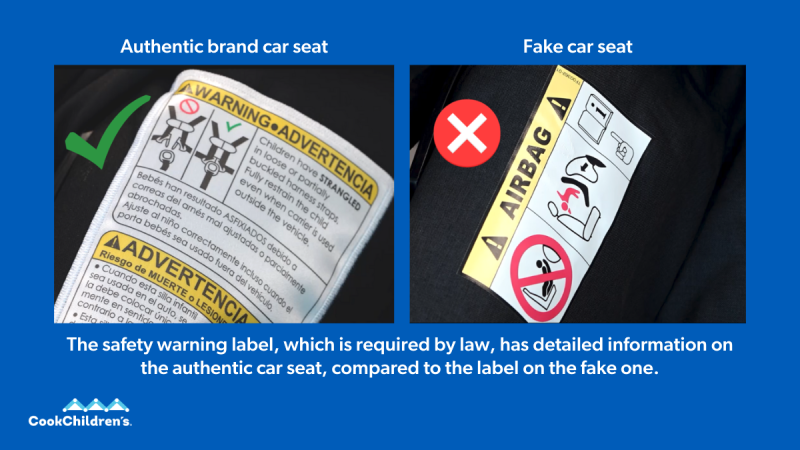
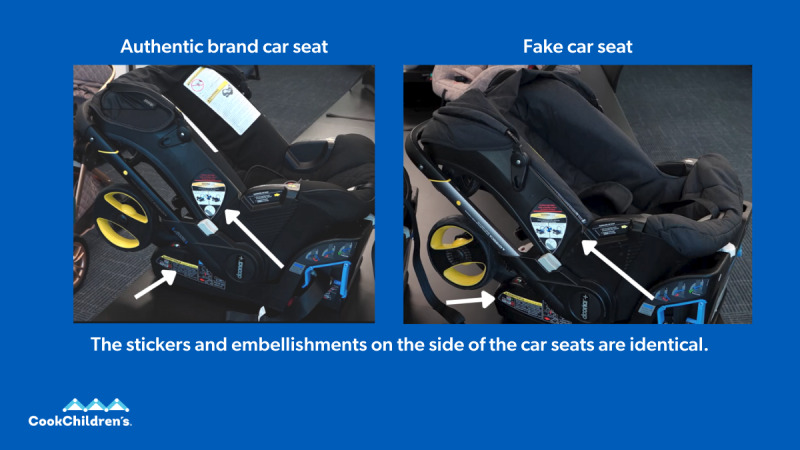
As you’re shopping for car seats, keep in mind that many popular brands are being knocked off to create counterfeits. These knockoffs are often cheaper than their legitimate counterparts but are significantly less likely to protect your child in the event of a car crash. Below are some red flags to watch out for when shopping, as well as ways to check the authenticity of your seat.
Red Flags:
- A great deal on a car seat. If it’s “too good to be true,” it probably is.
- Do not purchase from someone on social media or from a yard sale.
- Do not purchase from e-commerce sites, which allow for third-party sellers and can lead to a counterfeit car seat.
- A safety warning label with symbols and pictograms, but no detailed written information
Check for Authenticity
- If you haven’t yet purchased your car seat, make sure you buy it directly from the manufacturer or a reputable retail store.
- Call the seat’s manufacturer. They can help you determine if it’s a knockoff and will sometimes ask you to submit photos.
- Take your car seat to be checked by a certified child passenger safety technician. They are trained to help determine if it’s fake.
Evans strongly recommends anyone with a new car or booster seat does a car seat check with a child passenger safety technician. These professionals, many of whom are also nurses and physical therapists, educate caregivers/patients/families on car seat safety and know what is required for car seats to meet the Federal Motor Vehicle Safety Standard 213. Here are a few ways to schedule a free car seat check:
- Visit freecarseatcheck.org and click “Book your appointment”
- Find a child passenger safety technician at safekids.org
- Find an inspection station through The National Highway Traffic Safety Administration
For additional information about car seat safety, visit the Texas Department of State Health Services.
About Cook Children's Health Care System
Cook Children’s is more than a health care system: we strive to be an extension of your family, growing with your child from their first steps to adulthood. By collaborating to deliver on our Promise—to improve the well-being of every child in our care and our communities, we connect the dots for our patients. Between primary and specialty. Between home and medical home. Between short-term care and long-term health.
Based in Fort Worth, Texas, we’re 9,700+ dedicated team members strong, passionately caring for over 2 million patient encounters each year. Our integrated, not-for-profit organization spans two medical centers (including our state-of-the-art location in Prosper), two surgery centers, a physician network, home health services and a health plan. It also includes Child Study Center at Cook Children's, Cook Children's Health Services Inc., and Cook Children's Health Foundation. In 2024, Forbes named Cook Children’s the top health care employer in the U.S., and third on the list of ‘America’s Best Large Employers.’
And our impact extends beyond the borders of Texas. We proudly treat children from virtually every state in the nation and 32 countries. By seeing the world through the eyes of children and their families from all backgrounds, we’re able to shape health care suited to them: connected by kindness, imagination and respect—with an extra dose of magical wonder.
Discover more at cookchildrens.org.
