

Prenatal Prevention: New Vaccine Gives Moms Power to Protect Babies Against Severe RSV
By Ashley Antle
There is a new line of defense against the leading cause of pediatric hospitalizations, and doctors are hopeful it will decrease the spread and severity of a virus that affects nearly two-thirds of all infants during their first year of life.
 In 2023, the U.S. The Food and Drug Administration (FDA) approved the first respiratory syncytial virus (RSV) vaccine for pregnant women, known as Abrysvo. The vaccine transfers immunity to newborns, similar to how the pertussis vaccine for moms protects infants from whooping cough.
Respiratory syncytial virus is an infection that can lead to severe respiratory illness in infants and children, especially those under 2. In mild cases, children may experience a runny nose, cough, fever and wheezing. Serious cases can lead to inflammation of the airways and pneumonia, which could require hospitalization for difficulty breathing.
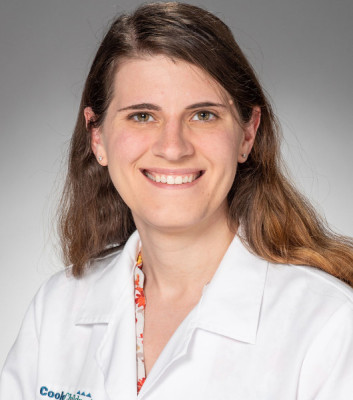
“Respiratory syncytial virus has been a major scourge for babies and pediatricians for a long time,” said Kaitlin Williamson, M.D., an infectious disease specialist at Cook Children’s Medical Center. “It's not a new thing. We're just hearing about it more because now there's something we can do about it. Truly up to 3% of all children are hospitalized in the first year of their life with RSV. That means 1 in 33 babies could be hospitalized their first year for the virus. That's an astronomical number.”
Two Doctors, One Decision
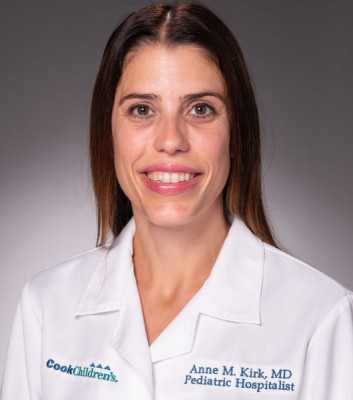
Anne Kirk, M.D, a pediatric hospitalist at Cook Children’s Medical Center, often treats children hospitalized due to RSV and is enthusiastic about this preventative breakthrough. This past year, her excitement became personal while pregnant with her now 8-month-old son. She chose to receive the maternal vaccine Abrysvo.
 Abrysvo works by stimulating the mother’s immune system to create RSV-fighting antibodies that are then passed on to the baby in utero. Clinical trials demonstrate an 81% reduction in severe RSV-related illnesses requiring hospitalization in infants within the first 90 days after birth, and a 69% reduction up to six months of age, compared to a placebo.
Still, Dr. Kirk was not automatically offered the vaccine by her obstetrician.
“During one of my winter visits with my OB, I asked if their clinic would have the maternal RSV vaccine or if I’d need to get it at a local pharmacy,” Dr. Kirk said. “I was surprised my OB hadn’t brought it up and a little surprised the clinic wouldn’t be carrying the vaccine as well. This was last year so it was the first season where the maternal RSV vaccine was offered, so the newness of it likely contributed to this, but I think it’s important for all OBs to encourage their pregnant patients to get this important vaccine.”
Dr. Kirk has seen enough to know the potential impact the vaccine could have on children and the medical community. She takes care of hundreds of sick patients hospitalized for RSV every winter. While every season is different, she says, doctors have seen a trend towards much sicker babies as a result of RSV over the last several years.
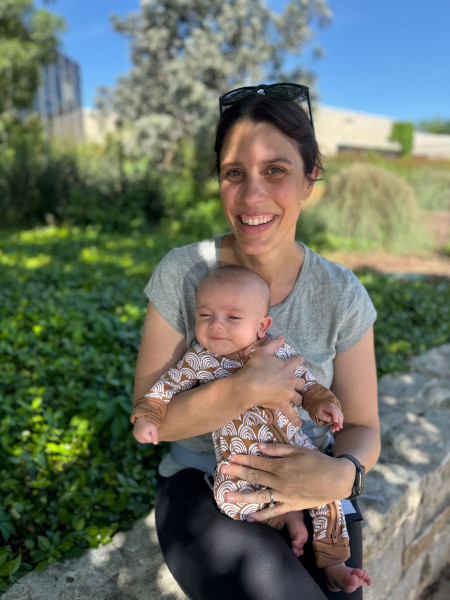 For her, getting the vaccine gave her a sense of empowerment as a mom.
“Being a new mother, you quickly realize that a lot of things are out of your control,” Dr. Kirk said. “As my OB said early on in my pregnancy, ‘As long as you remember that the baby is in charge, you’re good.’ This applies to labor and delivery and especially once the baby has arrived. By getting the vaccine while I was pregnant, I felt that I was doing as much as I could to keep my baby healthy by giving him RSV immunity from me. I think doing as much as I could to protect my baby made me feel better as a new mom."
Dr. Williamson also chose to get the maternal vaccine while recently pregnant.
“It was just so incredibly exciting to me that there was something I could do to offer my daughter some protection against it,” Dr. Williamson said. “I was so excited to be one of the first women to be able to get it.”
Dr. Williamson did not experience any side effects from the vaccine, but notes that, although a small effect, safety trials suggest a possible risk of preterm birth, particularly among women who received the vaccine before 32 weeks gestation.
One Virus, Two Protective Options
For women not eligible for the maternal vaccine or who are concerned about this risk, there is another option. Last summer, the FDA also approved Beyfortus, a monoclonal antibody therapy designed to prevent severe RSV infections in infants and young children.
Unlike a vaccine that teaches the immune system to fight a disease by generating its own antibodies, Beyfortus is an injection given to babies that directly delivers preventative antibodies they lack due to their immature immune systems. It can boost a baby’s immune system against severe RSV for up to five months.
“It’s really empowering for women to have that choice for their baby,” Dr. Williamson said. “Some women don’t want their newborn to get a shot for any reason and would rather take it for them. Whatever makes you feel like you’re offering the protection that makes the most sense for you and your baby is what you should do. I encourage and celebrate women picking whatever option works best for them since they’re both really safe and really effective.”
Who is Eligible?
Pregnant women in their 32nd through 36th week of pregnancy are eligible for Abrysvo. It is offered seasonally from September through January. For maximum protection for the baby, the vaccine should be given at least two weeks prior to birth.
It should be noted that Abrysvo is also used to protect older adults from RSV. While it is the same vaccine, it has different eligibility criteria. For older adults, it is given to those aged 60 and older with a higher risk for RSV complications, such as those with chronic lung disease, heart disease, weakened immune systems or other comorbidities.
The Centers for Disease Control (CDC) recommends Beyfortus for infants under 8 months of age born during or entering their first RSV season, as well as children younger than 20 months of age who remain at high risk of severe RSV disease during their second RSV season.
For more information about either of these protections against severe RSV, it’s important to visit with your obstetrician and/or pediatrician.
Related Stories
Cook Children’s Urges RSV Shot to Boost Immunity in Infants
Physicians Say New Antibody Shot Could Be Game Changer
Medication to Prevent RSV
About Cook Children's Health Care System  Cook Children’s is more than a health care system: we strive to be an extension of your family, growing with your child from their first steps to adulthood. By collaborating to deliver on our Promise—to improve the well-being of every child in our care and our communities, we connect the dots for our patients. Between primary and specialty. Between home and medical home. Between short-term care and long-term health.
Based in Fort Worth, Texas, we’re 9,700+ dedicated team members strong, passionately caring for over 2 million patient encounters each year. Our integrated, not-for-profit organization spans two medical centers (including our state-of-the-art location in Prosper), two surgery centers, a physician network, home health services and a health plan. It also includes Child Study Center at Cook Children's, Cook Children's Health Services Inc., and Cook Children's Health Foundation. In 2024, Forbes named Cook Children’s the top health care employer in the U.S., and third on the list of ‘America’s Best Large Employers.’
And our impact extends beyond the borders of Texas. We proudly treat children from virtually every state in the nation and 32 countries. By seeing the world through the eyes of children and their families from all backgrounds, we’re able to shape health care suited to them: connected by kindness, imagination and respect—with an extra dose of magical wonder.
Discover more at cookchildrens.org.
