

National medical journal features Cook Children’s role in studies of breakthrough epilepsy treatment
Children and teens with Dravet syndrome, a rare form of epilepsy, have new hope following treatment with an investigative therapy that alters the effects of the genetic abnormality responsible for their condition.
Following treatment, children experienced fewer seizures and demonstrated improved communication and other developmental skills – outcomes not generally possible with typical antiseizure medications.
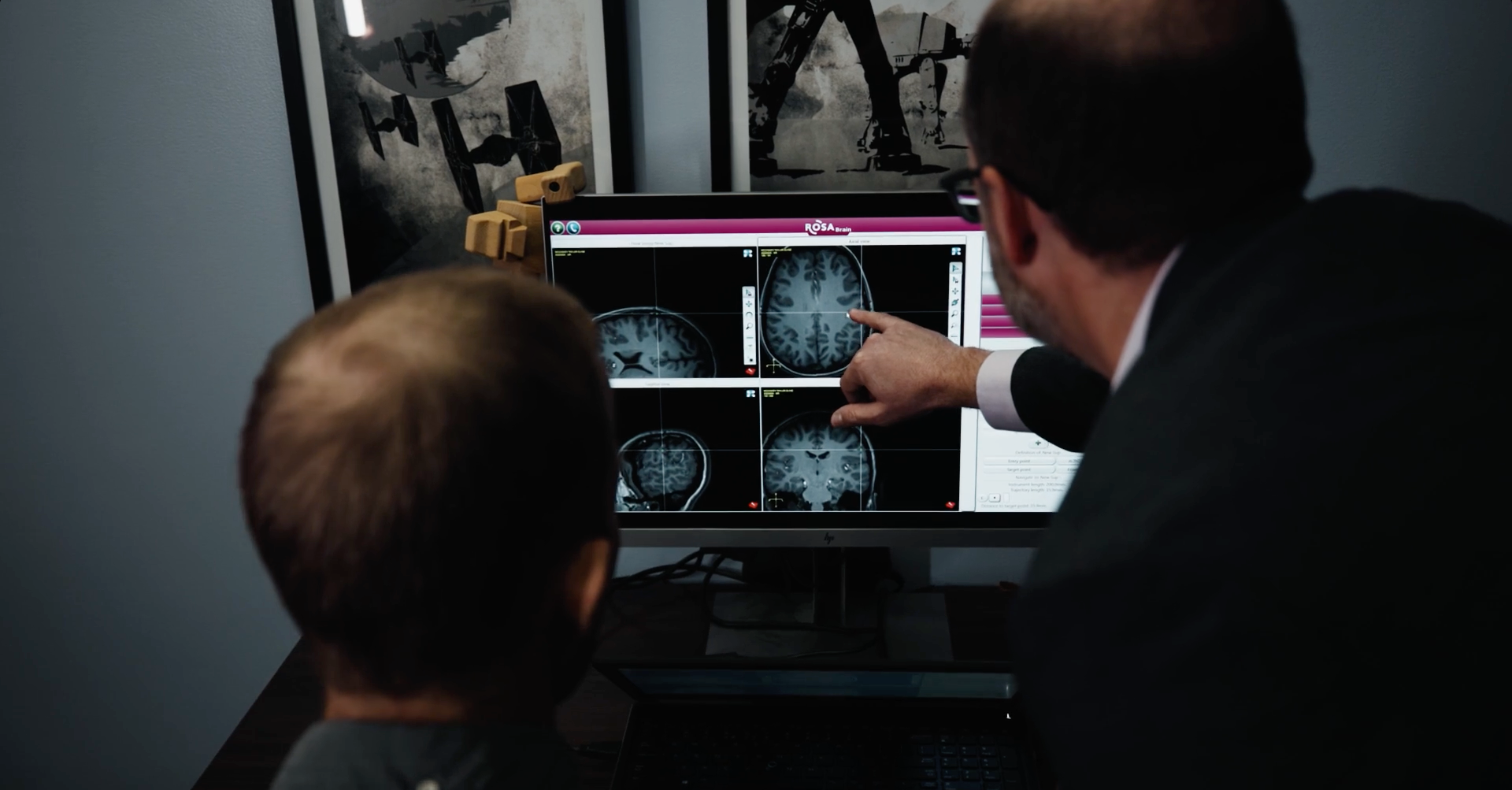 Researchers at Cook Children’s played a key role in the clinical trials that led to these findings, which were published in a March 2026 article in the New England Journal of Medicine (NEJM). Pediatric epileptologist M. Scott Perry, M.D., head of Neurosciences and director of the Justin Institute at Cook Children’s, co-authored the article and served as the lead investigator for one of the pivotal studies.
Dravet syndrome affects about 20,000 people in the United States. It causes seizures and problems with speech, sleep, development, intellectual abilities and more. About 100-125 patients from across the country come to Fort Worth seeking out Cook Children’s nationally recognized expertise in Dravet syndrome care.
Two initial studies – called MONARCH and ADMIRAL – enrolled 81 patients at multiple sites, including four patients at Cook Children’s. Two extension studies – SWALLOWTAIL and LONGWING – enrolled 75 patients. Dr. Perry served as lead investigator of SWALLOWTAIL.
The primary purpose of the studies was to assess the safety of zorevunersen, a medication administered via spinal tap. Participants received different amounts to help determine an optimal dosage that works safely and effectively.
The results are exciting, Dr. Perry said, because they indicate zorevunersen modifies Dravet syndrome by targeting the root cause. Study participants had fewer seizures and improvement in decision making, social interaction, communication, motor skills and other adaptive behaviors.
“We have a treatment which at least in early phase studies shows the potential to address the underlying genetic reason for the condition and as a result bring about improvements in the symptoms and frankly change the course of the condition for the patient, which is a considerable advancement over what we currently have available,” Dr. Perry said.
Adverse side effects were mostly mild or moderate, including elevated protein in the cerebrospinal fluid and pain after the spinal tap procedure.
Understanding Dravet
Most people diagnosed with Dravet syndrome have a mutation in the SCN1A gene that disrupts the production of normally functioning sodium channel proteins in the brain. The sodium channel is essential for neurons to fire appropriately. Seizures occur when the electrical flow misfires.
Antiseizure medication is currently the standard of care. But antiseizure medications don’t always control the seizures. And even when the frequency of seizures drops off, the patient’s cognitive delays and other symptoms don’t necessarily improve.
“Dravet is a condition called a developmental and epileptic encephalopathy, which means the seizures themselves cause problems, but the underlying reasons for the seizures also cause problems,” Dr. Perry said. “This drug aims to address that by treating the actual genetic abnormality. And when you correct the gene that causes the problem, now you can improve seizures and the nonseizure symptoms that come with it.”
While one copy of the gene produces good proteins, Dr. Perry explained, the mutated version found in Dravet makes proteins that don’t function effectively. Zorevunersen is a precision medicine that capitalizes on the healthy copy of SCN1A.
How does it work? Ribosomes are the part of the cells that read messenger RNA (mRNA), which Dr. Perry described as the recipe that forms the sodium channel. Zorevunersen prompts the ribosomes to skip over the portion of mRNA that discards both healthy and unhealthy copies of the gene. No longer discarded, more healthy copies are available to create more functioning sodium channel proteins.
Methods and Findings
Patients with Dravet syndrome from ages 2-18 years participated in the MONARCH, ADMIRAL, SWALLOWTAIL and LONGWING trials beginning in June 2020. Eighty-one percent of participants were taking three or more antiseizure medications prior to their first dose of zorevunersen.
The main objective was evaluating the safety of the trial therapy. Patients received one or more doses ranging from 10 milligrams to 70 mg. Data showed a reduction in seizures compared to the patients’ baseline numbers.
“What we determine from these studies is that initial doses of 70 mg performed better than any of the lower doses,” Dr. Perry said. “People who got multiple doses of 70 mg did better than people who got single doses. People who got two doses of 70 mg did similarly to people who got three. That’s why we’ve chosen two 70 mg doses as the loading dose for the ongoing phase 3 clinical trial.”
Participants in the extension studies followed up by receiving doses up to 45 mg every four months. At that level, they continued to maintain the similar reduction in seizures, he said.
Changes in adaptive behaviors and quality of life were measured by various scales based on impressions from clinicians and caregivers. Improvements were reported across the board.
Biotechnology company Stoke Therapeutics, Inc. opened the next phase of the trial, called EMPEROR, in August 2025. Participants will receive either zorevunersen or no treatment in four spinal taps over a 52-week period.
Dr. Perry said inclusion in the NEJM article shows Cook Children’s is making a significant contribution to a big advancement in Dravet syndrome care. By joining clinical trials, research sites help find solutions and hope for patients with complex conditions.
“Cook Children’s does meaningful research. This is clinical trial work developing novel new therapies for devastating diseases,” he said. “Cook Children’s played a key role in the development of this treatment, and the NEJM is an incredibly prestigious journal. It’s a big deal for Cook Children’s to be a major contributor to such a huge contribution to science.”
RELATED STORIES:
Groundbreaking trial targets genetic cause of epilepsy
Precision medicine: Clinical trial treats rare type of epilepsy
