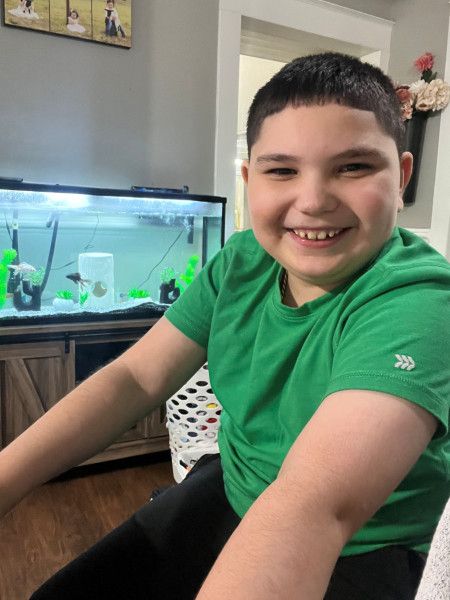
Precision Medicine: Clinical Trial Treats Rare Type of Epilepsy
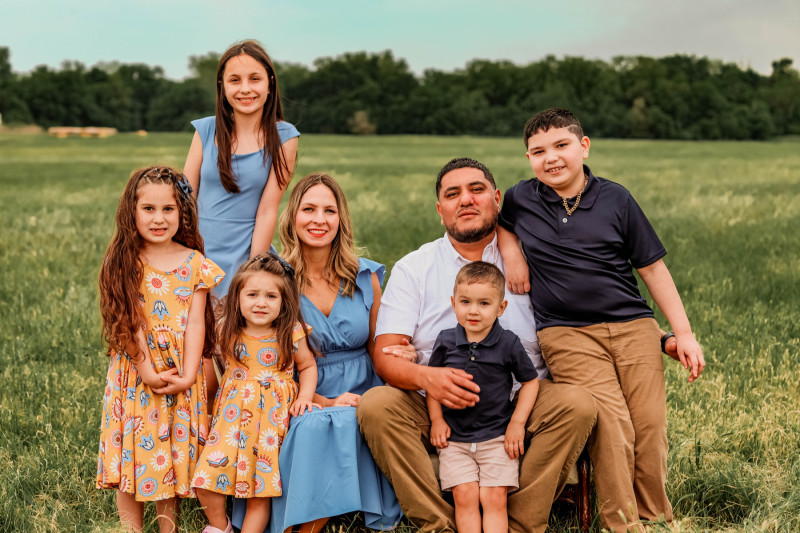
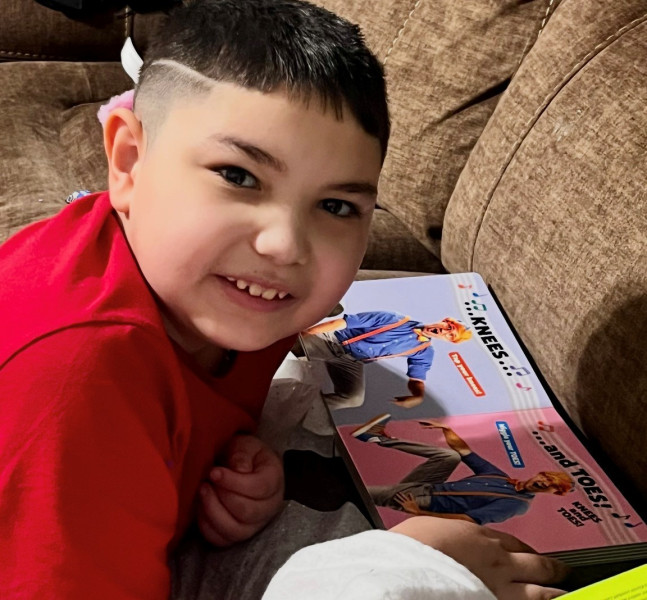
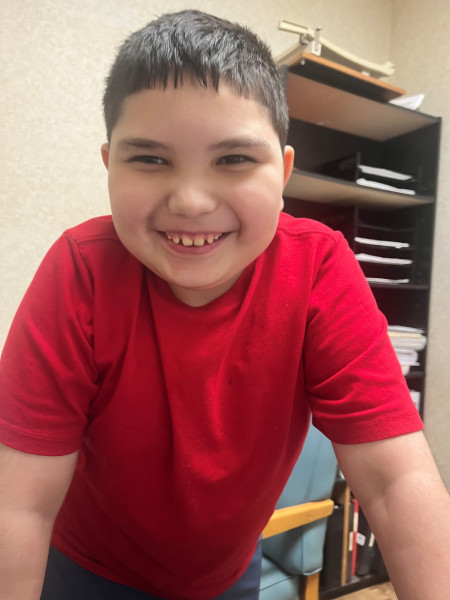
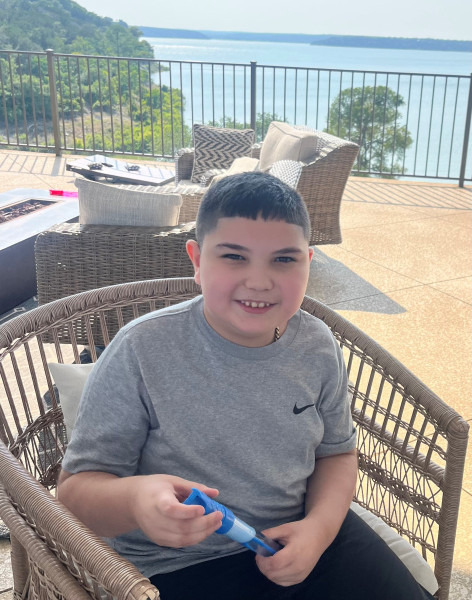
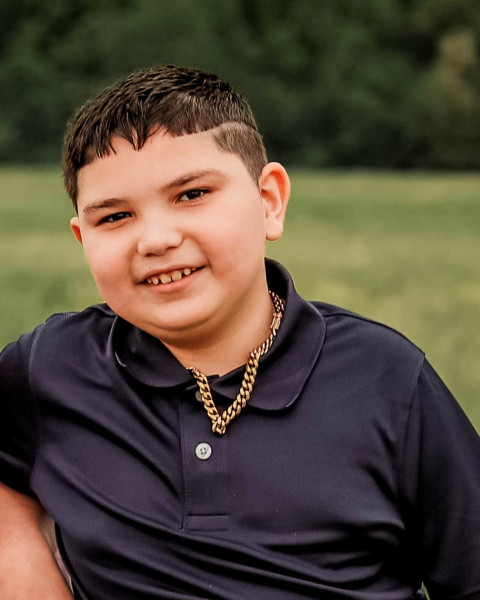 Running around too much or getting too hot used to trigger seizures several times a week for 8-year-old Sebastian Ruiz.
But since he started new investigational treatment through a clinical study at Cook Children’s, the seizures happen less often -- once or twice a month – and don’t last as long, Sebastian’s mom said.
Sebastian is one of about 20,000 people in the United States with a rare form of epilepsy called Dravet syndrome. Along with seizures, the disorder also leads to problems with speech, sleep, development and intellectual abilities among other issues. Sebastian was diagnosed with Dravet syndrome at 15 months old.
Juan and Rainey Ruiz make the two-hour drive from their home in Rosebud, Texas, to Cook Children’s Medical Center in Fort Worth so that their son can receive a new treatment still in the trial stage. That medication, called zorevunersen, works to offset the genetic malfunction that causes Dravet syndrome.
Rainey Ruiz said Sebastian used to have seizures that sometimes lasted from 30 minutes to an hour. Other medications weren’t helping. Now he receives a dose of zorevunersen every four months via spinal tap as part of the SWALLOWTAIL study. Rainey is grateful Sebastian has the chance to try an innovative therapy.
“When you’re a mom, you’re just desperate for anything and hope you’re doing the right thing,” she said. “It’s hard for me to be content with where we are and not try for something better for him.”
The U.S. Food and Drug Administration in December 2024 granted the medicine a breakthrough therapy designation as a potential disease-modifying treatment for Dravet syndrome. In Dravet syndrome, one of the two copies of the SCN1a gene has a variant, or change that impairs the genes ability to make a normally functioning sodium channel. The sodium channel is essential for the brain's neurons to fire appropriately. Zorevunersen is designed to capitalize on the healthy copy of SCN1a, helping it produce more functional sodium channel proteins in the brain, addressing the disorder’s root cause rather than just treating its symptoms.
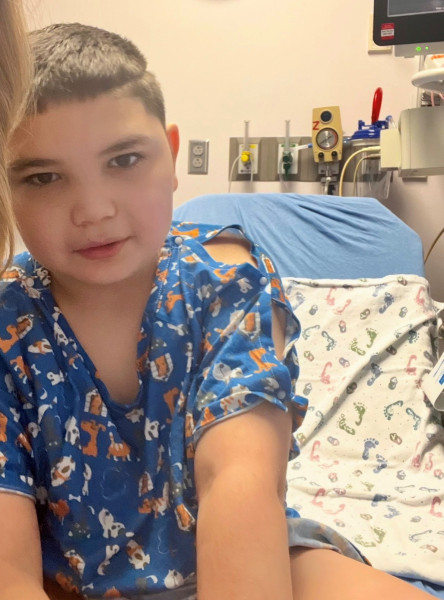 Biotechnology company Stoke Therapeutics, Inc. opened a third phase of the trial, called EMPEROR, in August 2025. M. Scott Perry, M.D., epileptologist and head of the Justin Institute at Cook Children’s, serves as lead investigator at Cook Children’s. The trial across approximately 70 sites involves 170 children and teens who have the SCN1A gene variant responsible for Dravet syndrome. The goal? To assess the medication’s safety and its impact on seizures, communication and other areas.
Patients enrolled in the EMPEROR trial undergo four spinal taps over 52 weeks, the first two 8 weeks apart and each additional procedure every 16 weeks. Patients will either get zorevunersen or no treatment during the 52-week period. The trial’s first patient from Cook Children’s received their initial dose in September 2025.
Dr. Perry said patients in SWALLOWTAIL and other earlier phases experienced fewer seizures, less severe seizures and improved ability to communicate and interact, as well as improvements in motor skills.
“The disease-modifying therapy is trying to correct the underlying cause,” Dr. Perry said. “And if you can correct the underlying cause or at least lessen the underlying cause’s impact, then you can have improvement across multiple manifestations of the disease.”
How It Works
Most people with Dravet syndrome have a mutation in the SCN1A gene that disrupts the production of normally functioning sodium channel proteins in the brain, causing abnormal electrical flow that leads to seizures. While one copy of their gene is producing good proteins, Dr. Perry explained, the mutated version is producing proteins that don’t work effectively.
Ribosomes are the part of the cells that read messenger RNA (mRNA), which Dr. Perry described as the recipe that makes up the sodium channel. Zorevunersen prompts the ribosomes to skip over and not read the portion of the mRNA that destroys both healthy and unhealthy copies. Because they’re not being discarded anymore – a natural process to limit overproduction of proteins -- more healthy copies are available. As a result, more functioning sodium channel proteins can be created.
“You end up basically getting almost 100% of the healthy version through to make up for what you’re losing on the unhealthy side,” Dr. Perry said.
Cook Children’s treats about 100-125 Dravet syndrome patients from across the country. As a recognized leader in epilepsy care and research, Cook Children’s was the initial site Stoke Therapeutics visited ahead of the EMPEROR trial. Cook Children’s Neuropsychology, Neurodiagnostics, Anesthesiology, Radiology and MRI departments are involved as well.
“I think it underscores what is possible at Cook Children’s from a research standpoint,” Dr. Perry said. “That is not a simple trial. It’s quite complex in its design. Cook Children’s was selected to participate because we can do it well. We have a track record of doing it well.”
Current options in doctors’ toolkits focus on treating the seizures, he said. Other symptoms, such as speech, still present problems. Zorevunersen gives doctors hope that precision medicine will change the genetic factors behind Dravet syndrome so that patients see improvement across the board.
Spotlight on Sebastian
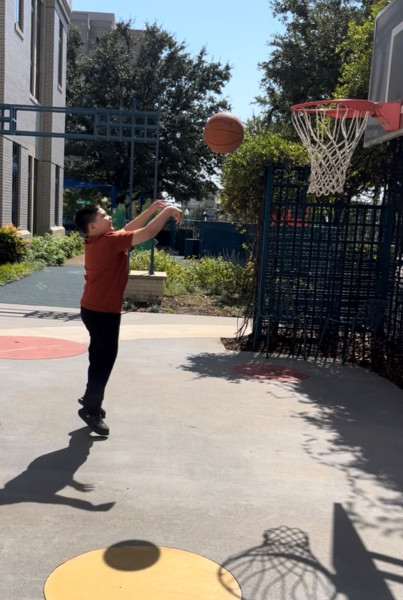 Sebastian had his first seizure at 4 months old and the next one three months later. They happened more frequently after that, and sometimes he had to be intubated at the hospital during a seizure. He started coming to Cook Children’s at age 2 years when the Ruiz family sought out a neurologist who specialized in Dravet syndrome.
“Dr. Perry is the top. He’s amazing,” Rainey said.
Sebastian had been enrolled in several clinical trials prior to SWALLOWTAIL. Now a third-grader, Sebastian has limited ability in speech, but he recently started recognizing letters of the alphabet. He loves basketball, school and his four siblings. Running a fever, overheating or overstimulation can still bring on seizures -- but not as often since he started the zorevunersen therapy, his mom said.
Participating in clinical trials can be long and hard, and there’s no guarantee the medication will benefit your child, Rainey pointed out. But trials provide hope for better outcomes for patients in the future. She encouraged parents of Dravet syndrome patients to consider enrolling if that’s an option for them.
“It’s just hard for me to stand by and not try to do something,” she said. “Even if it helps other kids, it’s still a win-win. You can change lives in other ways.”
RELATED STORIES:
Groundbreaking Trial Targets Genetic Cause of Epilepsy
A Mother’s Intuition, a Doctor’s Care
Jane and John Justin Institute for Mind Health at Cook Children's
Kids with neurological disorders often face many challenges—and see many specialists. For many families, that means multiple visits to different locations. At Cook Children's, we're changing the way we deliver care by making their journey easier. How? By opening the doors to care that's centered around the unique needs of our patients and their families.
The Jane and John Justin Institute for Mind Health at Cook Children's brings together nine specialties under one roof. Pediatric specialists in neurological, developmental, and behavioral health are changing the way we deliver health care. Together, we're healing minds and bodies, sharing smiles that warm the soul, and connecting care for kids unlike anyone else. Learn more about The Justin Institute.