

Living with Hemophilia: Stories of Resilience
Any time a child gets a bump, cut or bruise, it's a scary moment for parents. Most of the time a bandage will mend things, but for a parent whose child has a bleeding disorder, it's a slightly different story.
March is Blood Disorders Awareness Month, a time to shine a spotlight on patients living with bleeding disorders like hemophilia, a rare genetic disorder in which the blood clots either slower than normal or not at all. Patients receive medication through IV, port access, or subcutaneous injections.
Hemophilia Care at Cook Children’s Kerri Bond’s family is significantly impacted by hemophilia as her father, her daughter Adeline and her son Benjamin live with the condition. As a gene carrier, Kerri has experienced the condition’s realities firsthand. This personal experience shaped her approach to her children’s care.
Kerri’s father met Timothy McCavit, M.D., a hematologist who directs the Bleeding Disorder Program and Hemophilia Treatment Center at Cook Children’s, while volunteering at Camp Ailihpomeh, a Texas camp for children with hemophilia. This connection led Kerri to seek treatment for Benjamin and Adeline at Cook Children's after her family moved from Virginia to Waco, Texas.
“The care we get at Cook Children’s and the Hemophilia Treatment Center team is phenomenal and worth every mile of the trip,” Kerri said. “Dr. McCavit’s nurse practitioner, Katie, is also so great about checking in on us and the infusion team at Cook Children’s is exceptional!”
The Hemophilia Treatment Center care team aims to help patients understand that hemophilia is a part of who they are, without letting it define them.
“We try to help patients live a full life and be who they want to be, supporting their dreams and goals,” said Katie Carpenter, MSN, RN, CHES, CPN, hemophilia and bleeding disorders nurse.
Like Kerri, Araceli Martinez brought her family for hemophilia treatment to Cook Children’s Hemophilia Treatment Center; however, their personal experiences have been different. Araceli had no idea she carried the gene for hemophilia until her son, Kevyn, was born.
“My life changed,” Araceli said.
Araceli’s family traveled to and from Mexico for Kevyn’s treatment at Cook Children’s until she chose to relocate to Fort Worth to focus on her son’s health.
Living with Hemophilia
“For my whole family, hemophilia is just a normal part of life,” Kerri said. “We often talk about the reality of having a bleeding disorder and how grateful we are living during a time of such easy access to safe treatment.”
After Benjamin’s diagnosis of Hemophilia Type B at birth, Kerri, Benjamin, and Adeline participated in a genomic testing study. The results revealed Adeline had low levels of factor IX, a protein that helps blood clot, and both Kerri and Adeline were diagnosed with mild hemophilia B.
Benjamin receives prophylactic treatment, while Adeline, who has not yet experienced bleeding issues, may require treatment as she enters puberty.
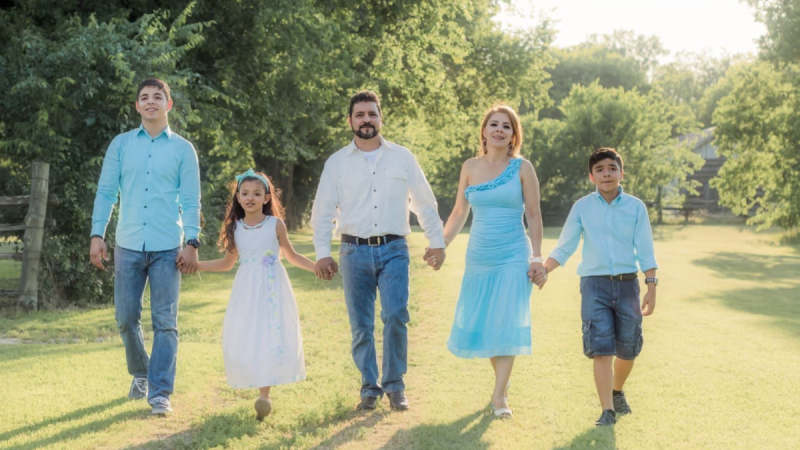 Araceli struggled with the idea of having another child. Ten years after Kevyn’s birth, she welcomed her daughter, Keyra. Despite the 50% chance Keyra would inherit hemophilia, the diagnosis was still heartbreaking.
“It’s been hard,” Araceli admitted. “I can tell you I’m happy now because my kids are doing well. I know that they have a blood disorder, but they are here.”
Today, Kevyn, 26, and Keyra, 16, manage their condition with intramuscular injections.
Connecting with Community
Living with a blood disorder can lead to feelings of isolation. Kerri emphasizes the importance of community support.
“Community is so important,” Kerri said. “I highly recommend getting involved with Texas Central Bleeding Disorders (TCBD), the North Texas chapter of the National Bleeding Disorders Foundation!”
TCBD offers free membership, educational events and retreats. Kerri and her children have formed lifelong connections through these events. She encourages parents to openly discuss bleeding disorders, normalizing the conversation.
“Having a bleeding disorder is nothing to be ashamed of, and while sometimes we need special medicine, we can do anything we want!” Kerri said.
Kerri’s personal experiences with hemophilia have instilled empathy and understanding in her approach to her children’s care. She believes her unaffected son, Edward, will also develop a great sense of compassion.
Araceli echoes the sentiment that hemophilia affects the entire family. While her children continue to thrive, she’s focused on her professional development.
“As a mother you are affected because of your children’s situation,” Araceli said. “Emotionally I’m impacted because I have a work gap. I believe I’m capable and have potential to contribute to our society.”
She now seeks to help other families become familiar with the blood disorder and develop her own career so she can support her children.
RELATED STORIES
Viviendo con hemofilia: Un ejemplo de resiliencia familiar
