

Cook Children’s Research Aims to Improve Care, Give Hope to Patients and Families with Lennox-Gastaut Syndrome
November is Epilepsy Awareness Month and we are spotlighting the research underway at Cook Children’s Lennox-Gastaut Comprehensive Care Center to bring hope to families.
By Amber Kaiser
Cook Children’s doctors and researchers are aiming to make an impact on the progression and treatment of Lennox-Gastaut Syndrome (LGS), a rare type of epilepsy that causes seizures that often lead to a cognitive or developmental delay. The seizures typically begin in childhood and LGS leads to increased risk for other health problems and mortality.
The Cook Children’s Lennox-Gastaut Comprehensive Care Center has multiple research projects underway that aim to provide vital information to better understand LGS progression, develop preventative interventions and develop more effective, targeted treatments. Early recognition and active management are essential for improving developmental outcomes.
Each year, about 300 to 400 patients with LGS visit Cook Children’s Neurology and about 50 patients are newly diagnosed with LGS.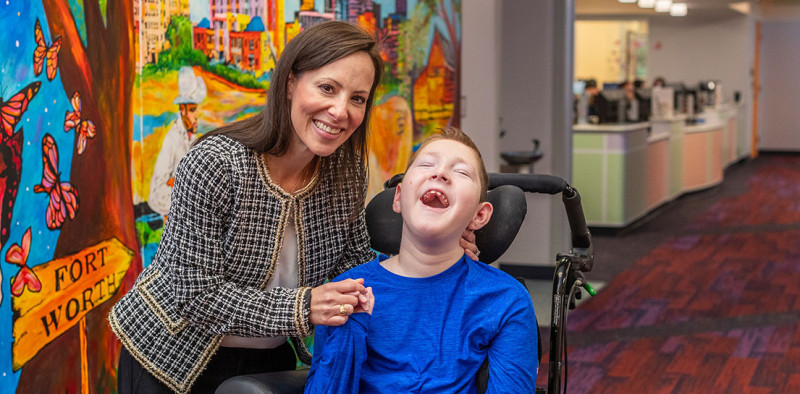
Cynthia Keator, M.D., Division Chief, Neurology at Cook Children’s Jane and John Justin Institute for Mind Health and the Cook Children’s Epilepsy Monitoring Unit (EMU), has dedicated her career to helping children with Developmental Epileptic Encephalopathy (DEE), specifically LGS.
Cook Children’s awarded Dr. Keator as an Endowed Chair in 2024, leading the Cook Children’s Lennox-Gastaut Comprehensive Care Center.
The center will follow patients, gather data and conduct a more comprehensive study of treatments, including surgery and medications. It is the first comprehensive care center in the country to work on algorithms, protocols and standardized guidelines for LGS care. The goal is to be the main site for clinical trials for new medication therapies for LGS.
The Challenge
Diagnosing LGS can be difficult for epileptologists because symptoms can change over time and some patients may not show some signs until later in the disease progression. LGS is characterized by multiple seizure types, developmental delay and distinct electrical patterns in the brain.
“There is a great degree of variability in the LGS population in terms of when diagnosis is given, or lack thereof, treatments and overall care,” Dr. Keator said.
Patients typically experience a wide range of comorbidities and require substantial support from caregivers and physicians throughout their entire lives.
Common symptoms include frequent seizures which may be drug-resistant. There are common seizure types which may be experienced, including tonic seizures (the most common type), atypical absence and drop attacks (atonic seizures). Other symptoms include:
- Developmental delay or loss of developmental skills
- Cognitive disability and/or impaired communication
- Behavioral issues
- Sleep issues
- Psychiatric issues
- Autism, depression, anxiety, psychosis
The Program
The three pillars of the program include the LGS Clinic, the LGS Natural History Registry, and the Biomarker Study.
The natural history registry helps see how the disease progresses over time in the LGS patients at Cook Children’s and will identify characteristics that confer high risk for LGS development. This will be done in the first two years of the project. 
During the following two years in the Biomarker Study, patients with patterns and risk identified from the natural history registry will be captured in the data to determine whether their condition progresses to LGS. The study aims to alter the course of the disease progression.
This analysis will help clinicians recognize early disease symptoms, their progression, severity and frequency.
Another vital research aspect that could make a considerable difference is identifying what helps identify at-risk populations before they develop LGS, with the potential to prevent it.
Dr. Keator also works with a dedicated Cook Children’s Neuroscience Research team to help her with data collection and research analysis. Christopher Hagen, Ph.D., is the new Research Scientist working with Dr. Keator.
“The journey for these families is incredible,” Dr. Keator said. “For them to know there is a large community of doctors, nurses, scientists and others working together to improve their conditions gives them hope.”
Care and Advice for Families with LGS
Living with epilepsy, or living with a family member who has epilepsy, can be the most challenging experience of one’s life. There is always more to learn and more that can be done in the medical field to help those impacted. For many, what epileptologists and other epilepsy specialists are doing in the medical field is the only hope they have.
“We are always striving for the next best treatment and so are our colleagues throughout the world,” Dr. Keator said. “The impact of epilepsy on a family and community is overwhelming. There is a large community of us working to improve quality of life, access to care, outcomes, treatments and ultimately a cure.”
November is Epilepsy Awareness Month. Epilepsy will affect one in 26 people in the United States during their lifetime. If you have a child with epilepsy, you’re not alone – 3.4 million Americans have this disorder. However, amazing things are happening in genetics, research, medication, surgery and treatment of pediatric epilepsy, bringing hope to more patients than ever before. If your child has been diagnosed, you probably have lots of questions. We can help. If you would like to schedule an appointment, refer a patient or speak to our staff, please call us at the Jane and John Justin Institute for Mind Health.
Research at Cook Children's
"The Cook Children’s Lennox-Gastaut Syndrome Research Clinic represents a major commitment to understanding and fighting this devastating form of epilepsy. Our cutting-edge work at this clinic — including the Natural History Registry and Biomarker Study — is focused on developing standardized protocols and accelerating targeted treatments to potentially alter the course of the disease. Ultimately, this research provides the essential knowledge to improve developmental outcomes and offer hope to the children and families we care for." - William L. Stigall, M.D., Chief Research Officer
