

Cook Children’s Physicians Share What Parents Need to Know about Salmonella
The Texas Department of State Health Services has not reported an outbreak.
Various Cook Children’s locations are experiencing a spike in cases of salmonella.
The Texas Department of State Health Services has not reported an outbreak.
Cook Children’s pediatricians Devona Martin, M.D., and Jenica Rose-Stine, D.O., say they have seen a surge in cases at their primary care clinic in Willow Park, Texas.
“Over the past few months, we have noticed a big increase in the number of cases of salmonella,” Dr. Martin said. “This usually presents as diarrhea that has blood or mucus and fever. Each case is reported to the Health Department to try to track down a cause, but a common source has not been identified.”
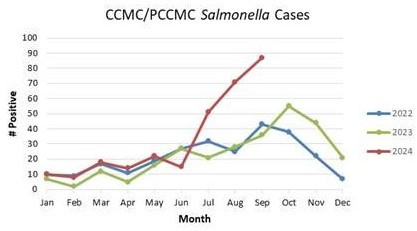 Since July, the Emergency Department at Cook Children’s Medical Center – Fort Worth has also reported increased numbers of patients with salmonella.
“In the ED, we usually see less than 20 patients per month with a diarrheal illness caused by salmonella,” said Stephanie Felton, D.O., associate medical director of the Cook Children’s Emergency Department. “In the month of July, we had 43 positive cases. We had 59 in August, 71 in September, and 74 in October.”
Last week at Cook Children’s, 11 out of 229 patients tested for Salmonella were positive, resulting in a 5% positivity rate.
Dr. Felton, Dr. Martin, and Dr. Rose-Stine provide answers to commonly asked questions about Salmonella.
What is salmonella?
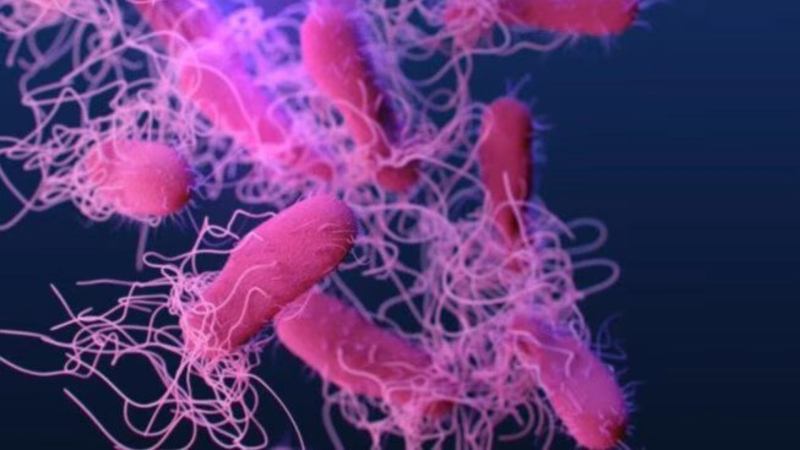
Salmonella is a bacteria that can cause gastrointestinal illness and fever called salmonellosis. It is one of the most common causes of foodborne illness in the United States.
What is the difference between salmonella and E. coli?
Although salmonella and E. coli cause similar illnesses, they are different kinds of bacteria. E. coli more commonly produces a toxin that can lead to kidney damage, a condition called hemolytic uremic syndrome. This isn’t seen as often with salmonella.
What are the symptoms of a salmonella infection?
Symptoms of salmonellosis are diarrhea with blood and/or mucus, vomiting, abdominal cramps, and fever.
How do children contract salmonellosis?
Salmonella infection can be contracted by consuming contaminated food products, including poultry, eggs, produce, infant formula, and water. It can also be spread through contact with infected animals, like reptiles and birds, or other people who are infected if strict hand hygiene isn’t followed.
 Is salmonella contagious?
Yes, salmonella is contagious and can be spread by person-to-person contact or by touching contaminated surfaces. The incubation period usually is between eight and 72 hours following exposure. You may be asymptomatic during this time.
Salmonella is not as contagious as the viral stomach bugs we often see.
How can parents and caregivers prevent infection?
We can prevent infection with proper hand washing, especially before eating and after touching animals. Make sure that your counter spaces and sinks are clear of any bottles, sippy cups, or dishware before washing any fruits or vegetables. Cook and prepare all poultry and meat products appropriately.
Only use FDA-approved formulas for your infants. Thoroughly clean all bottles, pacifiers, and toys before handing them to your children.
How are salmonella infections treated?
Treatment primarily involves rehydration and rest. Infants less than three months old or children with moderate to severe illness may receive antibiotics. These infections usually clear on their own.
What should parents do if they think their child has a salmonella infection?
If you are worried about your child having salmonella, please contact your primary care physician. He or she can run stool studies to confirm the diagnosis.
Unless your child has blood, mucus, or fever with their diarrheal illness, it’s likely a stomach virus and not salmonella. Keep your child at home and make sure they hydrate!
If your child is acutely ill or if you are concerned about dehydration or prolonged fevers (100.4 degrees Fahrenheit for five days or greater) please bring your child to the Emergency Department for an evaluation.
About Cook Children's Health Care System
Cook Children’s is more than a health care system: we strive to be an extension of your family, growing with your child from their first steps to adulthood. By collaborating to deliver on our Promise—to improve the well-being of every child in our care and our communities, we connect the dots for our patients. Between primary and specialty. Between home and medical home. Between short-term care and long-term health.
Based in Fort Worth, Texas, we’re 9,700+ dedicated team members strong, passionately caring for over 2 million patient encounters each year. Our integrated, not-for-profit organization spans two medical centers (including our state-of-the-art location in Prosper), two surgery centers, a physician network, home health services and a health plan. It also includes Child Study Center at Cook Children's, Cook Children's Health Services Inc., and Cook Children's Health Foundation. In 2024, Forbes named Cook Children’s the top health care employer in the U.S., and third on the list of ‘America’s Best Large Employers.’
And our impact extends beyond the borders of Texas. We proudly treat children from virtually every state in the nation and 32 countries. By seeing the world through the eyes of children and their families from all backgrounds, we’re able to shape health care suited to them: connected by kindness, imagination and respect—with an extra dose of magical wonder.
Discover more at cookchildrens.org.
