

A Breath of Fresh Air: Teen Athlete’s Breathing Conditions Treated at Cook Children’s Exercise Respiratory Center
Piper was diagnosed with three conditions – exercise-induced asthma, exercise-induced laryngeal obstruction (EILO) and dysfunctional breathing. Now, she has learned breathing techniques and is back on the softball field.
By Amber Kaiser
Piper Francis, 17, has been playing softball with lifelong friends since second grade, but last year, she noticed she was having difficulty breathing during practice. She saw multiple doctors who prescribed her asthma inhalers that didn’t help. She was heartbroken and was preparing to transition from an active player to team manager. Then, in early 2025, she was referred to the Exercise Respiratory Center at Cook Children’s – Prosper where her care team identified her breathing issue and helped her recover. Now, she’s back on the softball field and excited to play in her senior year.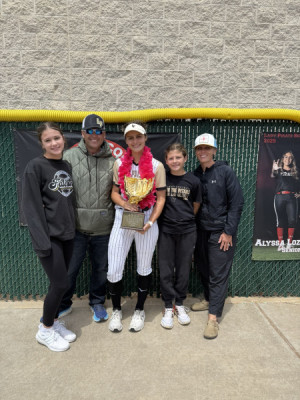
Pulmonology Care at Cook Children’s
John Robertson, M.D., pediatric pulmonologist at Cook Children’s Medical Center - Prosper, was Piper’s advocate, quickly figuring out what she needed to improve her breathing and help her continue playing softball.
“Almost every day last year, I would feel tightness in my chest and throat. It felt like something was blocking my airway,” Piper said. “I’d show up at softball practice and have to sit out through half of it. Now I’ve been able to go back to practice after seeing Dr. Robertson. He immediately recognized my problem and I felt better in less than a month!”
Piper was diagnosed with three conditions – exercise-induced asthma, exercise-induced laryngeal obstruction (EILO) and dysfunctional breathing.
“The big challenge is that the problems look like each other,” Dr. Robertson said. “Asthma labels are really common and doctors may be right most of the time, but when asthma medications don’t work, there are no standard guidelines pointing at what to do next. The symptoms of these diagnoses – EILO and dysfunctional breathing – aren’t a problem of diseased tissues. They’re normal structures functioning abnormally.”
EILO happens when the vocal cords or neighboring structures collapse on inhalation during strenuous exercise.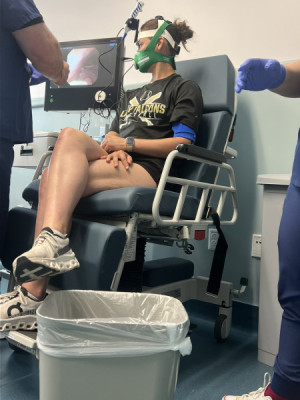
Dysfunctional breathing occurs when someone breathes primarily with chest muscles instead of the diaphragm, resulting in inefficient, fast, shallow breaths rather than slower and deeper ones.
Finally Diagnosed at Cook Children’s Exercise Respiratory Center
Piper was diagnosed with EILO and dysfunctional breathing with testing at Cook Children’s Exercise Respiratory Center, which opened in 2023. The Exercise Respiratory Center diagnoses, treats and researches the causes of exercise-induced respiratory symptoms for older children, adolescents and young adults. Some of the many duties of the researchers at the Exercise Respiratory Center, Rebecca Brovina, MSHS, BSN, RN, CPN, and Andy Kreutzer, PhD, CSCS, LSSWB, include gathering data and presenting findings to share with other medical professionals about the diagnosis and treatment of exercise-induced respiratory symptoms.
It’s one of three centers in the U.S. that test continuous laryngoscopy during exercise (CLE) for children and the only center in Texas. During this test, Dr. Robertson will use a scope to view the patient’s voice box and vocal cords while the child exercises. Dr. Robertson was recently named a finalist for D CEO's 2025 Excellence in Healthcare Awards for Outstanding Healthcare Innovator.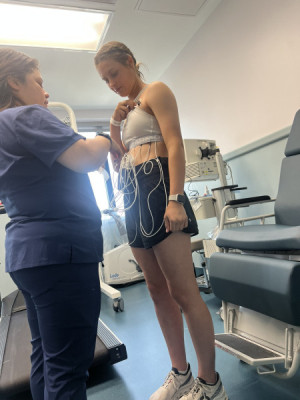
“We just finished our 100th CLE test recently,” Dr. Robertson said. “We perform maximal exercise tests, try to provoke the symptoms under investigation while we are examining the patient's voice box with a camera and measuring their breathing efficiency, so we can see what is malfunctioning precisely when symptoms are present.”
Athletic patients like Piper are typically treated within four to six weeks, consisting of four to six visits of physical therapy and/or speech therapy. Piper only needed three visits.
“Piper is a very special person,” Dr. Robertson said. “She’s a dedicated athlete, driven and very competitive and her success story has been inspiring for all of us!”
Physical Therapy and Speech Therapy: Learning How to Breathe Again
Dr. Robertson’s Exercise Respiratory team includes a physical therapist and a speech therapist. Part of Piper’s care includes learning how to breathe again – through her diaphragm instead of her chest.
“Throughout PT and speech therapy, I’ve learned a lot of new breathing techniques,” Piper said. “My symptoms have drastically changed. I can make it through an entire practice now without struggling and missing practice trying to breathe. Learning how to breathe correctly helped me the most!”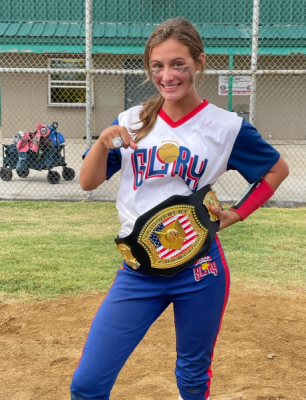
Now, whenever Piper feels chest pain, throat tightness, lightheadedness, or breathing difficulties, she first notices if she’s overlooking her breathing techniques and then makes a conscious effort to stay aware and focus on her breathing.
Finding Answers and Hope for Others
Since Piper’s care with Dr. Robertson and the Exercise Respiratory team, her health has drastically changed.
“Emotionally, it makes me feel relieved,” Piper said. “I don’t have to worry about struggling at practice anymore and I can just show up and perform my best.”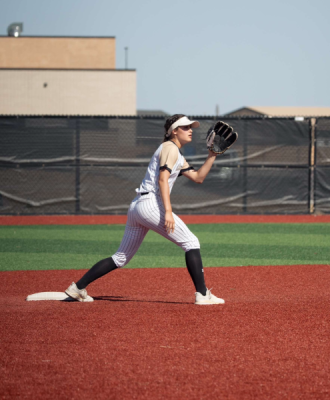
Piper’s mom, Kristi Francis, noticed last year that she would come home from softball practice exhausted, had trouble breathing and it would take hours before she felt back to normal.
“It’s been a game changer for Piper,” Kristi said. “We went from doctor to doctor and no one really listened and everyone thought we were crazy. They didn’t believe her symptoms and we finally got to someone who knew exactly what to do.”
When to Seek Further Evaluation
“I feel like this condition needs to be more recognized and that a lot more people actually have it and just don’t know,” Piper said.
General red flags for people to pay attention to and seek further evaluation:
- If someone is labeled as having asthma and uses an inhaler, but still has lots of symptoms when the asthma treatment doesn’t help.
- In EILO, there can be a symptom called stridor, which is exclusive to the voice box: stridor occurs when breathing in, usually as a loud, high-pitched sound that can be heard by others standing nearby. In asthma, wheezing happens during the breath out and is usually a quieter sound only noticed by the person experiencing the symptom.
- Along with the symptoms above, experiencing dizziness and lightheadedness, passing out/coming close to passing out.
Finding the right diagnosis makes all the difference and can help athletes like Piper feel better, get back to competition and even breathe better than ever before.
Cook Children's Exercise Respiratory Center
At Cook Children's Exercise Respiratory Center (ExRC), we diagnose, treat, and research the causes of exercise-induced respiratory symptoms in older children, adolescents, and young adults. Our goal is to remove any barriers created by respiratory causes, so our young athletes can perform at their fullest capacity.
The biggest challenge with correctly diagnosing the cause or causes of EIRS is that testing is usually normal when the patient is not exercising.
To solve this problem, the ExRC is built around maximal exercise testing. The basic idea is to exercise our patients with enough intensity to trigger their symptoms while we simultaneously examine the behavior of the upper airway, lungs, and cardiovascular system. This way, when the symptoms occur, we see precisely where the problem(s) are located, make the correct diagnoses, and start effective treatment with our multidisciplinary team.
The ExRC opened its doors officially at Cook Children's Medical Center - Prosper on Oct. 1, 2023, through an Endowed Chair Award generously given by the Cook Children’s Health Foundation.
We're here to help
If your child has respiratory symptoms during exercise, you probably have lots of questions. We can help. If you would like to schedule an appointment, refer a patient or speak to our staff, please call our offices at 682-303-4200 or send a referral fax to 682-303-0719. See more information here.
Research at Cook Children's
"Piper's story is exactly why we do research at Cook Children's. We have world-class physicians who are here to fulfill Our Promise: Everything for the Child. Dr. Robertson's expertise and experience mean that patients like Piper can get workups and therapies that aren't available anywhere else in Texas and very few places in the country. The research supporting the ExRC isn't primarily for publication, grants, or fame. It's to treat Piper. Dr. Robertson wants to do Everything for the Child and that means we need to research questions that don't have answers yet. Through Research, Everything For the Child! I'm so grateful to have Dr. Robertson at Cook Children's and so grateful to help him do all of his great work!"
William L. Stigall, M.D.
Chief Research Officer
